Does God Really Exist? — What the Wrath of God Points Us Toward Scripture Meditation · Romans 1

Have you ever genuinely wondered whether God exists? If you’re not a believer, you may have had the fleeting thought: “What if God is real — what then?” And even if you already call yourself a Christian, there may be moments deep in your heart where you’ve quietly asked, “Is this actually true?”
Today we’re going to sit with Romans chapter 1 — a letter written by the Apostle Paul to believers in Rome. What’s striking is that Paul doesn’t open with God’s love or grace. He opens with something far more sobering: the wrath of God. Why?
What is the book of Romans?
Romans is a letter written by a man named Paul — someone who not only rejected Jesus, but actively hunted down and imprisoned those who believed in him. Then, on the road to Damascus, he came face to face with the risen Christ, and his entire life was turned upside down.
From that moment on, Paul became one of the most passionate proclaimers of the gospel in history. And yet, when he sits down to write this letter — to share the good news of grace — the very first thing he brings up is not comfort, not welcome, not love. It is wrath.
“For the wrath of God is revealed from heaven against all ungodliness and unrighteousness of men, who by their unrighteousness suppress the truth.” (Romans 1:18)
Before a doctor can prescribe a cure, she must first give an honest diagnosis. In the same way, before we can truly receive the good news of salvation, we need to understand the real condition we are in. That is why Paul begins here.
We can know that God exists
So how do we know God is real? Paul says that no one can stand before God and claim ignorance — because God has made himself knowable in two ways.
“For what can be known about God is plain to them, because God has shown it to them. For his invisible attributes, namely, his eternal power and divine nature, have been clearly perceived, ever since the creation of the world, in the things that have been made. So they are without excuse.” (Romans 1:19–20)
The first witness is from within. Human beings are different from every other creature. We have reason, conscience, and a soul — traces of God left inside us. Our souls are oriented toward God the way a sunflower turns toward the sun. There is a hollow inside each of us that no amount of money, achievement, or pleasure can fill. It is shaped for God alone. As the psalmist wrote: “As a deer pants for flowing streams, so pants my soul for you, O God” (Psalm 42:1).
Get Word Ladder’s stories in your inbox
Join Medium for free to get updates from this writer.
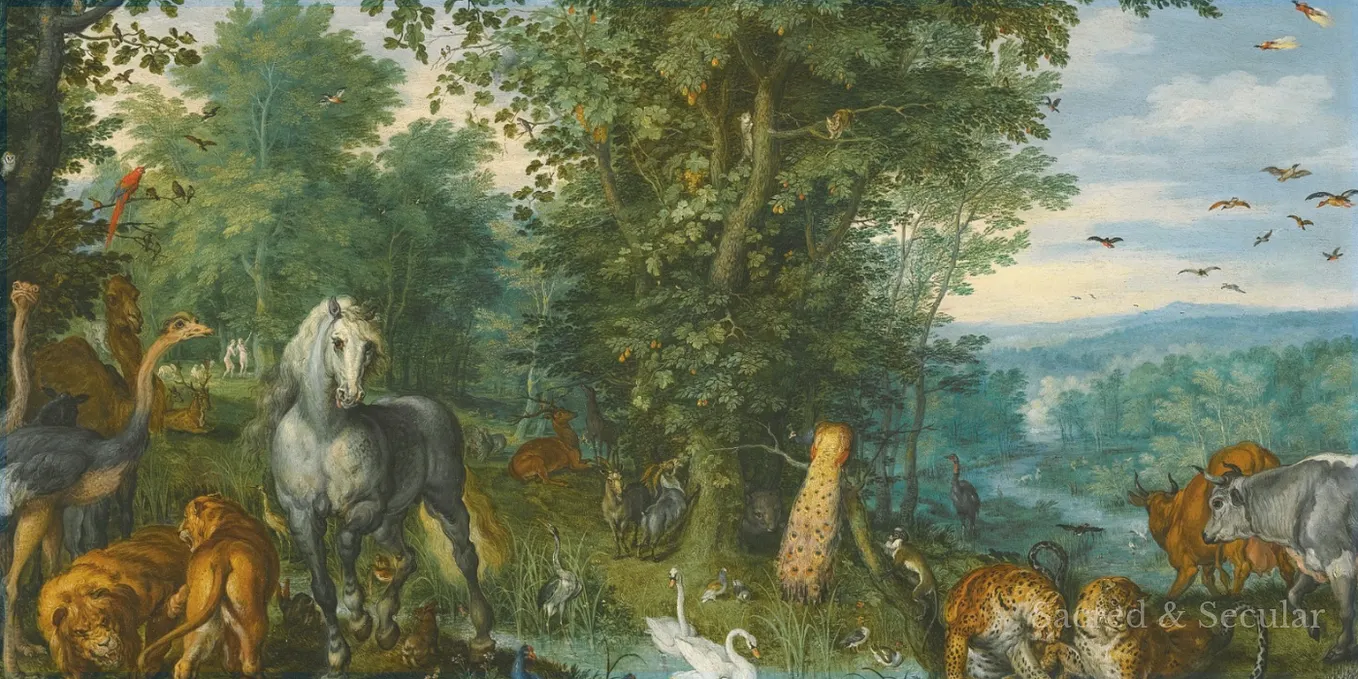
The second witness is the world around us. Look at the human body — its staggering complexity, its intricate systems. It strains belief to think it arose by pure accident. And the universe itself, governed by precise laws and filled with breathtaking order, bears the unmistakable mark of a Maker. Creation points beyond itself to a Creator.
The root of sin — ungodliness and unrighteousness
And yet, humanity looks at all of this evidence and turns away. Paul captures the human problem in two words: ungodliness and unrighteousness.
Ungodliness is knowing that God exists, yet refusing to honor him, give him thanks, or make room for him in our hearts — living as if he simply isn’t there. Unrighteousness is what follows: having lost God as the center, humanity fractures in its relationships, in society, and in every corner of life.
“For although they knew God, they did not honor him as God or give thanks to him, but they became futile in their thinking, and their foolish hearts were darkened. Claiming to be wise, they became fools.” (Romans 1:21–22)
Imagine someone who lavished you with extraordinary gifts, and you never once said thank you — never acknowledged them, acted as if they didn’t exist. That would be deeply wrong. But what humanity does to God is infinitely more serious. He fashioned this entire world for us. He breathed life into us. And we look him in the face and say, “You don’t exist.”
A soul cut off from God doesn’t simply go neutral — it fills the void with something else. Paul calls these things idols. They don’t have to be carved from stone. Money, status, sex, fame, approval — anything we love more than God becomes an idol. And idolatry does not stay contained. It spreads, corrupts, and leads to a darkness that Paul describes in vivid and painful detail throughout the rest of the chapter.
And yet — the gospel
If the story ended here, it would be a story of pure despair. But Paul’s letter does not end here. The God who is just in his wrath is also the God who is relentless in his love.
“For God so loved the world, that he gave his only Son, that whoever believes in him should not perish but have eternal life.” (John 3:16)
The judgment we deserved, Jesus took upon himself on the cross. The death that was ours, he died in our place. And through his resurrection, he defeated death entirely. Whoever receives him in faith — confessing their sin, trusting in his mercy — is forgiven, freed, and given life that will never end. The sinner becomes a child of God. That is grace.
Paul did not open with wrath to frighten us into submission. He opened with wrath because we cannot truly understand grace without first understanding what we have been saved from. The deeper we grasp the darkness we were in, the more astonishing the light of the cross becomes. This is why the gospel is called good news — not because it flatters us, but because it finds us exactly where we are and refuses to leave us there.
Closing Prayer: Gracious and loving Lord, thank you for this time to look honestly at our sin — to see that without you, we are lost, darkened, and without hope. We cannot save ourselves. We need the grace of Jesus Christ. Pour out your Spirit. Work through your Word. May every person reading this come to see their need, turn to Christ in faith, and know the joy of salvation. And for those whose faith has grown cold, may the love of the Father and the grace of the Son come alive again in their hearts. In the name of Jesus Christ, our Lord. Amen.