Ideal Features of an AI Voice Agent

Salesforce is only as useful as the data inside it. When calls go unlogged, qualification differs from rep to rep, and follow-ups slip, opportunities stall before they reach the right person. An AI voice agent can close that gap, but only if it does far more than pick up the phone. Here are the features that separate a basic call bot from a genuinely useful sales teammate, using Salesforce as the example.
The Problems a Great Voice Agent Must Solve
Teams without a well-connected voice agent keep running into the same six issues:
- Inbound calls aren’t fully captured, so important information gets lost in notes.
- Lead qualification is inconsistent, because different reps ask different questions and score leads differently.
- CRM hygiene suffers, with leads sitting unqualified or holding partial information.
- Follow-up is delayed, because reps lack context fast enough.
- Slow manual intake reduces conversion as prospects lose momentum in queues.
- High-intent leads need real-time routing and won’t wait for a callback.
Every feature below exists to fix one or more of these.
1. Consistent Lead Qualification
The ideal agent asks the right qualification questions on every call, capturing details such as need, timeline, budget and fit. It then routes only the best-fit leads to the correct rep or queue. Because every conversation follows the same logic, pipelines become comparable and easier to trust.
2. Structured CRM Capture
A transcript sitting in a folder isn’t enough. The agent should write structured customer responses, intent scores, notes and status updates directly into Salesforce. That means updating fields, creating contacts, adding tasks and logging notes, with calls, lead data and statuses mapped into the correct objects and fields. Reps never re-enter anything by hand.
3. Intelligent Routing
Speed matters most for high-intent leads. Look for an agent that sends the right lead to the right owner or territory based on deal type, region, score or qualification rules, for both new and existing leads. Assignment, queueing and workflow rules built around Salesforce keep lead continuity intact, so hot prospects move in real time instead of waiting for a callback.
4. Automated Follow-Up
A good conversation should never end in a dead stop. The agent should trigger reminders, nurture flows and callback campaigns after each call, based on lead status and engagement. Call outcomes should sync to tasks, assignment rules and next-step actions automatically, so high-intent opportunities advance quickly while others receive the right follow-up cadence.
Get Parkerfelix’s stories in your inbox
Join Medium for free to get updates from this writer.
5. Insights and Reporting
Every call is also a source of intelligence. The best agents help you track how conversations convert, which objections matter most and how lead quality changes over time. Instead of guessing why deals stall, managers can see patterns and adjust scripts, campaigns and qualification rules.
6. Human Handoff
Automation shouldn’t mean abandoning complex or high-value prospects. When a conversation needs a person, the agent should escalate it with full call context and a qualification summary already in the record. The rep picks up where the AI left off, with no repeated questions and no lost momentum.
The Always-On Basics
Beyond the six core capabilities, a few foundations make an agent practical day to day:
- Natural conversation in 40+ languages, so callers are understood in the language they prefer.
- Inbound and outbound calling, including outreach based on a Salesforce list, campaign or segment.
- Auto-scheduling and 24/7 booking, with meetings and appointments synced back to Salesforce without manual admin.
- Knowledge: your business rules, product information and objection handling, so answers stay useful and accurate.
What the Workflow Should Look Like
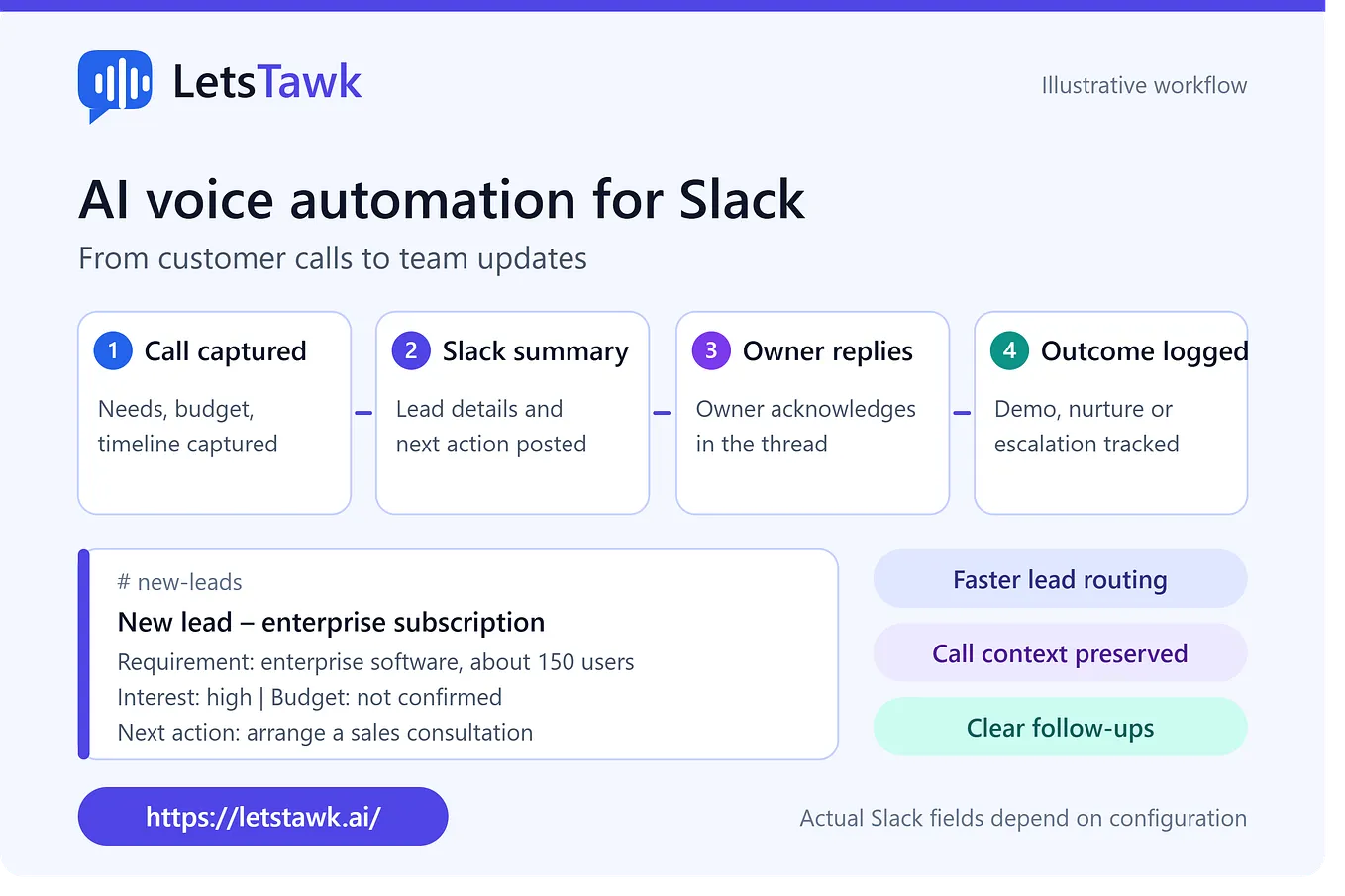
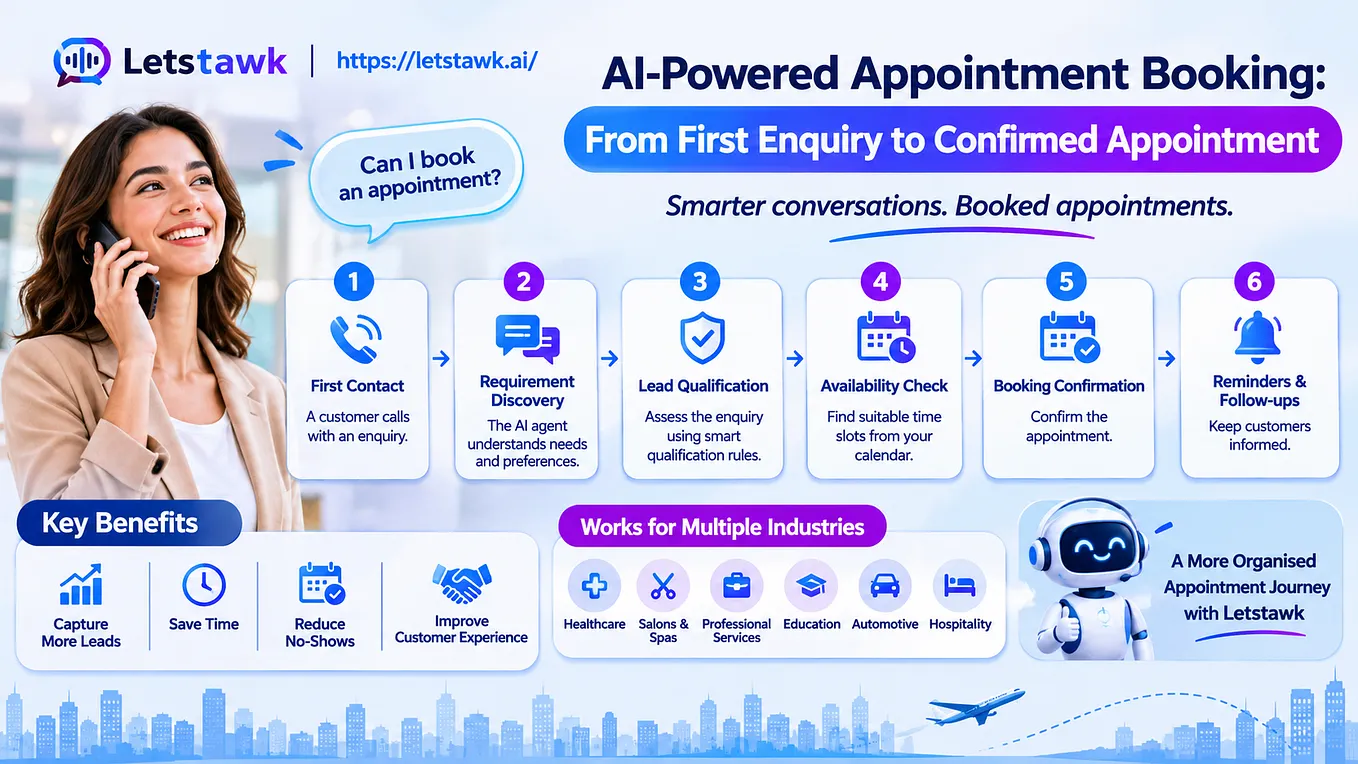
A well-designed flow runs in six steps. A lead calls in, or the AI initiates outreach. The agent asks qualification questions. The conversation is scored and categorised by lead type, stage or interest. Notes, data points and next actions are written back to Salesforce automatically. The lead is routed to the right owner. Finally, high-intent opportunities move to the next sales step while others are nurtured. All of it happens in real time, with no manual re-entry.
What You Gain
When these features come together, sales teams typically see:
- Cleaner lead data that is immediately actionable
- Faster response times, so prospects never wait long
- Better routing by geography, intent or qualification category
- Less manual admin after each call
- A more reliable process, with standardised conversations and fewer missed steps
- Flexible workflows adapted to your pipeline stages and campaign rules
The platform is especially valuable for teams with high lead volumes, where manual intake and follow-up are hardest to scale.
Try Letstawk
If your reps spend more time updating Salesforce than talking to prospects, Letstawk can change that. Its AI voice agent captures every inbound and outbound conversation, qualifies leads consistently and keeps your CRM clean and current, so your team can focus on closing. Visit letstawk.ai, request a demo and see how much faster every lead can move.