Why One I Ching Reading Can Contain Two Hexagrams


A single I Ching reading can show two hexagrams. If you are new to the method, that can sound like two answers: one pattern first, another after it, with a changing line somewhere in between. The labels create a false sense of sequence. The second pattern is not another event.
This story was developed with AI assistance. Its factual claims and product mechanics were checked against the listed sources and the project’s records; it is not presented as traditional authority or a forecast.
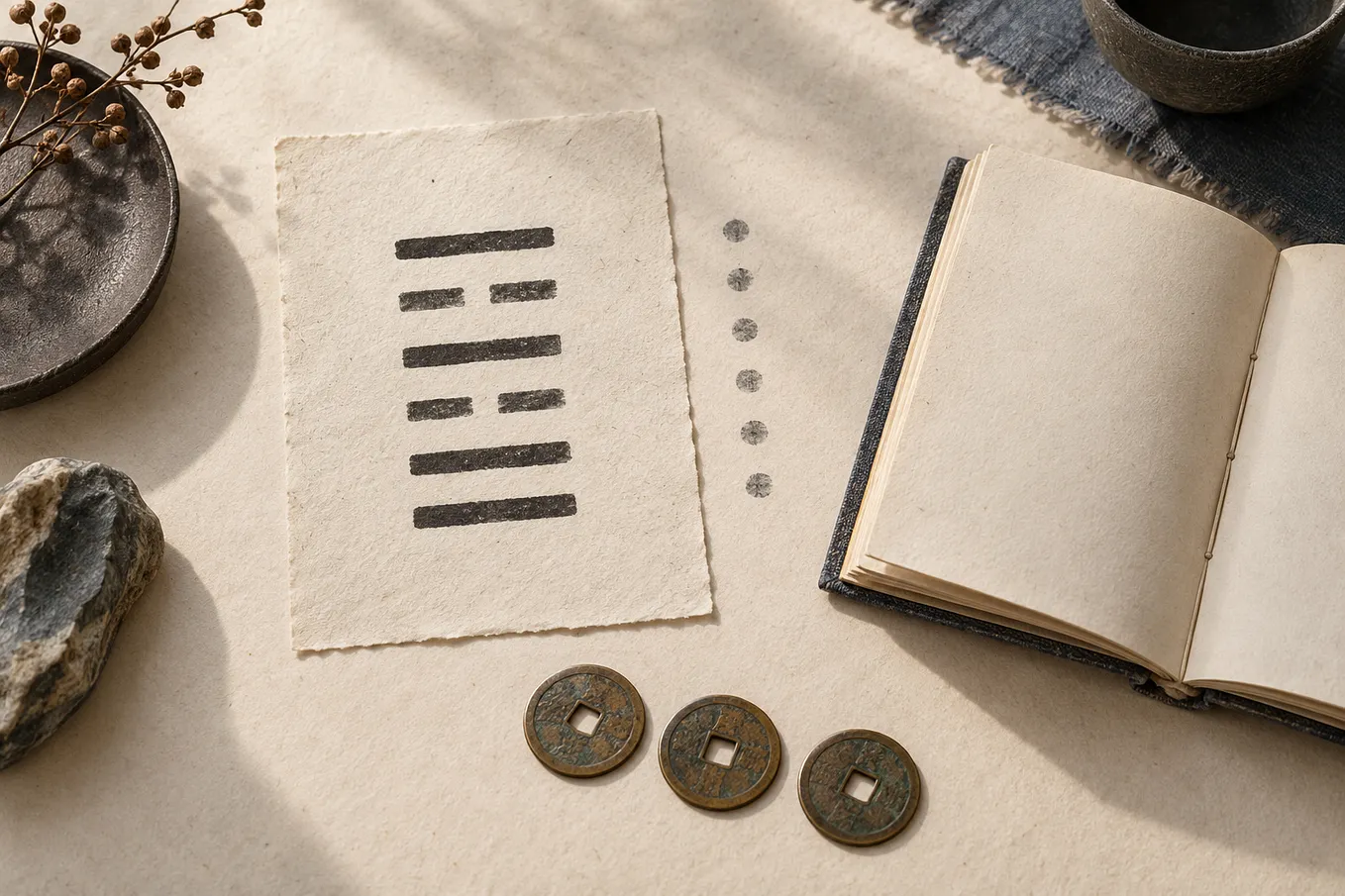
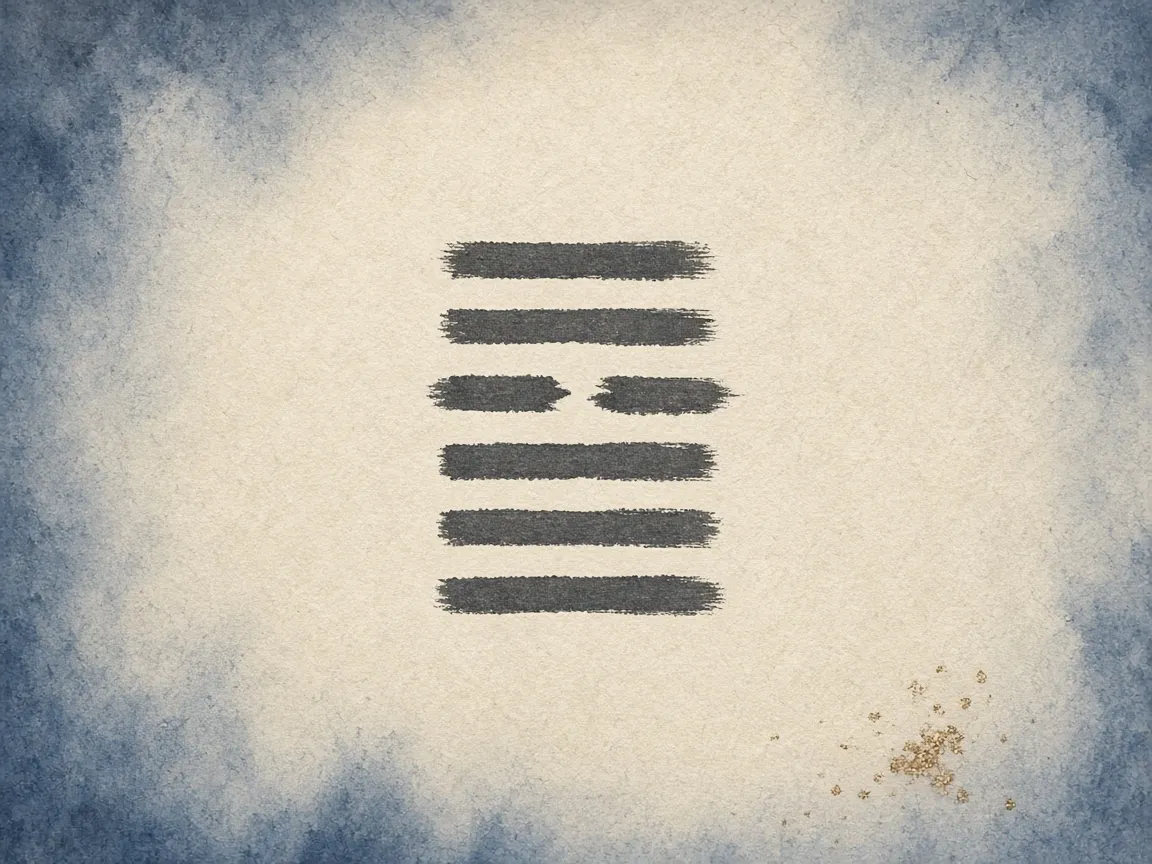
The simpler explanation is also the more useful one: one set of six coin casts can produce a Primary Hexagram and, when one or more lines change, a Relating Hexagram. The second pattern is not a second random draw. It comes from the first pattern, using the same recorded lines.
The useful design question is not how to make two patterns feel mysterious. It is whether the relationship between them remains inspectable. While building I Ching Reflection, that became a concrete constraint: zero, one, and several changing lines must stay visible as part of the same six-cast record.
Two names, one set of casts
The easiest way to see the relationship is to start with one cast.
With the three-coin method used here, each coin face is assigned a value of 2 or 3. Add the three values after every cast. The total can be 6, 7, 8, or 9:
- 6 — Old Yin, broken, changing: It turns into an unbroken line in the Relating Hexagram.
- 7 — Young Yang, unbroken, stable: It stays unbroken.
- 8 — Young Yin, broken, stable: It stays broken.
- 9 — Old Yang, unbroken, changing: It turns into a broken line in the Relating Hexagram.
The first cast is stored as the bottom line. The second goes above it, and so on until six positions are filled. Those six original line states form the Primary Hexagram. If the record contains a 6 or a 9, that line is marked as changing. Turning every changing line in its original position produces the Relating Hexagram.
Nothing has been drawn twice. The same six totals are being viewed in two related states: the pattern as cast, and the pattern after its changing lines turn.
A small calculation makes the relationship visible
Consider the totals [7, 7, 7, 7, 7, 9], recorded from bottom to top. The first six line states are all Yang, so the Primary Hexagram is number 1. Only the sixth line changes; turning it produces Relating Hexagram 43.
Now consider [6, 7, 8, 9, 8, 7], again from bottom to top. The Primary Hexagram is number 64. The first and fourth positions change, and turning both produces Relating Hexagram 41.
The numbers in these examples are identity labels, not ratings. They do not say that one result is fortunate, dangerous, urgent, or destined to happen. They show something more basic: the positions are part of the result. Change the order, or silently remove one changing line, and the calculation is no longer describing the same six casts.
The changing line has a place
A changing line is not an extra message placed beside the hexagram. It is one of the six lines in a particular position. It remains part of the Primary Hexagram, and that same position is transformed when the Relating Hexagram is calculated.
This matters most when several lines change. A reading can contain zero, one, or many changing lines. If several appear, the honest mechanical response is to keep them all. Different interpretive traditions may give them different weights, but choosing only the line that produces the most comfortable story changes the input.
Get Aoyi21’s stories in your inbox
Join Medium for free to get updates from this writer.
The product rule is deliberately narrow: preserve every changing position, transform them together, and make the structure inspectable. It does not claim that one modern reading order is the only historical method. It keeps a disagreement about interpretation separate from a mistake in recording the event.
Zero, one, or many
The number of changing lines changes the reading entry point, not the certainty of the outcome:
- Zero changing lines: Stay with the Primary Hexagram as the complete six-line pattern. There is no separate Relating Hexagram in this case.
- One changing line: Examine that exact position, then compare the related pattern created by turning it.
- Several changing lines: Preserve every position and ask what tension they create together. Do not turn “many” into “more serious,” “more powerful,” or “more accurate.”
These are ways to organize attention. They are not promises about relationships, health, money, work, safety, or anyone else’s private thoughts.
The design problem is preserving the relationship
While building I Ching Reflection, we wrote down a narrow contract for this exact question:
- Each click records one three-coin total in its actual position.
- The first cast sits at the bottom; the sixth sits at the top.
- After six casts, the Primary Hexagram, every changing position, and the Relating Hexagram are derived from that saved record.
- The optional question, the explanation, and the card can change the angle of reflection, but none of them can choose a line.
That contract gives the second hexagram a precise status: it is a derived view of recorded data, not another selection. If an app shows two patterns, the useful check is simple: can you trace both back to the same six positions, including every changing line?
This is why structure matters more than presentation. The screen may use color, motion, or a card to explain the result. Those elements can make a relationship easier to see, but they cannot become a second random event. Transparency does not remove mystery. It gives the mystery a stable object to meet.
What the two patterns are for
A fixed record does not make interpretation objective. It gives interpretation a common starting point. The Primary Hexagram preserves the original configuration. The Relating Hexagram makes the recorded changes visible. Neither one has to be turned into a verdict.
The practical question is therefore modest: What does the original pattern help me notice? What do the changing positions put under pressure? What does the related pattern help me compare? And what can I still check in ordinary life before acting?
When several lines change, do not select the one that makes the most comfortable story. Keep the full set, then decide which observations are relevant, which are uncertain, and which action is reversible. That is a reading discipline, not a promise of certainty.
A reading is not a forecast
I Ching, Yijing, and Book of Changes refer to a Chinese classical tradition with many historical layers and interpretive approaches. This article uses its six-line structure as a way to inspect change, pressure, context, and possible action. It is not a complete history, and this product’s transparent method is not presented as the only traditional method.
“Relating” is a safer name than “Future.” The second pattern can help a reader compare a situation with the movement already encoded in the cast. It does not guarantee that the pattern will occur, assign a date to it, or reveal a hidden fact.
A reading cannot read another person’s private mind. It cannot replace medical, legal, financial, or safety evidence. It can offer a symbolic prompt; the decision remains in the world, where consequences can be observed and revised.
A compact way to read two hexagrams
If you want a simple, transparent sequence, keep these five steps together:
- Record six three-coin totals in order, with the first cast at the bottom.
- Build the Primary Hexagram from the six original line states.
- Mark every total of 6 or 9 as changing. Do not move or delete a changing line.
- Turn all changing lines in place to derive the Relating Hexagram, if at least one line changes.
- Ask what the original pattern, the changing positions, and the related pattern help you observe. Treat the result as a prompt for reflection, not a command about the future.
The point is not to turn a symbolic practice into a spreadsheet. The point is to know which part came from the coins, which part came from interpretation, and which part is still yours to decide.
One event, two related patterns
The surprise is not that one reading can contain two hexagrams. It is that both can come from one disciplined event.
Six casts establish the structure. Changing lines show where the structure is in motion. The Relating Hexagram gives a second view of those same changes. None of that requires a second answer, a hidden selection, or a promise about what comes next.
If you want to inspect the mechanics visually, I Ching Reflection’s guide to changing lines lays out the Primary Hexagram, changing positions, and Relating Hexagram in one place. The guide opens outside Medium; the explanation above is meant to stand on its own.