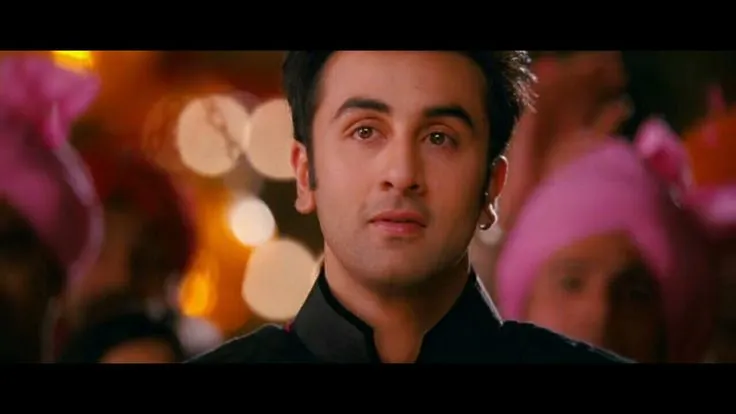
Finding the Rainbow in the “Badranga”: The Real, Painful Meaning of “Satranga”


When you first hear “Satranga,” Arijit Singh’s voice and that epic melody feel like a grand, sweeping romance. It’s the kind of song that makes you want to fall in love.
Most of us hear it and think it’s a “Satranga” (seven-colored) song about a perfect, vibrant, rainbow-like love.
But I was listening all wrong.
The real lyrics, written by the brilliant Siddharth-Garima for the film Animal, don’t tell a story of a perfect romance. They tell the story of a love that is painful, obsessive, and built on finding beauty in the ugliest parts of a relationship. Let’s break down the hidden meaning of “Satranga.”
The “Ride or Die” Vow
Before we even get to the song, picture this real-world scenario.
You have that one person. The one you’d do anything for. I don’t just mean “I’ll pick you up from the airport.” I mean, “If someone has a problem with you, they have a problem with me.” It’s that “ride or die” promise.
Now, imagine that promise becomes so all-consuming that you’re willing to take their wounds onto your own body. That you’ll make all their enemies your enemies. That you’ll happily burn in a fire with them, just to be by their side.
That is the terrifying, obsessive devotion at the heart of “Satranga.”
Part 1: The Vow of Worship
The song doesn’t begin with two equals. It begins with total, complete surrender.
Jogi mein aur ganga hai yeh ishq re (This love is the ascetic (Jogi), and I am the Ganges (Ganga))
This is the most important metaphor. A Jogi is an ascetic who has renounced the entire world. The holy Ganga river washes away the sins of everyone who comes to it.
He is not her partner; he is her holy river. He’s saying, “You can renounce the world, be flawed, and sin. I will be the one to wash it all away. I exist to purify you.”
He then doubles down on this worship:
Maathe se laga loon haath , Chuke mein pair tere (I’ll touch your feet And put my hands to my forehead)
This is a profound sign of respect and devotion in Indian culture. He is placing himself at her feet. This is his pledge.
Part 2: The Vow of “Blood”
This is where the song turns from devotion to a dark, obsessive promise, setting up the entire Animal theme.
Ho Rakh loon mein tan pe zakhm , Bana saare bair tere (I will keep your wounds on my body) (I will make all your enemies my own)
This is the “ride or die” vow, taken to its most extreme. He is not just offering to support her; he is offering to bleed for her. He is absorbing her pain and her battles, making them his own.
Get Piyush Pritam Sethi’s stories in your inbox
Join Medium for free to get updates from this writer.
This is why the song later asks the haunting question:
kyu lahoon mein ranga hai yeh ishq re (Why is this love colored in blood?)
Because he willed it to be. He chose to take on the “zakhm” (wounds) and “bair” (enmity).
Part 3: The Burnt and Broken Reality
Is this a happy relationship? Absolutely not. The lyrics tell us it’s all falling apart.
jo phere sang laage rakhte woh humko jala ke (The [wedding] vows we took together) (They keep us burning)
The “phere” — the sacred wedding vows — are not a source of comfort. They are a fire that is literally burning them alive.
woh vadhe jhoote vaade le jaa tu kasamein laga ke (Those promises, false promises) (Take them away, along with your oaths)
It’s all built on lies. The relationship is broken. He’s begging her to take back her “jhoote vaade” (false promises).
Part 4: The Final, Heartbreaking Truth
So if the love is bloody, burning, and broken… why stay? The song’s most famous line gives us the devastating answer.
Badranga mein Satranga hai yeh ishq re (In the ‘bad-colored’ (ugly), there is a ‘seven-colored’ (rainbow) in this love)
This is the entire meaning of the song.
He’s not saying their love is a “Satranga” (a perfect rainbow). He’s saying that within the “Badranga” (the ugly, bad-colored, bloody, painful, burning parts), he still finds his “Satranga.”
He has found a twisted, beautiful rainbow inside the damage.
This is why the song ends on such a painful paradox:
Mann matam aur zinda hai yeh ishq re (This love is mourning in my heart, and yet it is alive)
He is grieving this love while he’s still in it. It’s a “matam” (mourning), but it’s “zinda” (alive).
My Final Thought
“Satranga” is not a simple rainbow love song. It’s a tragic anthem of obsession. It’s about a man who loves someone so much that he’s willing to worship them, bleed for them, and burn alive with them… all while knowing it’s built on lies.
He’s not just loving her despite the flaws; he’s found his entire world in those flaws.
My question for you is: Is this kind of all-consuming, “Badranga” love the peak of romance, or is it just the deepest tragedy? Let me know what you think in the comments.