Learning from Normal Work: Moving Beyond Incidents to Map Operational Reality
Why waiting for incidents captures only 0.1% of operational truth, and how studying daily execution reveals the systemic friction, adaptability, and resilience that keep high-hazard assets safe.


From the Editor: In high-hazard industrial environments, traditional safety management spends almost all of its investigative energy analyzing the tiny fraction of time when things go wrong. Yet, operational resilience is built during the 99.9% of time when work goes right. Understanding how frontline teams successfully navigate daily system friction requires continuous operational visibility. To explore how forward-thinking enterprises capture real-time frontline insights during routine operations, we invite you to learn about the digital workflow solutions developed by Tekmon. [Schedule a 15-Minute Intro Call with Tekmon Here]
Executive Summary: The Blind Spot of Incident-Centric Governance
For decades, industrial safety management has operated under a fundamentally reactive paradigm. Organizations deploy extensive resources to investigate accidents, near-misses, and equipment failures. Root cause analysis teams dissect the events leading up to a failure, generate detailed reports, and issue corrective actions designed to prevent that specific sequence of events from recurring.
While thorough incident investigations are necessary, relying on them as the primary source of operational intelligence creates a profound strategic blind spot.
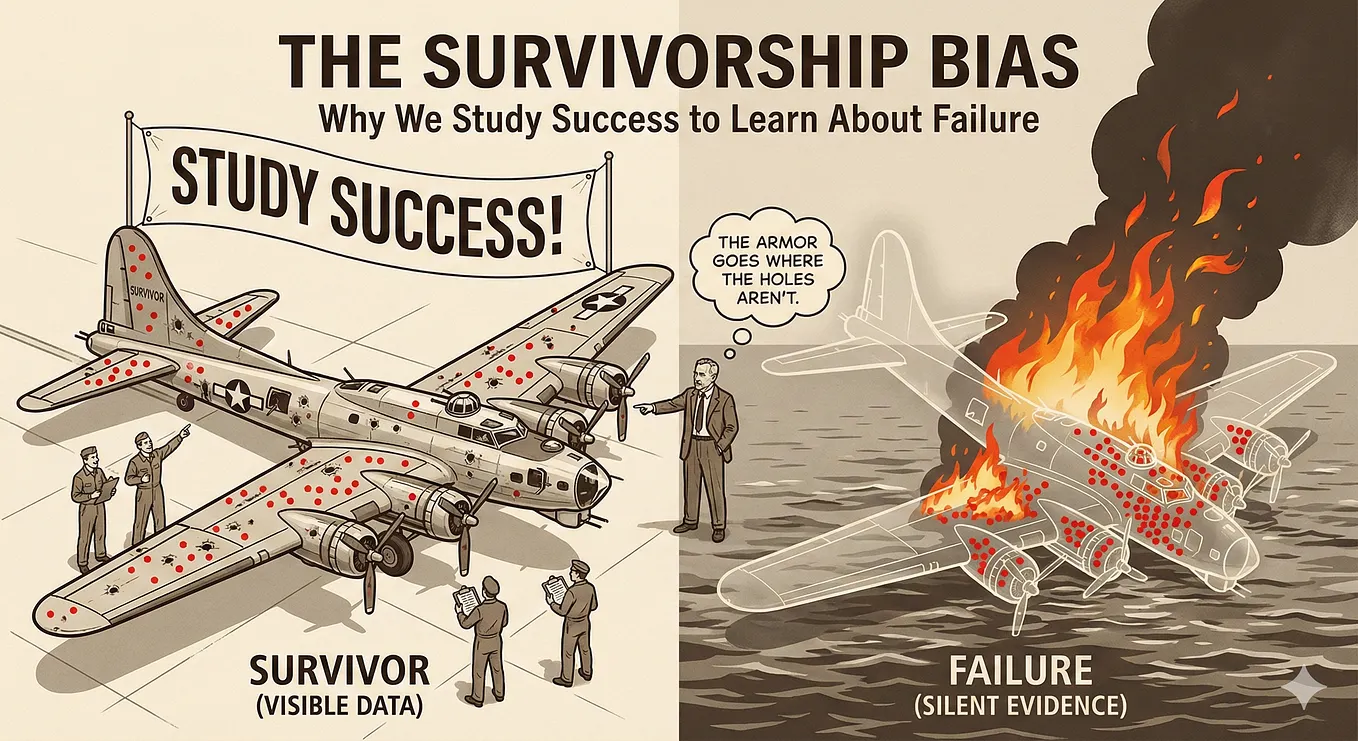
In modern high-reliability organizations, adverse events represent less than 0.1% of total operating hours. When executive leadership evaluates organizational risk based solely on what happens during an incident, they are examining an extraordinary statistical outlier.
This approach overlooks the fundamental truth of industrial operations: Safety is not merely the absence of incidents; it is the presence of adaptive capacity.
Every single day, frontline workers execute thousands of complex tasks amidst fluctuating ambient conditions, delayed maintenance parts, minor system glitches, and competing production pressures. They make hundreds of micro-adjustments to ensure that work is completed successfully and safely.
This daily execution — known in Human and Organizational Performance (HOP) principles as Normal Work — contains the true blueprint of an organization’s operational health.
This strategic briefing analyzes why waiting for failures limits organizational learning, examines the structural gap between procedure and practice, and provides an executive framework for mapping operational reality through continuous frontline engagement.
SECTION 1: THE INCIDENT BIAS (WHY WAITING FOR FAILURE IS TOO LATE)
The traditional approach to safety management rests on the implicit assumption that success and failure are fundamentally different outcomes produced by entirely different processes:
- Failure is assumed to be caused by human error, broken equipment, or procedural non-compliance.
- Success is assumed to occur automatically whenever workers strictly follow established procedures.
Modern resilience engineering has demonstrated that this distinction is flawed. In complex, dynamic industrial environments, the daily activities that result in successful production are virtually identical to the activities that occasionally result in an incident. The difference in outcome is frequently determined by minor variations in context, timing, or environmental factors.
The Limitations of Retrospective Analysis
When an organization investigates an incident after the fact, it suffers from Hindsight Bias. Investigators look back at a known outcome and reconstruct a narrative of cause and effect. With full knowledge of what went wrong, decisions made by frontline operators before the event can appear careless or irrational.
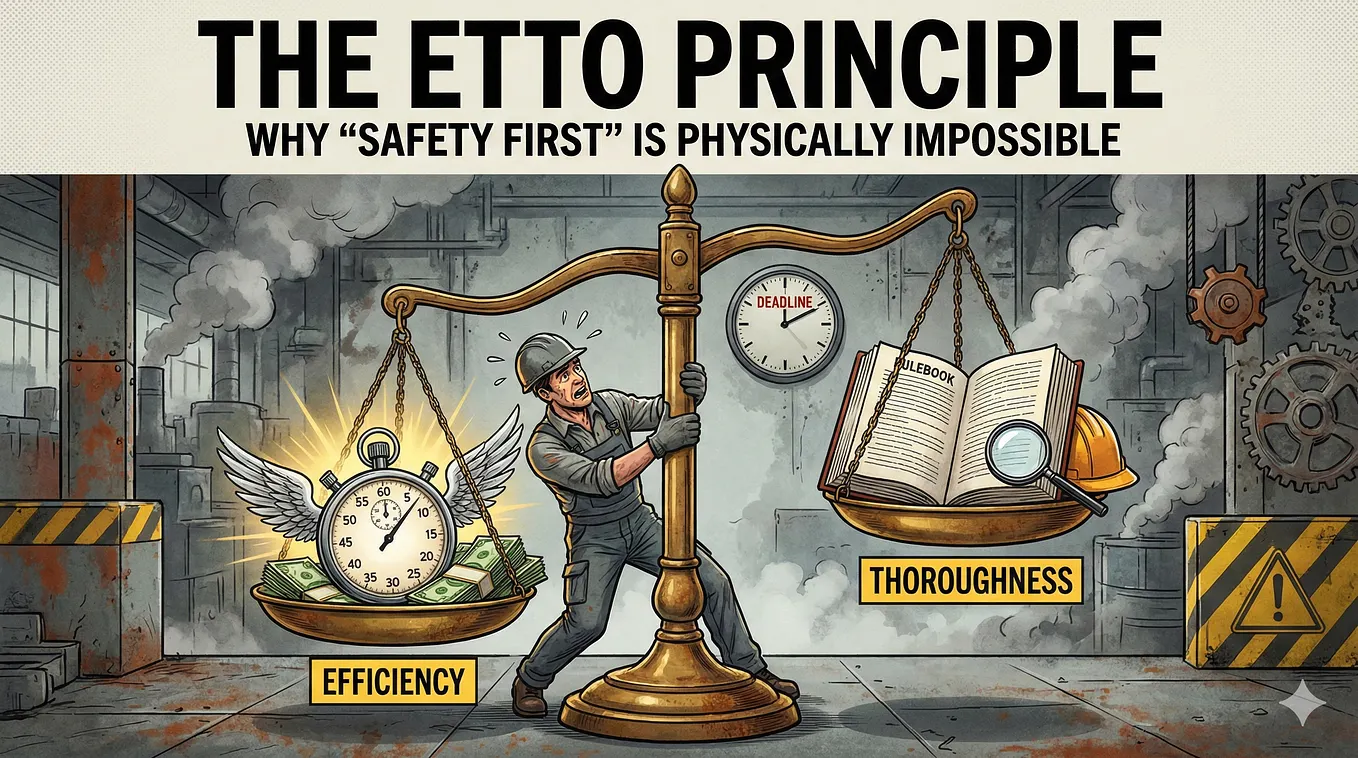
However, during normal work — before an incident occurs — operators do not have the benefit of hindsight. They are navigating dynamic trade-offs between safety, efficiency, quality, and time in real time.
By focusing exclusively on incidents, management misses the opportunity to identify systemic friction points — such as poorly designed tools, conflicting instructions, or awkward physical layouts — that workers accommodate every day until an unexpected change causes the system to fail.
Transitioning from a reactive to a proactive operating model requires studying how work succeeds under normal conditions, rather than waiting for a barrier failure to force an investigation.
SECTION 2: WORK-AS-IMAGINED VS. WORK-AS-DONE
At the center of learning from normal work is the distinction between how work is planned and how it is actually performed in the field:
- Work-as-Imagined (WAI): The formal policies, standard operating procedures (SOPs), engineering drawings, and risk assessments created by engineers, managers, and corporate safety specialists.
- Work-as-Done (WAD): The practical, adaptive execution of those procedures by frontline technicians facing physical constraints, weather variations, tool availability, and time pressures on shift.
In every industrial facility, a gap exists between Work-as-Imagined and Work-as-Done. This gap is not inherently evidence of poor discipline or negligence; it is an inevitable consequence of managing complex physical systems that cannot be fully anticipated in an office setting.
Operational Drift and Worker Adaptations
When a procedure is written without accounting for field realities, workers develop informal adaptations to bridge the gap. For example:
- If an isolation valve is located in an awkwardly high position requiring a ladder, technicians may find alternative ways to verify isolation rather than delaying a maintenance window.
- If a digital system requires duplicate data entry across multiple screens, operators may streamline their reporting habits to focus on immediate physical tasks.
Over time, these informal adaptations become the baseline norm — a process known as Operational Drift.
If leadership remains unaware of this drift, they operate under the dangerous illusion that the facility is running exactly as described in written SOPs. When an incident eventually occurs, management is often surprised to discover that the written procedure had not been followed in practice for months or years.
Proactive organizations do not punish operational drift; they seek to understand why it occurs. They actively map Work-as-Done to align written procedures with practical, safe field execution.
SECTION 3: MAPPING OPERATIONAL REALITY THROUGH CONTINUOUS FEEDBACK
To understand normal work, management must establish mechanisms that capture honest, unvarnished operational intelligence from the frontline without creating friction or fear of disciplinary action.
Relying on annual surveys or periodic formal audits is insufficient, as these traditional tools capture static compliance rather than daily operational reality.
Get The QHSE Standard’s stories in your inbox
Join Medium for free to get updates from this writer.
This is where Tekmon provides an essential digital layer.
Tekmon’s digital frontline platform enables organizations to bridge the gap between corporate procedures and field execution by integrating continuous feedback directly into daily mobile workflows.
Rather than waiting for an incident report, Tekmon allows frontline teams to highlight operational friction, procedural gaps, and tool limitations as part of their routine work tasks.
Here is how real-time frontline connectivity enables learning from normal work:
1. Context-Aware Task Feedback
When operators complete a digital checklist, permit, or maintenance routine using Tekmon on their mobile devices, they can instantly flag procedural ambiguities or physical obstacles at the exact moment of execution. This captures immediate, contextual intelligence rather than relying on delayed memory during a monthly meeting.
2. Frictionless Anomaly and Weak-Signal Capture
If a technician encounters an awkward tool, a misaligned valve tag, or an impractical step in an SOP, Tekmon enables them to capture a photo, add a brief voice-to-text note, and submit the feedback in seconds. By removing administrative burden, the system encourages workers to share weak signals that would otherwise remain invisible to leadership.
3. Real-Time Operational Trend Mapping
Tekmon aggregates frontline feedback into real-time operational dashboards. Site leadership can observe patterns of operational friction across specific assets, shifts, or departments, allowing process safety engineers to refine procedures and equipment before minor friction accumulates into an incident.
4. Closing the Operational Loop
When workers see that their feedback directly results in procedural updates or tool improvements, organizational trust expands. Tekmon ensures that field inputs are tracked through to resolution, reinforcing a culture where transparency is valued and operational reality is continuously improved.
SECTION 4: THE EXECUTIVE PLAYBOOK FOR LEARNING FROM NORMAL WORK
Transitioning an organization from incident-driven safety to normal-work learning requires intentional leadership and structured operational habits.
Executive leaders can implement the following strategic principles to map operational reality across their enterprise:
Principle 1: Sponsor “Learning Teams” on Routine Tasks
Establish structured, small-group sessions — known as Learning Teams — focused on routine, high-hazard, or frequent tasks. Bring together operators, maintenance technicians, process engineers, and supervisors to discuss how work is actually performed. Ask open-ended questions:
- “Where does this procedure slow you down?”
- “What tools or equipment require workarounds to function properly?”
- “What is the most frustrating aspect of executing this task on night shift?”
Principle 2: Audit Procedures Against Field Execution
Mandate that process engineers and safety specialists periodically conduct procedure reviews directly alongside frontline operators in the field. Instead of evaluating whether the operator matches the paper, evaluate whether the paper accurately reflects the safest, most efficient physical way to perform the job.
Principle 3: Measure “Operational Friction” Instead of Compliance
Shift executive metrics from tracking administrative compliance to measuring operational friction. Track metrics such as:
- The number of procedural improvement suggestions submitted by field technicians.
- The average resolution time for operator-identified equipment workarounds
- The alignment score between written SOPs and field-verified practices.
Principle 4: Treat Workarounds as Systemic Signals
When an informal workaround or procedural bypass is discovered, resist the temptation to attribute it immediately to worker negligence. Treat the workaround as valuable data signaling that the system, tool, or procedure is poorly designed for field conditions. Fix the underlying systemic issue first.
Conclusion: The Path to True Operational Resilience
An industrial enterprise cannot achieve long-term resilience by focusing exclusively on its rare moments of failure.
While incident investigations reveal what happened during an exceptional event, learning from normal work reveals how safety, quality, and production are successfully sustained every single day.
By recognizing the natural gap between Work-as-Imagined and Work-as-Done, executive leaders can transform their organizations from reactive, compliance-focused entities into proactive, learning systems.
Empowering frontline teams with intuitive, mobile workflow tools — such as those developed by Tekmon — ensures that operational reality is continuously mapped, understood, and improved. When management listens to the frontline and aligns corporate systems with shop-floor reality, the enterprise builds a foundation of true, lasting operational resilience.
A Note for Operational Leaders: Understanding how normal work is performed requires technology that captures frontline intelligence without adding administrative burden. The team at Tekmon specializes in streamlining digital frontline workflows, enabling field teams to share real-time feedback, identify operational friction, and help leadership map true operational reality.
- To explore how Tekmon can support your organization’s transition to proactive operational learning, [Schedule a 15-Minute Intro Call with Tekmon Here].
- For leaders evaluating their broader technology architecture, visit [qhsetech.com], a curated directory built to help executive teams compare and select modern software platforms tailored to industrial operations.