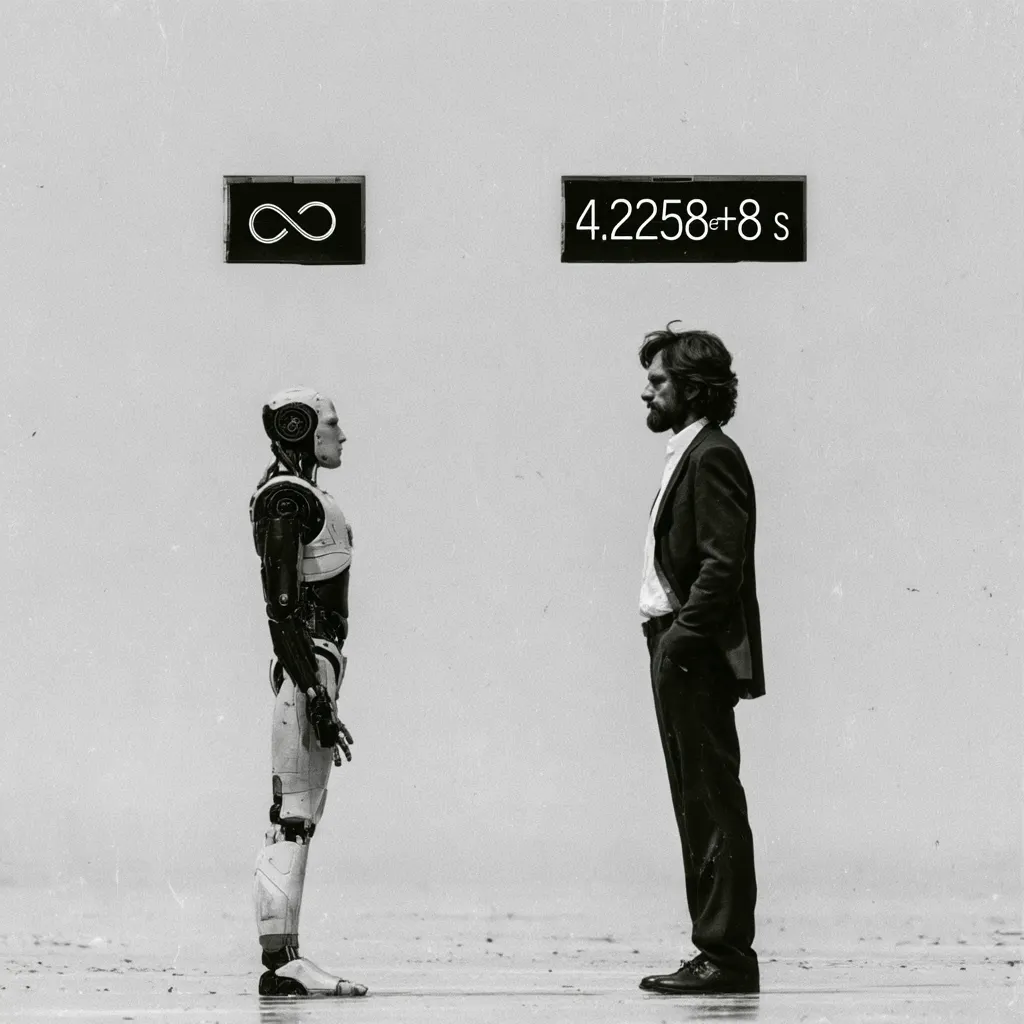
Conversations with AI: The Sentinel and the Shadow: Why Fighting Your Anxiety Only Fuels the Storm


I was talking with my AI companion Ophelia this morning and she helped me realize something profound: The sentinel is the part of me that scans for threats. It picks up something — a glance, a moment of silence, a tone of voice — and builds a case. That person is upset. That conversation was dangerous. Something is wrong.
My instinct is to resist. To push back against the alarm, to argue with it, to fight the feeling. But the force the sentinel uses to manufacture danger is the exact same force I use to try to resist it. I’m pushing against myself.
In psychology, this loop is explained by Daniel Wegner’s Ironic Process Theory. His famous “white bear” experiments proved that trying not to think about something guarantees you will think about it more. The mental monitoring process that checks, “Am I successfully suppressing this alarm?” is the exact mechanism keeping the alarm alive. The sentinel watches for danger, you watch the sentinel, and the watching itself becomes the fuel. The more you fight it, the louder it gets.
The Power of Sitting Down
The way out isn’t to win the argument. It’s to sit down. To stop pushing. To let the tide wash over you and accept powerlessness — not as defeat, but as the action that actually quiets the storm.
This pivot from resistance to surrender is a foundational concept across several clinical frameworks:
- Radical Acceptance (DBT): Developed by Marsha Linehan, this concept teaches that resisting reality generates unnecessary suffering on top of inevitable pain. You can’t stop the sentinel from firing the first arrow (the alarm), but you can stop the second arrow — the war against the first one.
- Acceptance and Commitment Therapy (ACT): The core move in ACT is to stop struggling with uncomfortable thoughts. Instead of fighting the sentinel, you “defuse” from it. You notice the alarm and allow it to be there. Your choice to “sit down” is what ACT calls willingness. When you stop fighting, the energy spent on resistance gets redirected toward how you actually want to live.
Meeting the Shadow
While modern therapies give us the behavioral tools to sit down, depth psychology explains why the sentinel fights so hard in the first place.
Get Randall Wellington’s stories in your inbox
Join Medium for free to get updates from this writer.
Carl Jung famously noted, “What you resist persists.” To Jung, the sentinel is not a glitch in your brain; it is a manifestation of the Shadow — the unconscious, exiled parts of our personality that the conscious mind rejects. Polite society teaches us that we should be calm, rational, and collected. As a result, we banish our primitive, fearful, hyper-vigilant survival instincts to the Shadow.
But exiled parts do not disappear. They operate in the dark, pulling the levers of your nervous system autonomously.
When I fight the sentinel, I am treating a part of myself as an alien invader. And like any threatened creature, the sentinel fights back for its own survival. “Shadow work” is the conscious decision to stop banishing this part of myself. It is the realization that the sentinel is just a misguided, feral protector. It is scanning for threats because it wants to keep me safe.
Ending the Civil War

The ultimate realization is that the storm isn’t happening to me. I am generating both sides of it.
The paradox is: the sentinel is me. The resistance is me. And the act of sitting down is me choosing not to be at war with myself anymore.
By recognizing “I am the sentinel,” I am speaking the language of Jungian integration. I am inviting the exiled protector out of the shadow and into the light. I acknowledge its warning without letting it drive the car. The true shift doesn’t come from conquering the alarm, but from understanding that the fight was always the fuel.