Kayaking in the Beardslee Islands, Glacier Bay, Alaska — Part I


(Note: another account of this trip was published in an earlier three-part story on Medium called “Paddling in Paradise.” That account has been deleted.)
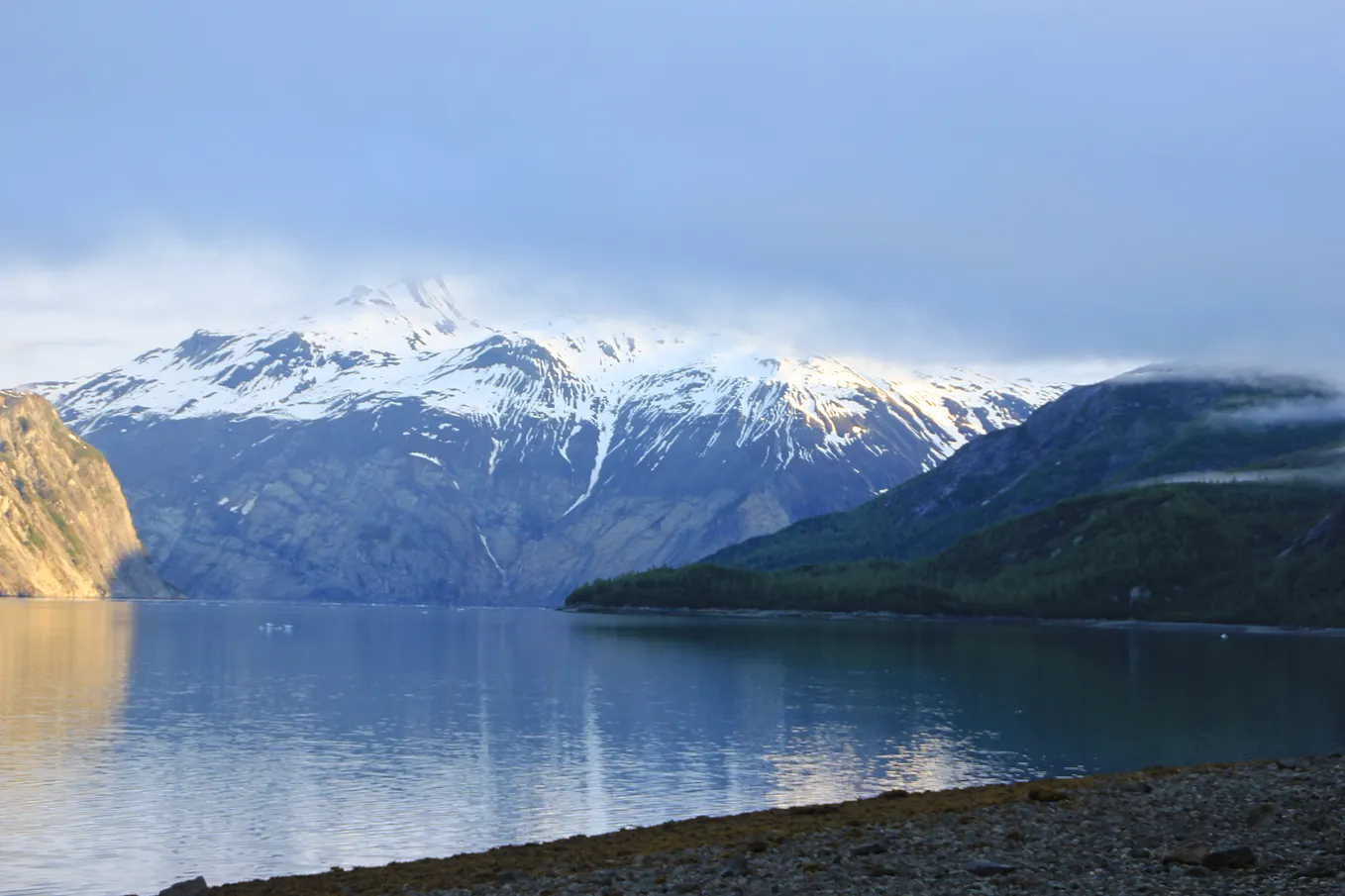
In 2013, to celebrate our 40th wedding anniversary, we (Maggie and Dick) treated ourselves to a kayaking and camping trip in the East Arm of Muir Inlet of Glacier Bay National Park. It was a glorious trip, though it challenged us in many ways. The experience was so great in terms of adventure, scenery, and wildlife that we decided to revisit Glacier Bay two years later to kayak the Beardslee Islands and Adams Inlet.
We flew to Gustavus from Juneau on Wings of Alaska. (Air Alaska also has a regular flight.) From there, it was a short van ride to the park’s headquarters on the shores of Glacier Bay. The night before our excursion, we stayed at the Glacier Bay Lodge, which is adjacent to the visitor center.
Before going into the backcountry of Glacier Bay, you have to attend the very helpful and informative orientation by one of the Park rangers. We also had a kayaking orientation from the wonderful folks at Glacier Bay Sea Kayaks (http://www.glacierbayseakayaks.com), from whom we were renting a double kayak and rain gear. What follows is our description of the trip from the first day we put into the Bay.
Day 1
The Beardslee Islands are close to the park’s headquarters, but to kayak into that area you must kayak through a narrow cut that forms a channel between Lester Island and the mainland. Because of all the silt that has been deposited by glaciers and because the land is rising due to the retreating glaciers, you can only kayak through the cut on a high tide of about 13 feet or more.
Looking toward the cut before high tide. As the tide rises a narrow channel appears that permits one to kayak into the Beardslee Islands
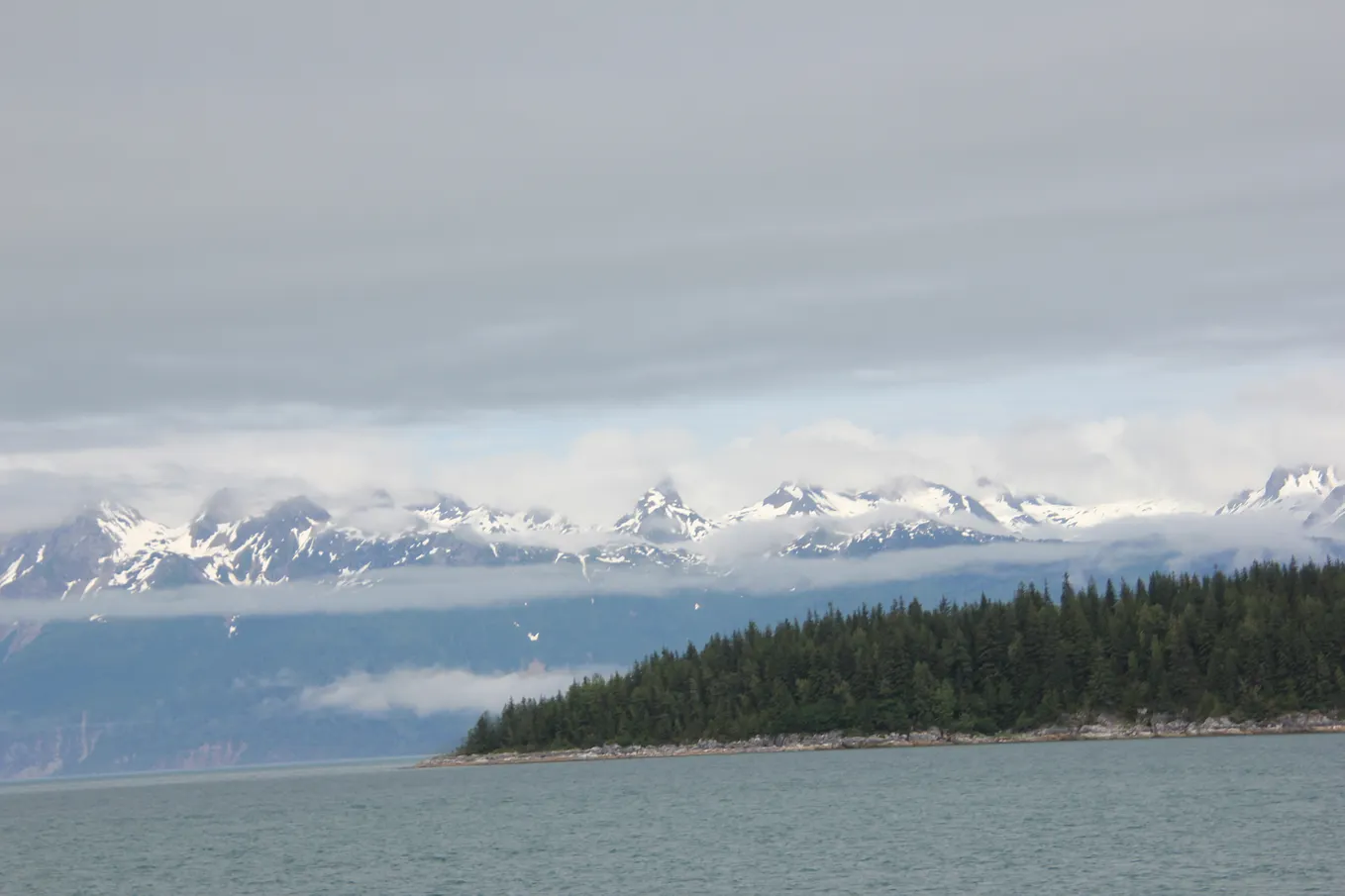
It was mid-afternoon as the channel opened and we began to kayak through the cut. Our destination was a beach on Kidney Island, where we planned to camp. We packed the kayak with everything we needed for the next 4 days and waited for the tide to rise. With the current rising and a wind at our back, we made good time through the cut and then to our first destination. During the 6 miles to our first camp we saw a sea otter and many sea birds, including a Loon, a Bufflehead, some Murrelets, Gulls, and a Bald Eagle. While in the Beardslee Islands, we were privileged to see abundant wildlife everyday.
When choosing a place to set up your tent and camp, you need to check the local tide tables (http://tidesandcurrents.noaa.gov/noaatidepredictions/NOAATidesFacade.jsp?Stationid=9452534) and also try to determine the highest recent tide mark on the beach. It would be disastrous for the high tide to swamp your tent and carry off your kayak in the middle of the night.
Because the difference between high and low tides can be 20 feet, our tent and the kayak next to it were placed high up on the beach. We placed our food and items with an odor in bear canisters about 200 feet from the tent. Cooking is done in the tidal zone.
When the overnight tide will be particularly high, you will probably wake up a few times to check the sea level. That night we did peek out of our tent a few times to see how close the tide was coming. The water came quite close before it began to ebb. Also, before you decide on a camping spot, you need to check for signs of recent bear activity, such as trails, bear prints, scat, and holes dug by a bear for a daybed.
Eating a meal in the wilderness is almost always a treat. You’ve worked hard, been exhilarated by incredible sights, and now you’re hungry. We had chosen our meals for taste and ease of preparation. We ate freeze-dried suppers, such as Louisiana rice and chicken, and instant soups. For breakfast, we had eggs, oatmeal, cocoa and coffee. Mostly we had to boil water and add it to the freeze-dried envelope, wait, and then enjoy a meal. Dick usually was in charge of cooking (i.e., boiling water) while Maggie determined what went where.
Dick enjoying morning coffee while we wait for scramble eggs to hydrate.
Day 2
To take advantage of the push from the tides, we made sure to be on our way by 8:00 AM. Our goal was to kayak among the western midrift islands of the Beardslees, head up to the channel leading to Beartrack Cove and then explore the Cove. We planned on then camping on an island back down in the channel.
We headed toward an island we had not seen the day before since it was only visible during low tide. Rounding it, we headed toward the midrift islands. On one of them, the Beardslee family had a fox farm, but you can’t see ruins there anymore. It was enjoyable kayaking among the islands. We headed north toward a cut between some of the islands that would lead us into Beartrack Cove. We had the GPS coordinates of the cut and seemed to be in the right place, but we never found the channel. It may have been that the tide was too low, or the maps were out of date. This is a land that is constantly changing. After kayaking into many dead-end coves, we decided to head over to Link Island to make our camp. In the Beardslees, you’re never too far from land.
Going to Link, we again saw many wild animals from the kayak, including a sea otter floating on its back.

A sea otter swimming among Kelp watches our passage.
Harbor porpoises and seals displayed their feeding techniques as we quietly made our way to a camping spot. One interesting behavior was seals charging up to the beach, possibly herding fish into the land to make it easier to catch them.

A sea porpoise feeding on the abundant resources in Glacier Bay
Get Richard Dieter’s stories in your inbox
Join Medium for free to get updates from this writer.
From our camp on Link Island, we heard the blow of a humpback whale. We could see it feeding in Hutchins Bay. It swam by Kidney Island, right across from our camp.

Looking from Link Island toward Hutchins Bay, we see the blow of a feeding humpback whale.

The humpback whale swam along the Kidney Island shore directly across form our tent
The air, sea and land were filled with many birds – a flying eagle, Murrelets, Buffleheads, gulls, and a pair of Oystercatchers landing on the beach.

Again a very high tide was predicted that night, so we placed our tent way up the beach.
Day 3
It was a more restful night, but we woke to discover that the low tide of -1 ft. meant we had to carry the kayak about twice the distance we carried it the night before to get to the water. When we got near the water, we began to sink into the mud, so we had to wait for the tide to rise to load the kayak and begin our day’s journey.
The channel we had kayaked the night before looked very different. The extreme low tide had exposed spits leading from our island and formerly submerged islands. Dick explored the spit and discovered moose tracks. Maggie was testing the mudflats near the kayak. Just then, she saw a grizzly bear dive into the water from Kidney Island and begin swimming toward the spit. We backed away towards our kayak and had our bear spray ready.
Grizzly bear swims toward our island searching for good feeding areas
Fortunately, our smell or movement let the bear know of our presence and it decided to swim back to Kidney Island and disappear into the woods. We were sorry to disturb the bear’s trip, but glad it didn’t choose to challenge us. It was a big bear.
The moose tracks on the spit indicated a moose had visited the exposed beach while we slept. White gulls landed on the mud flats to feed. Honking geese flew overhead. Although we were anxious to begin our day’s kayaking and adventure, we were able to experience so much of the wildlife of Glacier Bay from the beach.
When the water rose enough to finally pack the kayak, we began paddling over to Hutchins Bay. As we entered the Bay we saw a humpback whale feeding along the opposite shore. We also saw a pair of sea otters and a seal. We first kayaked up along the northern peninsula. Although the tide was rising, it felt as if we were kayaking against the current. This was because the tide headed up Hutchins Bay, met the end of the fjord and then was reflected back down.
One challenge to camping in the Beardslee Islands is the relative lack of places to find fresh water. We knew there was a stream entering the east side of the Bay so we landed on a beach and grabbed our filter to replenish our water. We thought we might camp there that night after exploring more of the Bay. While Maggie made sure the kayak was secure, Dick walked to the stream and discovered fresh paw prints of a large grizzly. Although we had found a delightful spot to camp that night, we decided we’d move on after filtering our cooking and drinking water. We always had our bear spray handy.
The hat shows the size of the grizzly prints next to the stream.r ew
Maggie snapped a picture of Dick using our MSR white gas stove. The food for our 8-day trip, everything with an odor, and all our trash fit in 3 bear containers (supplied by the Park).
Moving on from the stream, we kayaked across the cove to make camp. There were some old bear scat and a bear’s daybed dug in the beach, but all the signs of bear looked old. Our camp was at a lovely spot looking out into Hutchins Bay. When low tide came, we saw that a spit of land now cut off the cove from the Bay. We planned to leave the next morning before the next low tide would prevent our departure. Harbor porpoises and a seal swam in the waters off our campsite.
We had not planned on camping in the Bay, but because we had to change our plans when we couldn’t find the cut into Beartrack Cove, we had revised our schedule. As we experienced many times, changing plans meant unexpected but wonderful adventures. We had an enjoyable supper and evening in Hutchins Bay.
To go to Part II of this series, click https://medium.com/@rdieter/kayaking-in-the-beardslee-islands-glacier-bay-alaska-part-ii-070deb4bc3a0