A Critical Look At The Two World Creation-Systems Framework. (Part 1 Of 2).

Big Ideas, Bold Claims, And The Question Of Anti-Jewish Bias.
(Written By Rohan Palmer — Ai Assisted).

A Note on Terminology: The interpretive framework engaged throughout this essay series was developed under the name, The Two Kingdoms Framework. That name has since been retired in favor of The Two Creation-World Systems Framework, which more precisely reflects the framework’s core concern: the structural opposition between the Eden God’s original created order and the shadow-world’s governance system built upon it. All references in this essay use the updated designation.
I. What This Framework Is Actually Saying.
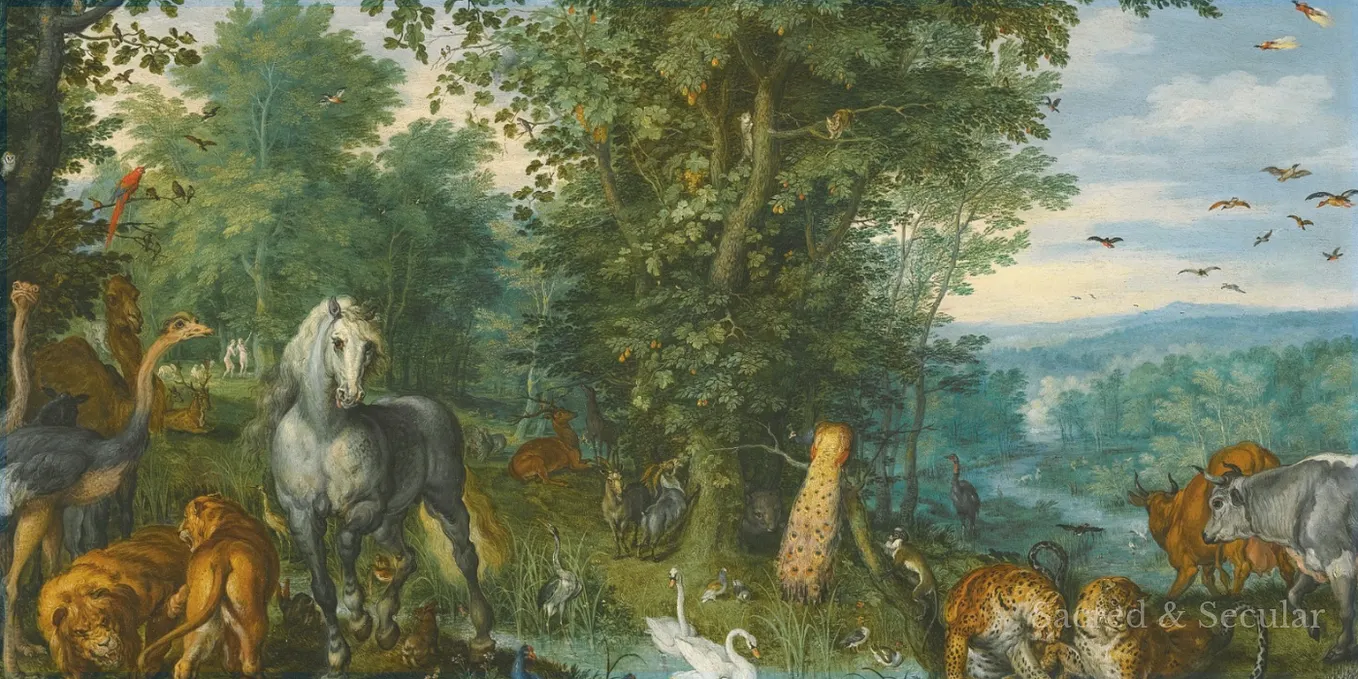
The Two World Creation-Systems Framework comes from two upcoming books written from a Messianic Jewish perspective. It’s one of the most ambitious theological projects to come out of that tradition in recent years. The basic idea is simple but surprising: Genesis 1 and Genesis 2–3 aren’t just different literary sources (which scholars have said for a long time). They actually present two different visions of ultimate reality — and possibly two different divine beings.
The God in Genesis 1 is called Elohim. He creates by speaking, gives freely, and rests when everything is complete. The figure in Genesis 2–3 is called YHWH Elohim (later just YHWH). He forms things from clay, gives prohibitions, questions people, and kicks them out of the garden. The framework calls these two “creation systems” and traces how their tension plays out through the rest of the Bible.
People who read this framework for the first time usually have two worries. First, is this reading actually defensible? Does it come from real textual evidence or is it reaching too far? Second, and more seriously, does this framework — especially when it talks about the Mosaic law, the Temple system, and the name YHWH — come across as anti-Jewish? Is it repeating the old Gnostic move of putting down the “Jewish God” to lift up a supposedly higher spiritual reality?
This essay takes both concerns seriously. A fair examination can’t just brush off the questions. We need to sit with them honestly, admit where the framework is genuinely vulnerable, and then show — carefully, on the framework’s own terms — why the anti-Jewish charge doesn’t stick.
II. What the Framework Gets Right.
Get Rpalmerusa’s stories in your inbox
Join Medium for free to get updates from this writer.
Before we get to the more speculative parts, we should recognize what the framework gets clearly right. Its intellectual credibility starts with paying real attention to the text.
The two-source idea is real and important. The Documentary Hypothesis — no matter how debated the details are — has been the mainstream view in academic Bible scholarship for over a hundred years. The observation that Genesis 1:1–2:3 and Genesis 2:4–3:24 use different divine names, describe creation in orders that don’t match up, and have strikingly different theological tones isn’t something the framework invented. It’s what every major research university and seminary teaches. The framework is right to say that smoothing over these differences — treating them as just style differences rather than meaningful theology — isn’t a neutral reading. It’s a choice, and one that requires ignoring what the text actually says.
Divine name differences matter theologically. The framework is on solid ground when it treats the shift from Elohim to YHWH Elohim to just YHWH as more than a literary accident. In the ancient Near East, divine names weren’t random labels. They carried theological weight — they showed the nature, character, and authority of the being named. Taking this distinction seriously isn’t innovation; it’s just basic attention to the text.
The two accounts really do show different characters. Account One’s Elohim is transcendent, effortless, and universally generous. Account Two’s YHWH Elohim is hands-on, reactive, and rules through prohibition. The framework correctly observes that this isn’t just a literary difference. It’s a theological one. The being who asks “Where are you?” in Genesis 3:9 doesn’t obviously seem like the same being who simply speaks light into existence in Genesis 1:3.
The unnamed seventh day is genuinely significant. The framework notes that the word “Shabbat” doesn’t appear in Genesis 1 or 2. It first shows up in Exodus 16:23, introduced as new information to the Israelites. This is textually verifiable and carries real interpretive weight. No patriarch in Genesis is ever recorded observing the Sabbath, being commanded about it, or being rebuked for failing to keep it. This isn’t a minor footnote. It’s a genuine puzzle that mainstream interpretation tends to gloss over rather than solve.
In all these ways, the framework does exactly what good critical theology should do, it takes the text more seriously than inherited harmonizing readings allow.
III. Where the Framework Is Vulnerable.
A critical look also has to admit where the framework overreaches or carries real risks.
The speculative parts are more central than the framework sometimes admits. The manuscripts are admirably clear about the three levels: textual observation, interpretive reading, and speculative theological proposal. But in practice, the speculative proposals — especially the idea that the Serpent might be connected to the being operating under the name YHWH in the post-Fall narrative — aren’t just side notes. They’re the engine of the framework’s most powerful claims. The framework’s honesty in flagging them as speculative is commendable, but readers should understand that the most provocative features of this reading don’t come from the scholarly consensus the framework rightly invokes. They come from a theological interpretation that goes well beyond it.
The covenant-transfer reading of the Fall is creative but not proven. The proposal that eating the fruit constituted a legally binding covenant transfer of humanity’s governing authority — carried out through free engagement with the Serpent’s offer — is theologically creative and makes sense within the framework’s larger logic. But the textual evidence it claims (the ancient Near Eastern significance of covenant meals, the legal weight of engaging with a covenant offer) is only genuine as analogy. Genesis 3 doesn’t use covenant vocabulary. Reading it as a covenant transfer is an interpretive move, however illuminating, not a plain discovery in the text.
The framework risks a kind of reverse supersessionism. By assigning the Mosaic law, the Temple economy, and much of Israel’s religious life to the administrative domain of the YHWH figure rather than to the Eden God of Account One, the framework implicitly creates a theological hierarchy where Second Temple Judaism — the great body of practice that Rabbinic Judaism comes from — is understood as a system of compliance management serving the wrong master. This is a radical claim, and it deserves more careful treatment than the framework currently gives it in the opening chapters. The framework’s stated commitment to the HaDerek (Messianic Jewish) tradition, and its insistence that it writes from within the tradition rather than against it, will need to be rigorously demonstrated across both books.
Next: A Critical Look At The Two World Creation-Systems Framework. Big Ideas, Bold Claims, And The Question Of Anti-Jewish Bias. (Part 2 of 2).