The Anthropic Principle: A Universe Built for Life?

Are the laws of nature the result of chance, design, or countless universes? An exploration of why the laws of physics appear finely tuned for life — and what that might reveal about the nature of our universe.
— Sarvesh Kore
I. Introduction
Look up at the night sky and you see a universe that seems calm and orderly. Stars shine steadily, planets move in predictable orbits, and galaxies slowly drift through space. Behind this peaceful picture are a few fundamental forces that control everything. Gravity pulls matter together to form stars and galaxies. Nuclear forces power the stars and create new elements. Electromagnetism binds atoms into molecules, and those molecules eventually become the chemistry of life.
But once scientists began studying these laws more closely, an interesting question appeared: why do these laws have exactly the values they do?
Many of the universe’s fundamental constants seem to sit in a very narrow range. If they were even slightly different, the universe could look completely different. Stars might never form. Atoms might not hold together. The universe might expand too quickly for galaxies to appear, or collapse long before life had time to evolve. In other words, the conditions that allow life seem surprisingly delicate.
Because of this, some scientists say the universe appears fine-tuned for life.
This idea leads to one of the most interesting concepts in cosmology and philosophy: the anthropic principle.
The principle essentially states:
Our observations of the universe are necessarily biased by the fact that we exist within it.
At first this might sound almost obvious. But when applied to cosmology, it becomes much more meaningful. Many features of the universe that seem mysterious or unlikely might simply reflect the fact that only life-permitting universes can contain observers.
The anthropic principle does not give a final answer. Instead, it points to one of the biggest mysteries in modern cosmology: why does the universe have the exact conditions that allow us to exist and ask questions about it in the first place?
II. The Idea
The anthropic principle is a concept that was clearly explained by physicist Brandon Carter in the 1970s, although people had been thinking about similar ideas long before that. Carter introduced the idea while discussing why the universe seems to have conditions that allow life to exist.
At its core, the anthropic principle says something very simple: the universe we observe has to be compatible with our existence, because otherwise we would not be here to observe it.
At first, this might sound obvious, almost like saying “we are here because we are here.” But when scientists apply this idea to cosmology — the study of the universe — it becomes much more interesting.
When physicists study the universe, they notice many things that seem strangely perfect for life. Certain physical constants, like the strength of gravity or the forces inside atoms, fall within very narrow ranges that allow stars, planets, and complex chemistry to exist. If those numbers were even a little different, the universe might look completely different.
The anthropic principle suggests that maybe this is not so surprising after all. We are only able to observe a universe where conditions allow life to exist. If the universe had been hostile to life, there would simply be no observers around to notice it.
Philosopher Nick Bostrom explains this idea using something called anthropic selection bias. This means our observations of the universe are naturally limited by the fact that we exist as observers. In other words, we can only find ourselves in places where our existence is possible.
A simple way to think about this is with an example. Imagine there are billions of different universes, each with slightly different physical laws. In most of those universes, stars might never form, atoms might not hold together, or the universe might collapse too quickly. Those universes would be empty and lifeless.
But in the small number of universes where the conditions are just right, life could eventually develop. In those rare universes, intelligent observers might appear and start asking questions about the cosmos. From their point of view, their universe would seem surprisingly well suited for life.
So the anthropic principle does not necessarily say the universe was designed for us. Instead, it reminds us that we can only exist in a universe where existence is possible in the first place.
III. The Goldilocks Universe
When scientists talk about the anthropic principle, they often mention something called “Goldilocks conditions.” The idea comes from the fairy tale Goldilocks and the Three Bears, where Goldilocks looks for things that are not too hot, not too cold, but just right.
Interestingly, many features of our universe seem to fall into these “just right” ranges. If certain conditions were even slightly different, life as we know it might never have formed. This is why some scientists say we live in a kind of Goldilocks universe.
1. Earth’s Position in the Solar System
First, Earth happens to orbit the Sun at just the right distance. Scientists call this region the habitable zone, or sometimes the Goldilocks zone. In this zone, temperatures are suitable for liquid water, which is essential for life.
If Earth were a little closer to the Sun, it might end up more like Venus. Venus is almost the same size as Earth, but its thick atmosphere traps heat so strongly that the surface temperature reaches around 900°F (about 475°C). The planet is extremely hot and covered in clouds of sulfuric acid.
On the other hand, if Earth were farther from the Sun, it might resemble Mars. Mars is much colder, and most of its water is frozen. Its thin atmosphere cannot hold enough heat to support stable liquid water on the surface.
Earth just happens to lie between these two extremes, allowing oceans and rivers to exist for billions of years.
2. The Role of the Moon
Another important factor is our Moon. Compared to other moons in the solar system, Earth’s Moon is unusually large relative to the planet it orbits.
Scientists believe the Moon helps stabilize Earth’s axial tilt, which is the angle at which our planet spins. This tilt controls our seasons. Without the Moon, Earth’s tilt might change wildly over millions of years.
Computer simulations suggest that Earth’s axis could wobble dramatically — possibly even flipping toward extreme angles. That would cause huge climate changes, making the environment unstable for long periods. Life, especially complex life, needs a fairly stable climate to evolve over hundreds of millions of years.
In this way, the Moon acts like a stabilizer that helps keep Earth’s climate relatively steady.
3. Jupiter as a Cosmic Shield
Another surprising factor is the giant planet Jupiter. Jupiter is more than twice as massive as all the other planets in the solar system combined, and its enormous gravity affects objects throughout the solar system.
Many astronomers think Jupiter helps protect Earth by pulling in or deflecting comets and asteroids that might otherwise strike the inner planets. Early in the solar system’s history, collisions were very common, during what scientists call the late heavy bombardment.
Over time, Jupiter’s gravity likely helped clear much of this debris. Without a planet like Jupiter, the inner solar system might still be filled with dangerous objects that could regularly hit Earth and wipe out life.
4. The Galactic Habitable Zone
Even the position of our entire solar system inside the galaxy seems fortunate. We live inside the Milky Way, about two-thirds of the way out from its center.
If our solar system were much closer to the center of the galaxy, the environment would be far more violent. The galactic core contains dense star clusters, powerful radiation, and possibly a supermassive black hole. These conditions could make life very difficult.
But if we were too far from the center, there would be another problem. The outer regions of galaxies have fewer heavy elements, such as carbon, oxygen, and iron. These elements are necessary to build rocky planets and the chemistry of life.
Our position in the Milky Way appears to lie within a kind of galactic habitable zone, where conditions are stable enough and rich enough in elements for planets like Earth to form.
A Chain of “Just Right” Conditions
When scientists look at all these factors together — the Earth’s orbit, the presence of the Moon, the influence of Jupiter, and our location in the galaxy — it starts to look like a chain of lucky circumstances.
Each condition by itself might not seem extraordinary. But taken together, they create a planet where life has been able to survive and evolve for billions of years.
And this is exactly the kind of situation that makes the anthropic principle so interesting. If any one of these factors had been very different, we might not be here discussing them at all.
But these planetary coincidences are only part of the story. The deeper mystery lies in the laws of physics themselves, which also appear to be balanced in very precise ways that allow the universe — and life within it — to exist.
IV. The Laws of Physics
Many of the basic numbers that control the universe seem to be set very precisely. If some of them were even a little different, the universe might not be able to form stars, planets, or life at all.
These numbers are often called fundamental constants. They include things like the strength of gravity, the strength of nuclear forces, and the masses of particles. Scientists don’t currently know why these constants have the values they do — they simply seem to be part of how our universe works.
Astronomer Martin Rees has pointed out several key numbers that appear extremely important for the structure of the universe. When scientists study them closely, they notice something surprising: many of them must lie within a very narrow range for a life-friendly universe to exist.
The Strength of Nuclear Forces
Take the strong nuclear force, which holds atomic nuclei together. If it were a bit weaker, protons and neutrons wouldn’t bind, and atoms couldn’t form. If it were stronger, stars would burn through their fuel too fast for life to evolve. Rees quantifies this with a number called epsilon, which equals 0.007. This measures how much hydrogen turns into helium via fusion in the big bang.
- If epsilon were 0.006, nuclear forces would weaken, deuterium (a proton and neutron) couldn’t form, heavier elements like carbon and oxygen wouldn’t exist, and life as we know it would be impossible.
- If epsilon were 0.008, fusion would be too fast, all hydrogen would vanish, and stars — our sources of energy — wouldn’t survive.
Even tiny changes in this number could make the universe incapable of supporting life. Physicist Fred Hoyle also found that a shift of just 4% in nuclear force would stop carbon formation in stars, leaving life’s building blocks missing.
The Proton–Neutron Balance
Another important detail involves the tiny difference between protons and neutrons.
A proton is slightly lighter than a neutron. This small difference is extremely important. Because neutrons are heavier, they can decay into protons over time. This helps make stable atoms possible.
But if the proton were just a little heavier than it actually is, it could decay into a neutron instead. In that case, atoms would not remain stable, and the chemistry needed for life could never form.
It may seem like a tiny detail, but that small mass difference helps make the entire periodic table possible.
Gravity’s Weakness
Gravity also plays a crucial role, but in a surprising way. Compared to other forces in physics, gravity is incredibly weak.
For example, the electric force between two charged particles is about 10³⁶ times stronger than gravity. That is an enormous difference.
If gravity were stronger, stars would collapse more quickly and burn through their fuel extremely fast. The universe might be filled with short-lived stars that explode before life has time to evolve.
If gravity were weaker, gas clouds in space might never collapse enough to form stars in the first place. Without stars, there would be no energy sources and no heavy elements needed for life.
So even gravity seems to fall into a narrow range that allows galaxies and stars to exist.
The Cosmological Constant
Another famous example involves something called the cosmological constant (Λ). This quantity affects how fast the universe expands.
In the late 1990s, astronomers discovered that the universe is actually expanding faster and faster. This accelerated expansion appears to be caused by a mysterious effect related to the cosmological constant.
What surprised scientists is how incredibly small this number is. If it were just a little larger, the universe would have expanded so rapidly that galaxies would never have formed. Matter would have spread out too quickly to gather into stars.
But if the value were negative and large in magnitude, the universe might collapse back on itself too quickly for life to appear.
Again, the value seems to lie within a very small range that allows galaxies, stars, and planets to form.
Other Numbers Rees Highlights
- Omega (Ω) — the relative density of the universe. Too small, and the universe would expand too fast; too large, and it would collapse before life could evolve. At one second after the Big Bang, Omega had to be within one part in a million billion to allow a life-friendly universe.
- Q — the tiny irregularities in the cosmic microwave background, about 10⁻⁵. Too small, and the universe would be perfectly uniform and lifeless. Too large, and matter would form massive black holes, making planetary systems impossible.
- D — the number of spatial dimensions. Our universe has three. In one or two dimensions, life couldn’t form because atoms and complex brains couldn’t exist. In four dimensions, planetary orbits and atomic structures wouldn’t be stable, so solar systems and chemistry as we know it couldn’t exist.
A Narrow Window for Life
When scientists put all these examples together, they start to notice a pattern. Many of the physical constants of the universe appear to lie inside a very narrow band that allows complex structures to exist.
Change a few numbers slightly, and the universe might become a place with no stars, no chemistry, and no life.
Because of this, some scientists have suggested that the universe appears fine-tuned for life. Physicist Freeman Dyson once expressed this idea in a famous line:
“It is as if the universe knew we were coming.”
Of course, that statement raises an even bigger question: is this fine-tuning just a coincidence, or is there some deeper explanation behind it?
V. Weak vs Strong Anthropic Principles
As scientists started discussing the anthropic principle more seriously, they realized that the idea could be understood in different ways. Not all scientists mean the same thing when they use the term. Because of this, several versions of the anthropic principle have been proposed over the years.
One physicist who tried to organize these ideas was Don Page. He summarized a few different forms of the anthropic principle that scientists and philosophers usually talk about.
Get Sarvesh Kore’s stories in your inbox
Join Medium for free to get updates from this writer.
The two most commonly discussed versions are called the Weak Anthropic Principle and the Strong Anthropic Principle.
Weak Anthropic Principle (WAP)
The Weak Anthropic Principle, often shortened to WAP, is the version that most scientists accept because it does not make any big assumptions about the universe.
It simply says that the universe we observe must be compatible with our existence as observers. In other words, the conditions we see in the universe are limited by the fact that we are here to see them.
Page summarized it like this:
“What we observe about the universe is restricted by the requirement of our existence as observers.”
This idea is sometimes called an observational selection effect. It means that we should not be surprised to find ourselves in a universe where life is possible, because if life were impossible, we would not exist to notice it.
For example, imagine that many regions of the universe — or even many universes — exist with different conditions. Most of them might be empty or hostile to life. But observers could only appear in the rare places where conditions allow life to develop.
So naturally, those observers would look around and see a universe that seems suitable for life.
Strong Anthropic Principle (SAP)
The Strong Anthropic Principle, or SAP, takes the idea further and is much more controversial.
This version suggests that the universe must have properties that eventually allow life to develop.
According to Page, one version of it can be stated like this:
“The universe must have the properties for life to develop at some time within it.”
Some interpretations of the strong anthropic principle go even further and suggest that life — or even intelligent observers — may play a fundamental role in the universe itself.
Over time, scientists have suggested several variations of this stronger idea. For example, Page also described something called the strong-weak anthropic principle, which says that in a many-worlds or multiverse scenario, life must develop in at least one of those worlds.
There is also an even more extreme idea called the Final Anthropic Principle, which suggests that intelligence must eventually arise in the universe and continue to exist forever.
Not surprisingly, these stronger versions have sparked a lot of debate. Some scientists find them fascinating because they try to explain why the universe seems so well suited for life. Others criticize them because they sound more philosophical than scientific and are difficult to test with experiments.
Because of this, most researchers treat the weak anthropic principle as a useful way to think about our observations, while the stronger versions remain topics of ongoing discussion and speculation.
VI. Interpretations: Design, Chance, or Multiverse?
The anthropic principle points out something interesting: the universe seems to have conditions that allow life to exist. But the principle itself does not actually explain why this is the case. It only tells us that we can observe the universe because we are here.
Because of this, scientists and philosophers have suggested several different explanations for why the universe appears so well suited for life. Three of the most commonly discussed ideas are design, coincidence, and the multiverse.
1. Cosmic Design
One interpretation is that the universe might have been intentionally designed so that life could exist.
Some scientists and philosophers have argued that the fine-tuning of the universe could be evidence of a creator or some kind of intelligent design behind the laws of nature. For example, physicist-turned-theologian John Polkinghorne suggested that the universe appears “special and finely tuned for life” because it may be the result of a Creator.
Ideas like this are not new. The famous scientist Isaac Newton believed that the beauty and order of the laws of physics reflected a deeper divine structure in the universe.
Supporters of this view argue that the extremely precise values of the constants of nature are unlikely to happen by accident. From their perspective, the universe may have been set up in a way that allows life and consciousness to appear.
However, this explanation is difficult to test scientifically. Science usually relies on experiments and observations that can be measured or repeated, and ideas involving a creator are generally outside the scope of scientific testing. Because of this, most scientists treat the design interpretation as a philosophical or theological viewpoint rather than a scientific theory.
2. Pure Coincidence
Another possibility is much simpler: the universe might just be a lucky accident.
In this view, there may be countless planets, solar systems, and regions of space where life is impossible. The universe could be mostly empty, cold, or hostile to life. But in a few rare places, conditions might happen to be just right.
We live in one of those rare places, so naturally the universe looks suitable for life to us.
This idea is somewhat similar to winning a very unlikely lottery. Even if the chances are extremely small, someone eventually wins. In the same way, life could simply be the result of an extremely rare combination of cosmic conditions.
However, many physicists find this explanation unsatisfying. The number of things that need to be “just right” for life to exist — such as the strengths of forces, the masses of particles, and the expansion rate of the universe — seems very large. Because of this, some scientists feel that pure coincidence alone might not be the whole story.
3. The Multiverse Hypothesis
A third explanation that many cosmologists discuss today is the multiverse.
The multiverse idea suggests that our universe might be only one of many universes. Each universe could have different physical laws or different values for the constants of nature.
If there are enough universes, then it becomes very likely that at least a few of them will have the right conditions for life. We happen to live in one of those rare universes.
Astrophysicist Martin Rees used a simple analogy to explain this idea. He compared it to finding a suit that fits perfectly. If there is only one suit in the store, it would be surprising if it fits you exactly. But if there are thousands of suits available, it is not surprising that one of them fits.
In the same way, if there are many universes with different physical constants, then it is not surprising that one universe — ours — has the right conditions for life.
Some modern physics theories even hint that a multiverse might be possible. Ideas such as cosmic inflation, string theory, and quantum cosmology suggest ways in which many universes could potentially exist.
However, there is still a big problem: scientists have no direct observational evidence for other universes. At the moment, the multiverse remains an interesting possibility, but it is still very difficult to test experimentally.
Because of this, the question of why the universe seems fine-tuned for life is still open. Scientists continue to explore these ideas, and the answer may require discoveries in physics that we have not yet made.
VII. Evolution of Universes
Some physicists have proposed an even more unusual idea to explain why our universe seems to have the right conditions for life. Instead of thinking about universes as random or specially designed, they suggest that universes might actually evolve over time, somewhat like living organisms.
One of the scientists who proposed this idea is Lee Smolin. He suggested that universes might go through a process similar to Darwinian evolution, where certain types of universes become more common because they are better at producing new universes.
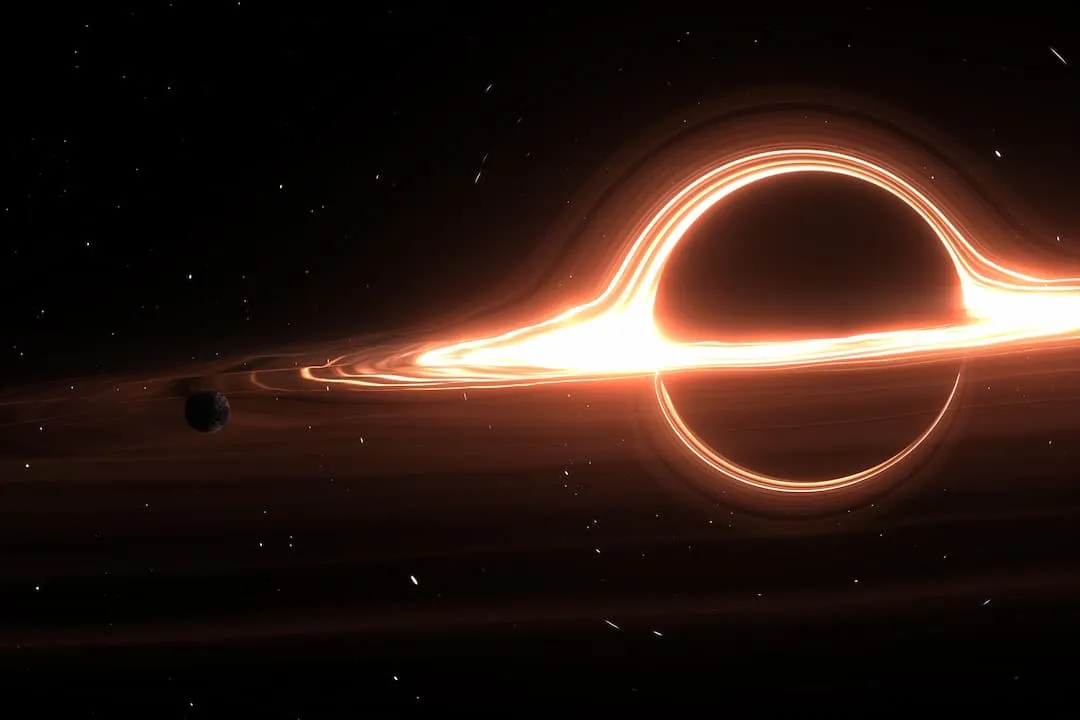
According to Smolin’s idea, new universes could form inside black holes. When a black hole forms, it might create a new “baby universe” with slightly different physical constants than the parent universe. These constants include things like the strength of gravity or the strength of nuclear forces.
Extra Read: How could a universe form inside a black hole?
At first this sounds strange, but it comes from ideas in modern cosmology and general relativity.
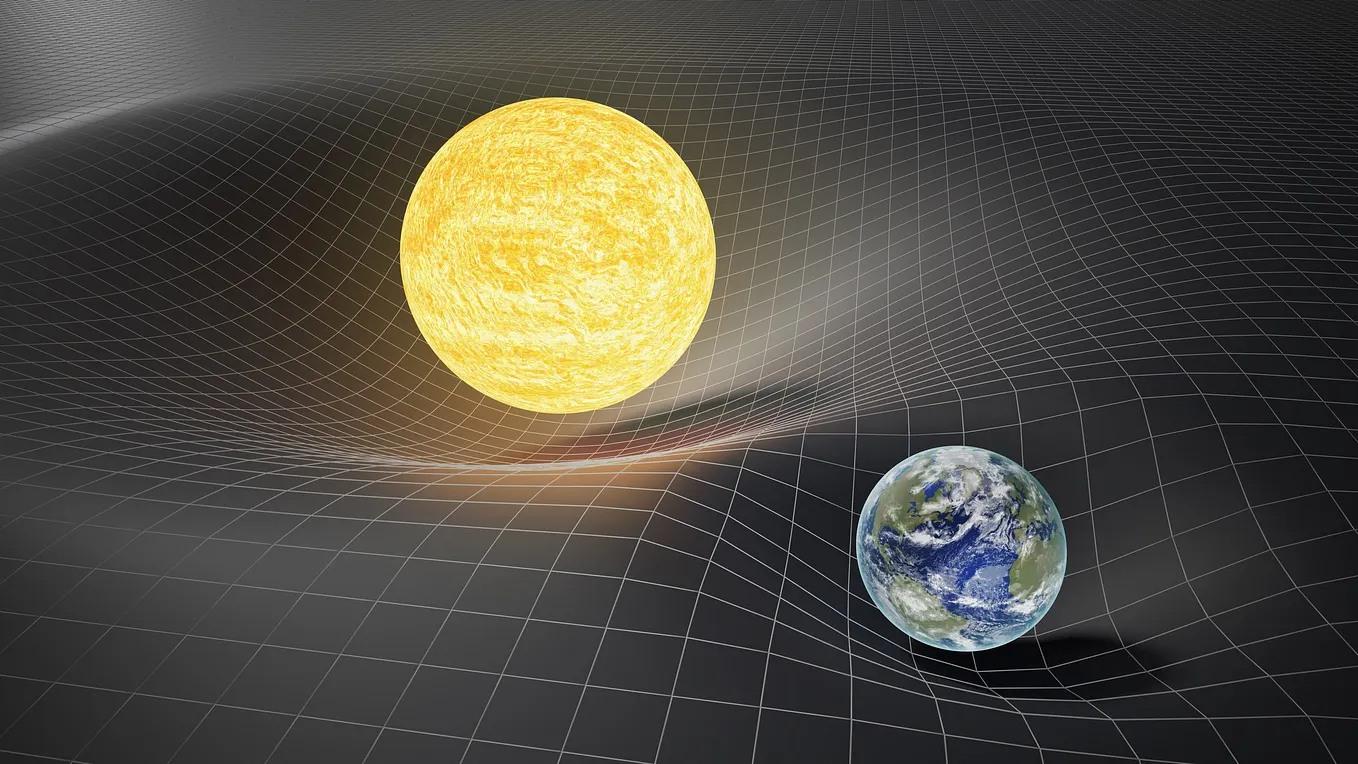
According to Albert Einstein’s theory of general relativity, when a massive star collapses, it can form a black hole. Inside the black hole, gravity becomes extremely strong and matter is compressed to incredibly high densities.
In classical physics, this collapse leads to a singularity, a point where density becomes infinite and our current laws of physics stop working.
However, many physicists think quantum effects might change what happens at these extreme conditions. Some theoretical models suggest that instead of collapsing into a true singularity, space-time might reach a limit and then bounce, expanding again into a new region of space-time.
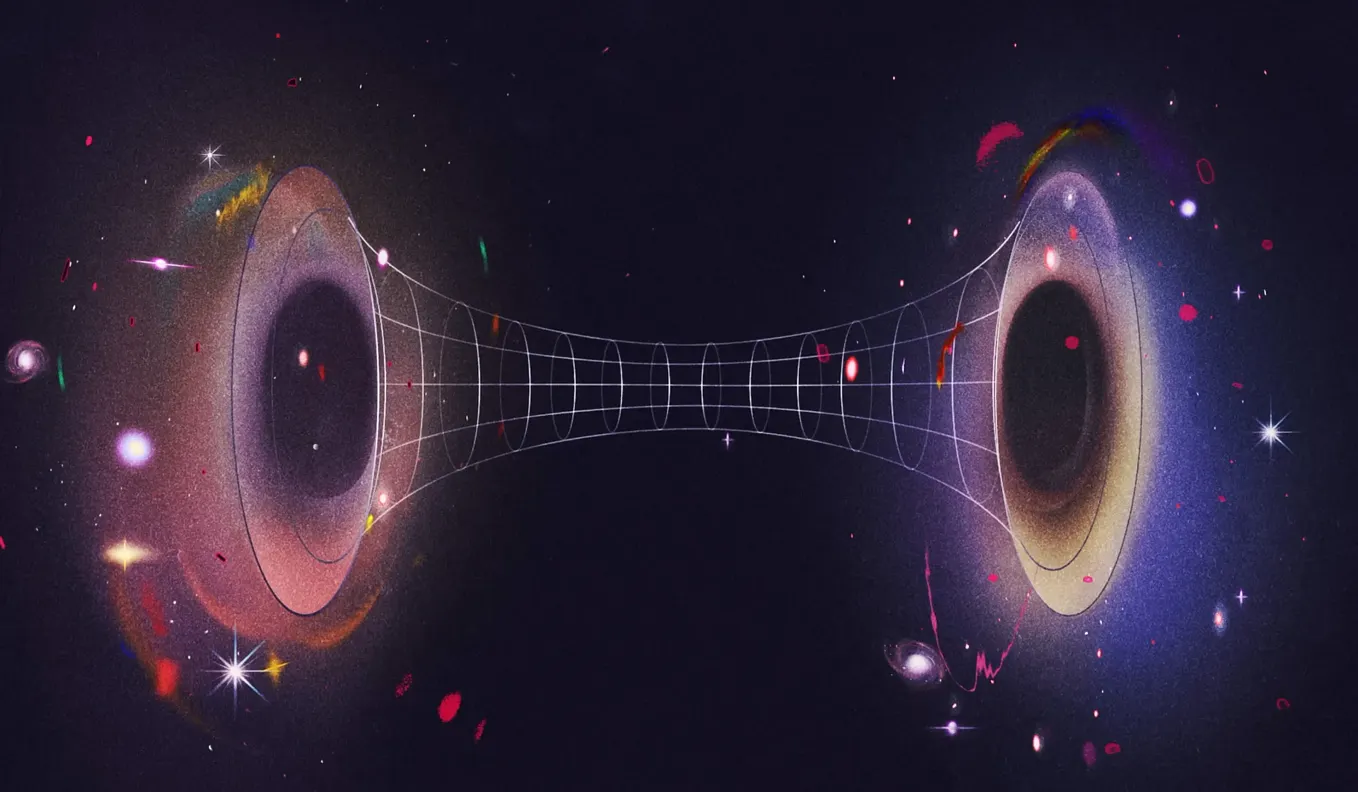
This expanding region could behave like a new universe, completely separated from the parent universe. To observers in the parent universe, we would only see a black hole. But inside the event horizon, space-time might continue expanding like a miniature Big Bang.
In this picture, our own universe might even have formed from a black hole in another universe long ago.
Using this idea, Lee Smolin proposed something called cosmic natural selection.
If every black hole can create a new universe, then universes that produce more black holes would also produce more offspring universes. Over extremely long times, these universes would become more common in the multiverse.
In this way, universes could spread their “genetic information,” meaning their physical constants, to future generations of universes.
This idea was also discussed by Michio Kaku in his book Parallel Worlds. In the book, he explains that the most successful universes might be the ones that create the largest number of black holes, since each black hole could potentially give birth to a new universe.
What makes Smolin’s idea interesting is that it could be tested, which is important in science.
If the theory is correct, our universe should be especially good at producing black holes. Scientists can explore this by studying how changing the physical constants would affect star formation and black hole creation.
For example, it might turn out that a universe with a much stronger nuclear force could produce many more black holes, but such a universe might also be hostile to life because stars would burn out very quickly.
If something like this were discovered, it could challenge Smolin’s idea.
For now, cosmic natural selection remains a speculative but fascinating idea. It shows how physicists are trying to understand one of the deepest questions in cosmology: why the universe has the laws that it does.
VIII. Criticism of the Anthropic Principle
Even though the anthropic principle is widely discussed in cosmology, not all scientists agree with it. Many researchers think it is interesting, but they also point out several problems with using it as an explanation.
One criticism is that the anthropic principle does not really predict anything new. Instead, it simply explains why we observe the universe the way we do. Some scientists argue that it mostly restates an obvious idea: we observe a life-friendly universe because we exist in it.
The famous physicist Steven Weinberg acknowledged that the anthropic principle can sometimes help explain puzzling features of the universe, such as why certain physical constants have the values they do. However, he also warned that scientists should be careful not to rely on it too much. If used carelessly, it could become an easy answer that stops deeper investigation.
Other physicists share similar concerns. For example, cosmologist Alan Guth once remarked that scientists often turn to the anthropic principle only when they do not yet have a better explanation. In other words, it can sometimes feel like a placeholder rather than a real scientific solution.
Another problem is that it can be difficult to test. Good scientific theories usually make predictions that can be checked with observations or experiments. Critics argue that the anthropic principle does not always do this, which makes it harder to treat as a full scientific theory.
Because of these issues, many scientists do not see the anthropic principle as a final answer. Instead, they view it as more of a philosophical framework — a way of thinking about why the universe appears the way it does.
Even so, the idea continues to play an important role in modern cosmology. It raises deep questions about the nature of the universe and reminds scientists that the conditions required for life may be far rarer, and more remarkable, than they first appear.
IX. A Universe That Can Ask Questions
After looking at all these ideas, one thing becomes clear: the universe we live in is incredibly special in many ways. The laws of physics, the formation of stars and galaxies, and even the chemistry that allows life to exist all depend on a very delicate balance of cosmic conditions.
If some of these values were even slightly different, the universe might look completely different. Stars might never form, atoms might not exist, or galaxies might never appear. In that case, the universe could have been dark, chaotic, or mostly empty.
But in our universe, these conditions came together in just the right way for something remarkable to happen: life appeared.
And not just simple life. Over billions of years, the universe produced intelligent beings capable of studying the cosmos itself. Humans can build telescopes, discover physical laws, and ask deep questions about where everything came from.
This idea lies at the heart of the anthropic principle. It reminds us that the universe we observe must allow observers to exist in the first place.
Scientists are still debating what this really means. Does it point to pure coincidence? Is it the result of a multiverse, where many universes exist with different laws of physics? Or does it hint that there are deeper physical principles we have not yet discovered?
These questions sit at the intersection of cosmology, particle physics, and philosophy. Researchers continue to study the universe through observations of distant galaxies, experiments in particle accelerators, and new theories about the nature of space and time.
For now, the anthropic principle does not give a final answer. Instead, it highlights something profound: the universe is not just a place where matter and energy exist. It is a universe where conscious beings can emerge and wonder about their own existence.
In that sense, one of the most remarkable features of the cosmos may be this simple fact: after nearly 13.8 billion years of cosmic evolution, the universe produced creatures capable of asking why it exists at all.
X. References
- Parallel Worlds, Michio Kaku: https://auass.net/wp-content/uploads/2021/01/Michio-Kaku-Parallel-Worlds.pdf
- Wikipedia: https://en.wikipedia.org/wiki/Anthropic_principle
- Anthropic Bias, Nick Bostrom: https://anthropic-principle.com/pdf/anthropic-bias-nick-bostrom.pdf
- Britannica: https://www.britannica.com/science/anthropic-principle
- HowStuffWorks: https://science.howstuffworks.com/science-vs-myth/everyday-myths/anthropic-principle.htm
- EBSCO: https://www.ebsco.com/research-starters/religion-and-philosophy/anthropic-principle
- Cambridge University Press: https://ned.ipac.caltech.edu/level5/Peacock/Peacock3_5.html
- Reddit: https://www.reddit.com/r/explainlikeimfive/comments/1cp6mst/eli5_what_is_the_anthropic_principle/