Securing 2026: Five Principles for Smarter Communication Planning

I am building my email list so I can offer the most value to you (tools, how-to, case study, scenario tear downs, etc) as a newsletter subscriber.
Please support more high-value content by subscribing to our newsletter; we publish once a week.
(Note: The original article is published at https://www.gocommunicators.com/securing-2026-five-principles-for-smarter-communication-planning).
— — — — —
As the calendar year draws to a close, communicators are tasked with shaping or contributing to the organisation’s master communication plan for the year ahead. This process is not just about outlining activities or filling a budget spreadsheet. Done well, it is about setting the agenda, aligning stakeholders, and ensuring that resources are committed to programmes that can deliver genuine value.
Too often, communicators fall into the trap of approaching this process from a purely tactical perspective. They itemise campaigns, list activities, and attach cost estimates without anchoring their requests in broader organisational goals. This leaves their plans vulnerable to being negotiated down or reframed by stakeholders in ways that reduce their strategic impact.
The challenge, therefore, is to rise above short-term, activity-driven planning and manage conversations about resources at the level of goals, outcomes, and value.
The Pitfall of Activity-Driven Planning
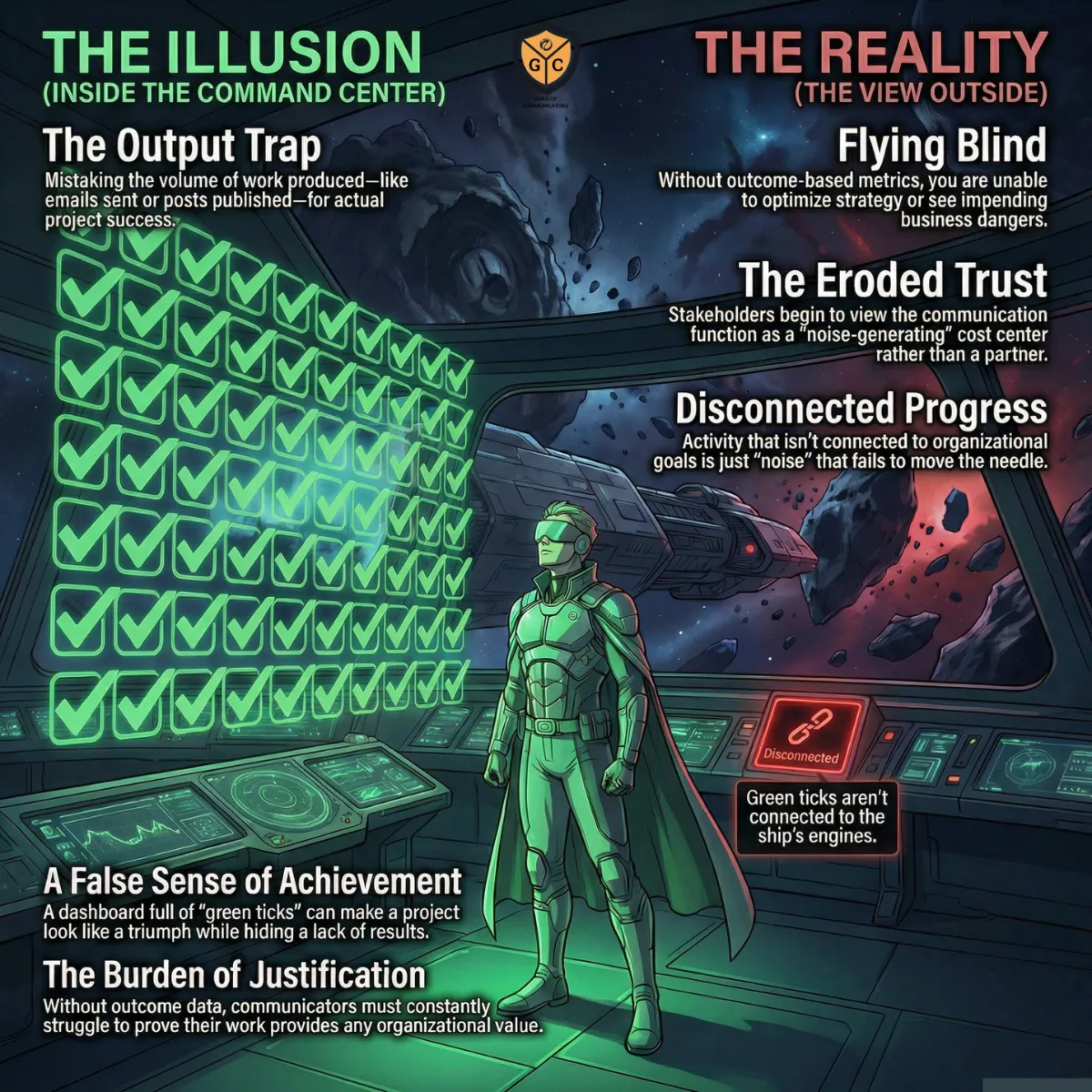
When communicators think in terms of objectives framed narrowly as outputs — press releases, campaigns, or events — resource forecasts are tied to a tally of tasks. This invites stakeholders to push back in two unhelpful ways.
First, they may negotiate for more work to be completed with fewer resources. Second, they may treat the communicator transactionally, asking for unit costs of each activity as though buying commodities.
Neither approach helps communicators demonstrate their strategic role. By tethering budgets to outputs instead of outcomes, communicators create a frame where their work is measured only in terms of visible activity, rather than contribution to organisational priorities. Stakeholders then hold more power in resource discussions, because they can demand efficiency gains without regard for effectiveness.
The result is a cycle in which communicators defend activities rather than shaping strategy. Over time, this reduces credibility and trust, as it positions the communicator closer to a project coordinator than a planner or strategist.

The Cost of the Wrong Framing
The implications of activity-driven planning are significant. Once stakeholders perceive communication as operational rather than strategic, they shift the discussion away from organisational goals and towards short-term tasks.
This shift strips communicators of influence, as future outcomes are often dependent on markets, customers, or stakeholder responses — factors beyond anyone’s direct control.
When communicators are asked to guarantee results they cannot fully control, dissatisfaction is almost inevitable. Stakeholders may question the value of the plan if outputs do not directly translate into outcomes, and trust in the communicator declines. The individual is then forced to reactively justify work after the fact, rather than proactively shaping the conversation.
Get Aaron K’s stories in your inbox
Join Medium for free to get updates from this writer.
This erosion of trust has lasting effects. Once a communicator is seen as less strategic, it becomes harder to regain a seat at the table where higher-level planning decisions are made. To avoid this outcome, communicators must ensure that the way they frame their plans positions them alongside senior leaders as strategic partners.
Think About Your Foundations
Securing approval for a master communication plan in 2026 requires more than listing activities and requesting budgets. It demands a shift in how communicators frame their work and their role.
Here are two key principles to adhere to when putting together the master communication plan:
Negotiate at the Goal–Outcome Level: Plans must be built around outcomes that matter to the organisation, not just outputs. This principle requires communicators to tie budget requests to how communication supports strategic goals — reputation, engagement, or stakeholder alignment — rather than to the volume of work to be delivered. Doing so shifts the negotiation from “how much activity for this budget” to “what value the organisation will gain.”
Anchor Discussions in Collaboration and Value: Budget planning should not be presented as a one-sided request. It must demonstrate how communication outcomes create value across the organisation, while also showing willingness to collaborate. By framing resource allocation as an investment in shared priorities, communicators can counter the perception that communication is a cost centre.
Psychology and Stakeholder Perception
Beyond the structural principles, communicators must understand how stakeholder perceptions are shaped by psychology. Stakeholders are not neutral evaluators. They carry cognitive tendencies that influence how they view plans and the people presenting them.
Continue reading the article through this link to learn about what are the psychological biases to manage with stakeholders, and 3 more principles to incorporate into your process, as well as how to apply them in practice.
I am building my email list so I can offer the most value to you (tools, how-to, case study, scenario tear downs, etc) as a newsletter subscriber.
Please support more high-value content by subscribing to our newsletter; we publish once a week.
If you are keen to read more about strategic communications and PR, visit my website and blog at: www.gocommunicators.com.
— — —
The Guild of Communicators empowers early-career communicators to excel and lead in the organisation they serve and the craft they have chosen.
Our tiered memberships are designed to support your journey:
- Connect: Build your foundational skills and network within a supportive peer community.
- Elevate: Accelerate your growth with premium resources, immersive workshops, and career coaching from industry veterans.
Take the next step in developing your craft and professional development.
Learn more and join the Guild at www.gocommunicators.com.
(For students: If you’re a student, undergraduate or postgraduate, explore our special student referral programme to lock in your membership fee for the second year! Drop us an email to find out more.)
(For Businesses: We also connect organisations with pre-vetted, certified communicators for project-based needs and offer custom training solutions. Reach out to our Business Concierge to find out about the process.)