A journey from the human face to the Face of Divine

It has always puzzled me — sometimes even angered me. Translators of the Qur’an think they have explained that central word in the very heart of Surah al-Ikhlas by rendering it as something like “one” or “single.” Say: He is God, One. Is that all? Does this not stir you at all? Yet you translate Ahad using the same word that is the counterpart of the Arabic Vahid. If you believe Ehad and Vahid are similar enough to be brushed off as “one” or “single,” then be prepared to let us read Surah al-Ikhlas as Qul Huwa Allahu Vahid, instead of Qul Huwa Allahu Ahad.
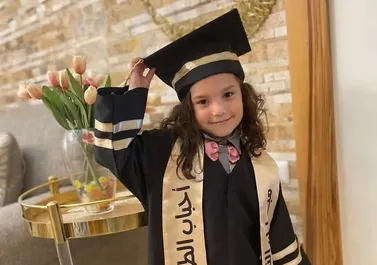
Thankfully, there is someone like Said Nursi, who placed Ahad at the very center of life. He polished the truth of Ahadiyyah — which springs from Ahad — like a pearl, and made it an ornament for our ears. Nursi first looks for the difference between Ahad and Vahid in the human face: In brief, every human face shares the same general layout. The position of the eyes, nose, and mouth, the arrangement of the cheeks — thankfully — are similar. This tells us all faces are made by the same Hand: the work of God, who is Vahid. But works from the same Hand could be expected to be uniform — yet human faces are not. The Creator, while making every face resemble another (and we need this resemblance; otherwise, we would appear monstrous to each other), at the same time paints each face with such delicate brushstrokes that it becomes utterly unique and unrepeatable. This is the work of God as Ahad.
The balance between Vahid and Ahad is always a silent and soft gift to us. Each human face is not so alien or foreign to others as to be unrecognizable, yet not so monotonous as to be confused with the rest. Our uniqueness does not violate our need to see familiar faces; and our familiarity does not overshadow our need to be unique.
Each human face is not so alien or foreign to others as to be unrecognizable, yet not so monotonous as to be confused with the rest. Our uniqueness does not violate our need to see familiar faces; and our familiarity does not overshadow our need to be unique.
The human face is one-of-a-kind, singular, matchless — unique. This uniqueness gives each of us an identity. It is the very truth that flows in the tender melody of the late O’Connor’s song: “Nothing compares to you.” Since my youth, I have listened to this song with the joy of someone who has found what they have been searching for; to me, it is like a commentary on Surah al-Ikhlas that theologians have missed.
When I later came across the late Dr. Haluk Nurbaki’s reflection on Ahad, I was once again grateful to Sinead O’Connor. Nurbaki says: Ahad is not something simply “ready made” or “there”; it is the uniqueness you create. Suppose you love someone — truly love them. To outsiders, he/she is simply one among many human beings. To them, there is a second person, a third, a fourth… But from where you stand, that person is the only one — nothing compares to him/her. You can no longer say “two.” The one you love is one, and only one. Once you have called them “one,” you cannot call another “two,” and you would be ashamed to say “three.” The “one” that Ahad expresses is a “one” without a “two.” The person stays there — always there. You say “one” each time with fresh excitement, but you never repeat yourself. Each “one” is both the first and the last time you ever say it; there is no “next one” or “next time”.
Get Senai Demirci, MD’s stories in your inbox
Join Medium for free to get updates from this writer.
This beautiful awareness always reminds me of the lesson the fox gives to the Little Prince: “If you tame me, I will be unique to you in all the world. And you will be unique to me.” From the fox’s mouth we learn that this way of seeing is “seeing with the heart, not with the eyes”: “What is essential is invisible to the eye; only the heart can see what is essential.”
Now let us return to Surah al-Ikhlas and ask: The God you call Ahad — does He treat you as just “one among many” human beings? Or does He place upon your face a seal of uniqueness — both physical and emotional — so that the one who loves you will say, “nothing compares to you”? Would you really want your face to be like everyone else’s? Like prefabricated houses? Like cars of the same model, stamped out of identical molds? If that were so, would the person you saw in the mirror still be you? Would you still be able to say, “This is me!”? Wouldn’t you need to be asked for identification every evening when you came home? And if someone with your exact face committed genocide, murder, or crimes of shame, wouldn’t you live each day under the weight of disgrace?
Now look again at Surah al-Ikhlas. The face you hold up as your honor, your identity, has been given to you with a uniqueness that only a heart can perceive. And it is given to you, again and again, each moment, as your own fresh face — your own wajh.
As a Sufi term, wajh is more than just “face.” It is the human face that gladly and joyfully responds to the full intensity of all genuine gazes turned toward it and focused upon it. Wajh is the face that knows it is being seen by friendly eyes.
So say: “Whoever makes me unique — I call Him God.”
Say: “Whoever lifts me from the plainness the eye can see and makes me visible in a uniqueness worthy only of a heart’s gaze, I call Him God.”
Say: “Whoever tames me enough to become their one and only — whoever does more than see me as merely one among many — I call Him God.”