Living in the Spirit Daily Devotional
Your guide to a daily walk with God.
Saturday, 7 November 2026
Topic: Man or Messiah?
Text: Luke 4:16-30
We continue our series on defending the faith today. Yesterday, we discussed the historical existence of Jesus; today, we will look at Jesus as the Messiah.
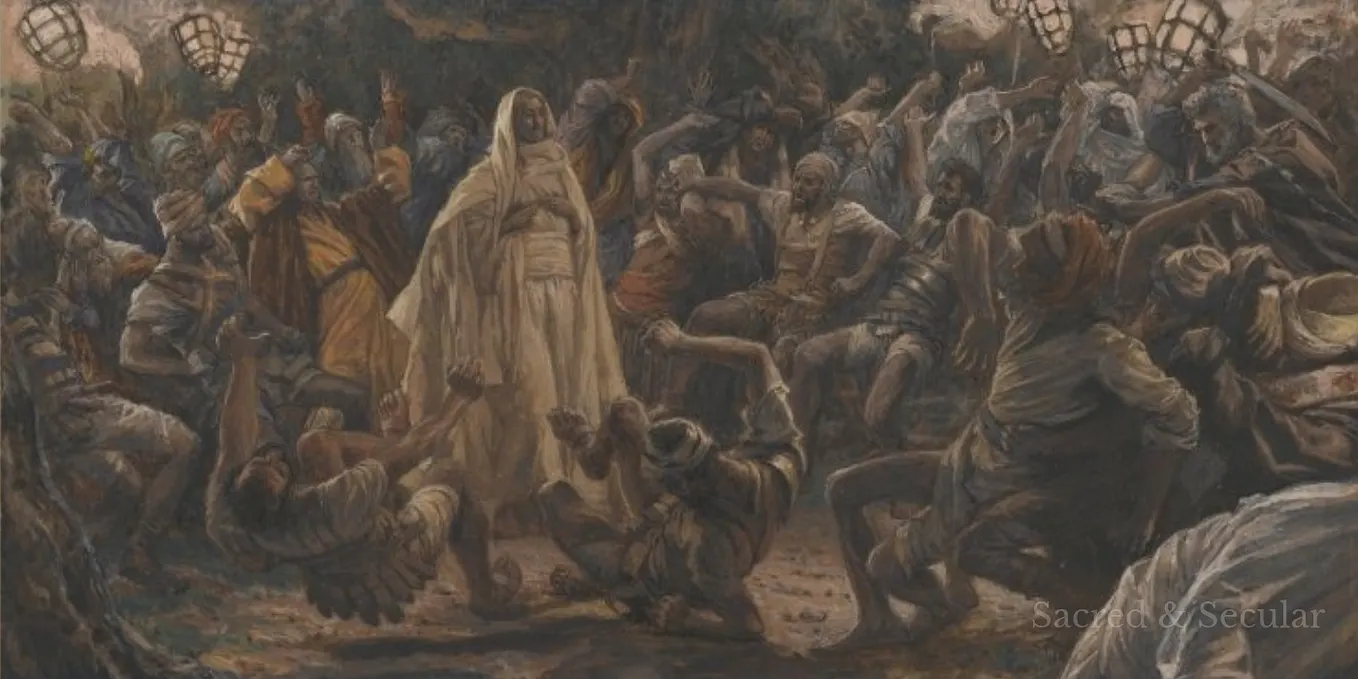
In our Bible text today, Jesus enters a synagogue to preach, reads a Messianic prophecy from Isaiah 61, and applies it to Himself, saying that the prophecy is being fulfilled before their very eyes (Luke 4: 17-21).
Now, this was bold and very important because the Jews had long awaited the Messiah, the promised King from the lineage of David, who was supposed to redeem God's people, establish God's kingdom in righteousness, peace and justice, and cause all nations to acknowledge and worship the God of Israel (2 Samuel 7:12–16, Jeremiah 23:5-6).
Under Roman rule, they longed for the coming of the Messiah, which they saw as liberation, and questioned every rising emissary, including John, checking to see if he was the Messiah (John 1:19-28).
He went on to back up His claim through His preaching, teaching, healing and delivering those oppressed by the devil. He taught and commanded with great authority and had followers (Matthew 4:23-25).
Get Spirit Living Devotional’s stories in your inbox
Join Medium for free to get updates from this writer.
But the Jewish leaders ultimately rejected Jesus. Many would rightly question: if the Jews, to whom belonged the Law and the Prophets and who were entrusted with the oracles of God, rejected their own Messiah, why do Christians worldwide accept Him?
It is because they rejected Him because they had certain physical expectations that were not met, but were fulfilled spiritually (Luke 24:13-27).
Examples include the expectation that He would be a human king with a physical throne and kingdom; instead, He was divine, with a heavenly kingdom. He was a King but did not live as one on earth (Luke 1:30-33; John 18:36).
He was also expected to gather the exiles from the diaspora back into the kingdom of Israel, but He gathered all lost souls back into God's kingdom (Ezekiel 34:11-16; John 10:11-16).
He was expected to rebuild the temple and restore full Torah observance, but He raised the temple of His own body and made everyone who believed in Him a carrier of God's presence, writing the law in their hearts so that they might not sin against God (Jeremiah 31:31–34; Ezekiel 36:26-27).
So, throughout His ministry, He clashed with the Jewish leaders in a conflict between expectation and reality. Ultimately, many followed Him and believed He was the Messiah, while others rejected Him and plotted to have Him killed (John 7:40-44).
Beloved, it is important to note, however, that we did not just believe casually; we believe because we have very good grounds to.
We believe because His life was well documented in prophecy before He was ever born. The circumstances of His birth, His living conditions, His death, His resurrection and even His rejection were all captured by the prophets.
And we read in our text today that He told the people in His own country that they would reject Him, as was common with all the prophets, and they did. Tomorrow, we'll explore some of the evidence for Jesus as the Messiah from prophecy.
God bless you.
Contact Spirit Living Devotionals via
Mail: spiritlivingdevotional@gmail.com
WhatsApp: +2347056696094