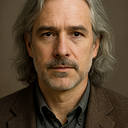
What Stanislav Grof Says About the History of Holotropic Breathwork

For seasoned readers of Stanislav Grof’s work, much of what follows might be well known. But some readers may never have come across these details, and so I decided to write this piece anyway. The truth is, the story of how holotropic breathwork came into being still captivates me, especially those behind-the-scenes details that Grof occasionally lets slip. It’s fascinating to discover how the birth and development of this method were shaped by circumstance, coincidence, and synchronicity.
Over the years I’ve read my way through Grof’s books and listened to his lectures and interviews online, gradually piecing together a fuller picture. Then I came across two interviews — this one on YouTube and this conversation on Voices of Esalen — and I genuinely savored them both, because they taught me more than anything else I’d found.
A problem in need of a solution
As many of you know, Grof began working at the Esalen Institute in 1973, where he led a variety of workshops. As he has recalled many times, his audiences found themselves in a curious bind: they were thrilled by his accounts of LSD experiments — and at the same time frustrated, because they longed to experience something like it themselves. But LSD and other psychedelics had been banned in the United States since the late 1960s, and Grof understandably had no intention of getting the Institute into trouble. Then, in November 1975, his future wife Christina joined him at Esalen, and together they began searching for a non-pharmacological way of inducing altered states of consciousness — something they could actually offer to people.
Clues from the therapy room
In his interviews, Grof remembers moments from his LSD sessions that, in hindsight, pointed the way forward. During one session, a patient asked him to press down hard on his shoulder, which had suddenly begun to ache intensely. On another occasion, a patient felt enormous relief after vomiting. This kind of thing happened repeatedly, he says, in situations where the inner process had not yet reached completion but the drug’s effect was already wearing off — leaving the risk that the session would end with the patient in an unresolved, difficult state.
When Grof began working with patients in this hands-on way, something remarkable kept occurring: they would spontaneously slip into a state of accelerated breathing that carried them back “into the process,” releasing further important material from the unconscious — and the session could then be brought to a successful close.
Breath, bodywork, and trial and error
Christina had extensive experience with yogic breathing techniques — she was a hatha yoga instructor — and so the two of them began experimenting with the breath. They added massage and applying pressure to painful areas of the body, an approach that would later evolve into what we now call bodywork.
The early sessions took various experimental forms. At one point, everyone lay in a circle, heads toward the center, holding hands. They also tried breathing in a half-sitting, half-reclining position, backs propped against pillows. Only later did they settle on today’s familiar arrangement: lying down, each person on their own mattress.
An injured back and a happy accident
Grof also recalls that in the beginning, workshops were structured so that all participants breathed while he, Christina, and a few helpers acted as sitters. Then, just before one large international workshop, he injured his back while building a terraced garden at Esalen. He was in considerable pain, and it was clear he couldn’t serve as a sitter.
Get Stanislav Carl Terence’s stories in your inbox
Join Medium for free to get updates from this writer.
So they improvised: the group would be split in two, one half breathing while the other half sat for them, with the roles reversed in the following session. The result, he says, was such a resounding success that they never went back. The sitters experienced the session in an entirely new way — one they found deeply enriching.
The music
Christina’s father was a musician, and with his help she began preparing the music for the sessions. She searched the archives for ethnic music specifically designed to induce altered states of consciousness, and together with friends she recorded special drumming tracks intended to influence the rhythm of the breath. According to Grof, this drumming was tested in a laboratory by the anthropologist and shaman Michael Harner, who confirmed its effectiveness.
In later interviews, Christina often said that preparing the music for the workshops was something she truly enjoyed — and that she would adjust her selections according to the mood in the room, choosing pieces that reflected what was actually unfolding among the participants.
A sensation at Esalen — and beyond
In the second interview, Grof remembers how quickly holotropic breathwork became a sensation, drawing people to Esalen from all over the world — at the time, there was simply nowhere else to try it. They held frequent large workshops in that period, the biggest of which lasted an entire month. Only later did the Grofs begin offering workshops elsewhere and launch their training program for facilitators.
A dream for the future
Toward the end of the interview, the host asked Grof how he would use psychedelics and holotropic breathwork if these substances could be employed legally. Grof answered that he sees holotropic breathwork as the ideal first step for people who have no prior experience with expanded states of consciousness — because during breathwork, they can end the process without difficulty if it begins to frighten them. He also considers it an ideal tool for integration at the end of a psychedelic session.
And his dream? A center where all of these approaches — yoga, meditation, psychedelics, shamanic techniques, holotropic breathwork — could be combined and tailored to the personal needs of each individual client.
(please read also my article “Noeticpunk & Shamanicpunk — warning and disclaimer”)