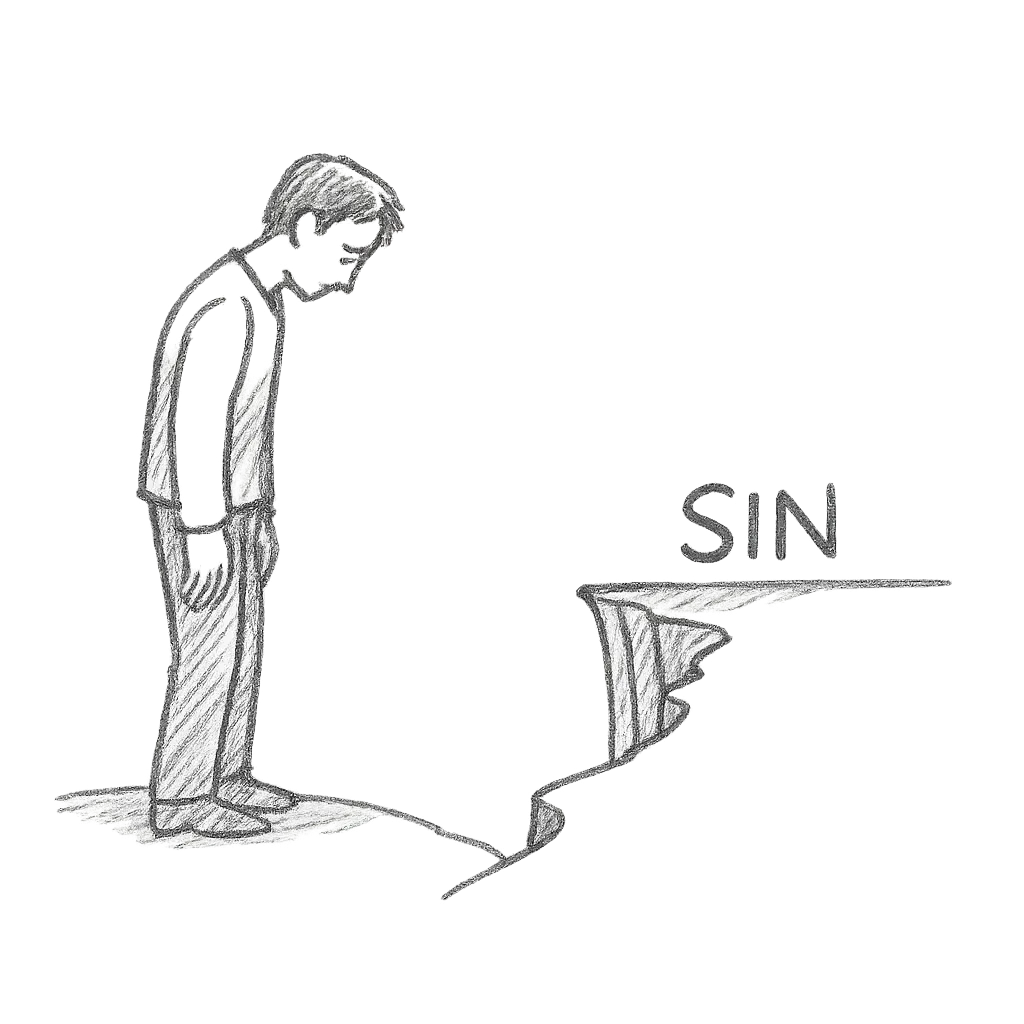
You’re Fighting the Wrong Enemy

A Reflection on Ephesians 6:12–13
Think about the last time you were truly exhausted by conflict.
Maybe it was a relationship that drained you for months. A disagreement at church that turned into something painful. A political argument that left you feeling angry and hollow. A family dynamic you have been trying to fix for years, but nothing seems to change.
Now ask yourself:
What did all that fighting actually accomplish?
I do not ask that to discourage you. I ask it because the apostle Paul gives us a way of seeing conflict that changes everything.
In Ephesians 6, Paul does not simply tell believers to be strong. He first corrects our vision. He tells us that many of the battles we are fighting have been misidentified from the beginning.

The Assumption We All Make
When something goes wrong, we instinctively look for someone to blame.
That is not always a character flaw. It is deeply human. We are wired to find causes, assign responsibility, and direct our energy toward what appears to be the source of the problem.
So we fight.
We argue. We distance ourselves. We build cases in our minds. We rehearse conversations that may never happen. We protect ourselves from people who hurt us, threaten us, disappoint us, or simply see the world differently.
And over time, we get tired.
The exhaustion many Christians carry is not always from a lack of faith. Sometimes it comes from fighting the wrong battle. We have spent enormous energy on a conflict that was misidentified from the start.
Paul’s Stunning Correction
In Ephesians 6:12, Paul writes:
“For we wrestle not against flesh and blood, but against principalities, against powers, against the rulers of the darkness of this world, against spiritual wickedness in high places.” — Ephesians 6:12 (KJV)
Notice what Paul says first:
Not against flesh and blood.
Not against your difficult coworker. Not against the family member who never understands you. Not against the politician you believe is ruining everything. Not against the person at church who said something that still hurts.
Paul is not saying those relationships are easy. He is not saying harm is not real. He is not asking us to ignore injustice or pretend that people never cause damage.
He is saying something deeper.
Even when people hurt us, they are not the ultimate enemy.
To treat them as if they are is a spiritual and relational mistake. It changes the way we speak. It changes the way we pray. It changes the way we confront. And eventually, it changes the kind of people we become.
This is one of the most countercultural statements in the New Testament.
We live in a time shaped by enemy-making. Social media rewards outrage. Political identity is often built around opposition. Even church communities can fracture over who is “in” and who is “out.”
Into that world, Paul says:
You are fighting the wrong thing.
What We Are Actually Up Against
Paul’s language — rulers, authorities, powers, and spiritual forces — acknowledges a real spiritual dimension to our struggle. But his point is not to lead us into fear, obsession, or endless speculation about unseen realities.
His point is to reframe the battle.
The real war is not between people. It is against the forces that distort, divide, deceive, and destroy.
These forces work through fear. They work through pride. They work through shame. They work through the lies that make us see other people as enemies to be defeated rather than neighbors to be loved.
Think about how often conflict follows this pattern.
Fear convinces us that someone is a threat. Pride refuses to let us be the first to reach out. Shame keeps us from admitting that we contributed to the problem. Anger makes us feel righteous, even when we are becoming hard.
What began as a misunderstanding becomes a long estrangement. What began as a disagreement becomes contempt. What began as a wound becomes a wall.
That is not only human failure. Something deeper is working against the love, unity, humility, and reconciliation we were made for.
When Paul names the enemy, he is not trying to scare us. He is trying to free us from wasting our lives fighting one another.

The Word Paul Keeps Using
After Paul identifies the real nature of the battle, he tells believers what to do.
In Ephesians 6:13, he writes:
“Wherefore take unto you the whole armour of God, that ye may be able to withstand in the evil day, and having done all, to stand.” — Ephesians 6:13 (KJV)
The word Paul keeps returning to is simple:
Stand.
Get Stevens Brookes’s stories in your inbox
Join Medium for free to get updates from this writer.
Not attack. Not retreat. Stand.
That is a very specific posture.
Standing is not aggression. Standing is not avoidance. Standing is not pretending everything is fine.
To stand is to remain faithful without becoming hateful. To stand is to hold your ground without losing your soul. To stand is to stay present without being controlled by panic, pride, or revenge.
In our cultural moment, standing may be one of the hardest things to do.
Everything pushes us toward reaction. The news cycle rewards outrage. Algorithms amplify extremes. Public pressure tells us to pick a side, attack the other side, and never admit weakness.
But Paul says:
Stand.
Stand in truth. Stand in love. Stand in humility. Stand when it would be easier to walk away. Stand when it would be easier to destroy the person in front of you. Stand when everything in you wants to win the argument more than preserve your heart.
Standing is not passivity. It is a form of courage we often underestimate.
What This Does Not Mean
Recognizing that our struggle is “not against flesh and blood” does not mean ignoring injustice.
It does not mean staying silent in the face of abuse. It does not mean avoiding hard conversations. It does not mean pretending that people do not make harmful choices. It does not mean accountability is unnecessary.
What it means is this:
Even when we confront real harm, we do not have to dehumanize the people involved.
We can tell the truth without hatred. We can set boundaries without contempt. We can hold people accountable without turning them into monsters. We can disagree deeply without treating someone as an enemy to be destroyed.
That is not weakness.
That is the demanding strength of the gospel.
The Armor Is for Standing
The armor of God is often imagined as something aggressive, as if Paul were calling Christians to charge into battle against other people.
But that misses the point entirely.
The armor Paul describes is not ornamental, and it is not offensive. Truth guards against the lies that slowly reshape us. Peace steadies the feet so we do not run from what we should face. Faith absorbs what would otherwise break us. Prayer keeps us dependent on God rather than consumed by the fight.
Every piece of the armor serves the same purpose: not to help us defeat people, but to help us resist what is trying to destroy love — in us and through us.
The armor of God is designed to help us remain human when the pressure is to become something harder, colder, and smaller than what we were made to be.
It is designed to help us stand.
The Freedom in Getting the Enemy Right
Here is the freedom I keep coming back to:
If the real enemy is not the people around you, then the people around you are not lost causes.
The coworker who makes your life harder is not the enemy. The family member with different politics is not the enemy. The person whose theology you think is wrong is not the enemy. The leader who disappointed you is not the enemy. The person who wounded you is not the ultimate enemy.
They may be confused. They may be broken. They may be responsible for real harm. They may need to be confronted or held accountable.
But they are not the thing you were created to fight.
That shift can change how you enter conflict.
It can keep you from burning relationships that did not need to burn. It can keep you from becoming cruel in the name of being right. It can keep you from confusing discernment with suspicion. It can keep you from surrendering your heart to the very darkness you are trying to resist.
An Invitation
If you are tired, I wonder if some of that exhaustion comes from fighting battles that were never yours to fight in the first place.
Maybe you have been treating people as the source of problems that go deeper than any one person. Maybe you have been trying to defeat someone God is asking you to pray for. Maybe you have been fighting to win, when God is calling you to stand.
Paul’s invitation is not to stop caring. It is not to stop engaging. It is not to pretend evil is not real.
His invitation is to get the enemy right.
Before you respond to the next conflict, pause long enough to ask:
Am I fighting a person, or am I standing against what is trying to divide, distort, and destroy?
That question may change the way you speak. It may change the way you pray. It may change what you refuse to become.
Stand.
Not because it is easy. Not because the conflict is small. Not because the wounds are not real.
Stand because you know what you are actually standing for.
And you know what you are actually standing against.

Ephesians 6:12–13 (KJV)