Kintsugi and the Japanese Art of Repair
How urushi lacquer, controlled curing, and a last dusting of metal powder turn broken ceramic back into a usable object


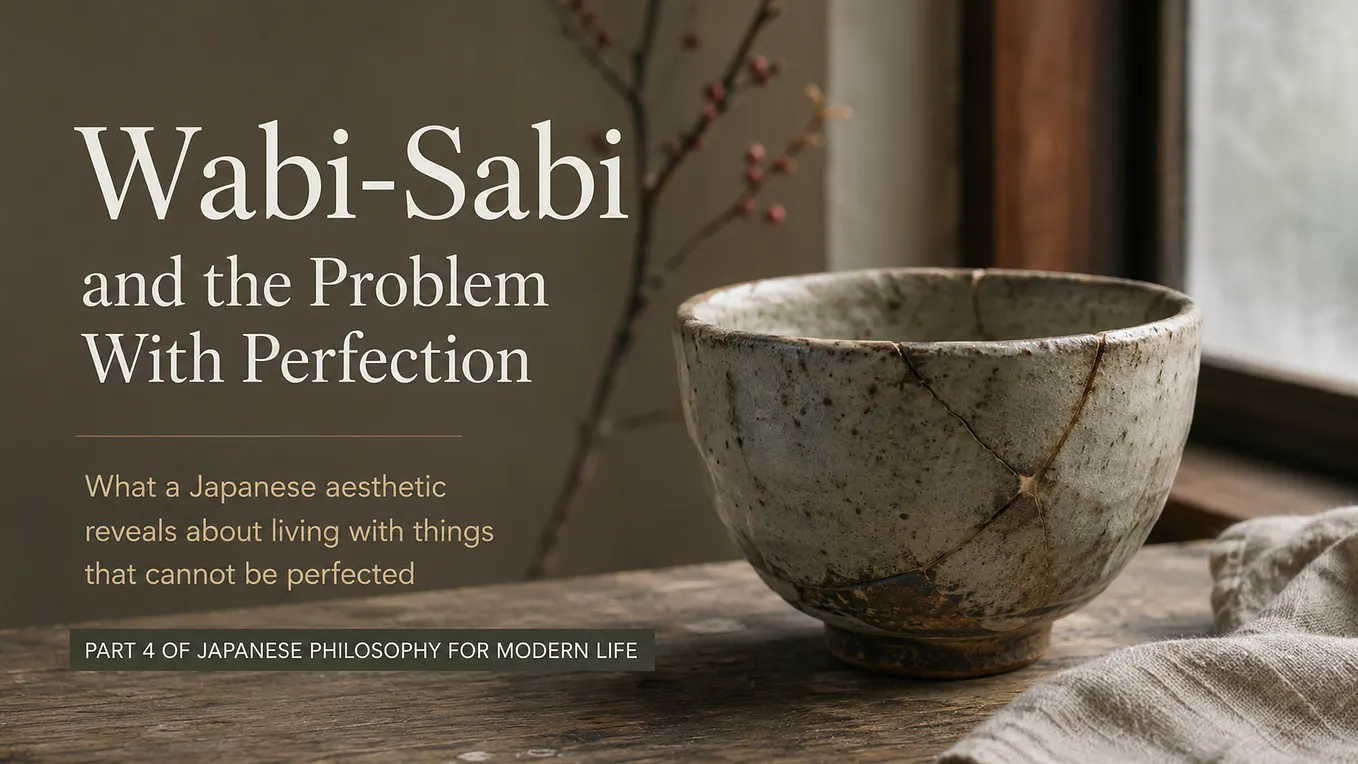
The gold line on a kintsugi bowl is applied last, in a layer far thinner than the materials beneath it. Beneath it sit a bonding layer, fillers where material is missing, and several coats of lacquer, each requiring time to cure. By the time the gold is applied, the repair is already structurally complete.
The gold draws the eye, while the work that holds the bowl together remains hidden beneath it.
What Kintsugi Actually Is
Kintsugi is a method of repairing broken ceramics with urushi, a natural lacquer, and finishing the seam with metal powder, most often gold. The word is usually translated as “golden joinery.” In the traditional method, the lacquer holds the pieces together and the metal sits on top as a finish. Gold painted over a crack with nothing structural beneath it is decoration, not kintsugi in the traditional sense.
The exact origins of kintsugi remain uncertain. The practice is associated with Japanese tea culture, but the familiar story linking its development to the shogun Ashikaga Yoshimasa is generally treated as legend rather than established fact.
In Why Japanese Products Are Made to Be Used for Years, I looked at what allows a product to remain useful over time. Why Broken Things Still Have Value in Japan explored why a damaged object may still be worth keeping. Here, the focus is on the work of repairing it.
A Lacquer That Cures Instead of Drying
Urushi comes from the sap of the lacquer tree, Toxicodendron vernicifluum, native to East Asia. It doesn’t dry the way paint does, by letting a solvent evaporate. Instead, it hardens through a chemical reaction involving enzymes in the lacquer and oxygen from the air. Warm temperatures and high humidity help the reaction proceed, as explained by the Kyoto National Museum. Practitioners often work at around 20 to 25 degrees Celsius and roughly 70 to 80 percent relative humidity, though the ideal conditions vary with the materials and stage of the repair. In dry air the process slows badly and the lacquer can stay tacky for a very long time.
So craftspeople keep fresh work in a humidity-controlled chamber, called a muro or furo, between stages. Depending on the stage, a piece may spend anywhere from a day or two to a couple of weeks inside.
Layer thickness also matters. A coat that is too thick may harden on the surface while remaining soft underneath. Craftspeople therefore apply thin layers, building them up gradually.
The Stages Behind the Seam
The exact sequence and number of coats vary with the damage and the craftsperson, but traditional kintsugi follows a broadly similar process.
The pieces are first bonded with mugi-urushi, raw lacquer kneaded with wheat flour and water, which is spread on the broken edges before the fragments are pressed together. Small chips and gaps are filled with sabi-urushi, lacquer mixed with a fine clay powder called tonoko. Larger losses get a coarser filler that adds wood powder or fiber. Each filled area has to cure before it can be sanded level.
Once the surface is even, thin layers of lacquer build up over the seam, with sanding between them. A final colored coat may be applied before the metallic powder. For gold finishes, this layer is sometimes red, using an iron-oxide pigment. While that coat is still slightly tacky, metal powder is applied to the surface. The excess powder is cleared away, and some craftspeople add a final thin coat of lacquer and polish the result.
Get Hiro | The Invisible Japan’s stories in your inbox
Join Medium for free to get updates from this writer.
A traditional repair can take weeks or even months to complete.
Judgment in a Material That Won’t Be Hurried
Because each stage requires time to cure, the craftsperson must judge how the fragments fit, how much filler to use, and when the surface is ready for the next step.
The fit of the fragments determines the width of the seam. A close join needs less filler, while a larger gap requires more. Too much filler can distort the rim or foot, while too little leaves an uneven surface. The craftsperson must also judge when each filled area is ready to be sanded.
How the Repair Looks
The final appearance depends on the finishing materials and the colors used beneath the metal powder. Red lacquer under gold powder is commonly used because it warms the metal’s color, while silver is often paired with black. Some repairs use silver or other finishes altogether, so a gold seam is one outcome among several.
Chips and missing sections make the repair more than a line. Where a fragment is lost, a filled area finished in metal adds a shape that was never part of the original object. Whether the result looks balanced depends on the proportions, the surface finish, and the viewer’s taste. A heavy fill beside a hairline crack, for example, can look uneven.
What Kintsugi Can and Cannot Do
The extent of the damage determines what can be repaired. The more fragments are missing, the more of the object ends up being filler and finish, and at some point the repaired piece is as much a built-up object as a restored one.
Food safety needs particular care because the materials used in a repair can vary. Fully cured urushi has a long history of use on food-contact items, but uncured lacquer can cause skin irritation. This reaction is associated with urushiol, the same compound found in poison ivy, a botanical relative of the lacquer tree.
Repaired vessels should generally be kept out of microwaves, where metal powder can spark, and washed by hand rather than in a dishwasher. Before using a repaired piece for food or drink, check whether the specific materials and repair method are suitable for that purpose.
Many one-day workshops and kits use epoxy or other synthetic resins with gold-colored powder, which skips the long curing time. These repairs are usually described as decorative, not for food contact. Because these methods use different materials, food-contact safety should be confirmed with the workshop or kit manufacturer before the repaired piece is used for eating or drinking.
Where the Gold Goes
Seen from above, the seam is a single bright line. Beneath it are the layers of lacquer and filler that hold the ceramic together, the result of work carried out over days or weeks.
Part 6 of Japanese Craftsmanship & Design
Exploring the ideas, skills, and ways of working behind the things made in Japan.
If you found this perspective interesting, you can explore more articles in the series or subscribe to my free newsletter for deeper reflections on Japanese culture, philosophy, craftsmanship, and everyday life.