“We All Know What Our Organization’s Strategy Is.” Do We?

Why most organizations overestimate alignment and underestimate interpretation.

AI and image assistance disclosure: The image was generated with Microsoft Copilot. Microsoft Copilot was also used for editorial assistance, including drafting, restructuring, and refinement. The ideas, arguments, frameworks, professional perspectives, and final editorial decisions are my own, informed by more than 35 years of enterprise transformation experience.
The Question Nobody Asks
Most leadership teams believe their organization understands its strategy.
The strategy has been presented. The vision has been communicated. The roadmap has been shared. Leadership assumes that exposure to strategy creates a shared understanding of it.
Yet ask ten leaders to describe what success looks like three years from now and you will often hear ten different versions of the future. The differences are rarely dramatic, which is precisely what makes them dangerous. Small differences in understanding become meaningful differences in priorities, decisions, investments, and trade-offs. Over time, those differences compound.
The uncomfortable reality is that many organizations are less aligned than they believe.
Not because people disagree.
Because people interpret.
The Great Alignment Assumption
Organizations often assume that shared exposure creates shared understanding.
It does not.
Every person interprets strategy through their responsibilities, incentives, experiences, and assumptions. As strategic intent moves through the organization, different groups naturally emphasize different aspects of the message. What one leader sees as customer growth, another sees as operational efficiency. What one executive views as innovation, another views as risk management.
The result is not a shared understanding of success. It is a collection of interpretations that appear aligned on the surface but gradually drive different decisions once people begin acting on them.
Strategy Exists. Shared Meaning Often Doesn’t.
Consider a common strategic objective:
“Deliver a world-class customer experience.”
Most organizations would consider that statement clear.
Yet ask Operations, Customer Success, Finance, Marketing, and Technology what it means and you will receive different answers. Every answer may be reasonable. Every answer may create value.
The challenge is that they are not necessarily pursuing the same intended outcome.
Organizations frequently possess strategic language without possessing shared meaning.
The words are shared.
The interpretation is not.
Communication Is Not Alignment
When leaders discover alignment gaps, the typical response is more communication.
More presentations.
More town halls.
More executive messaging.
Communication matters. Organizations should communicate relentlessly.
However, communication and alignment are different things. Communication distributes information. Alignment requires shared meaning.
Every time strategy is summarized, delegated, translated, interpreted, or remembered, variation enters the process. When an organization depends primarily on communication to preserve intent, understanding becomes increasingly vulnerable to drift.
Many organizations measure how often strategy has been communicated.
Few assess how consistently strategy has been understood.
The Missing Organizational Asset
This leads to a deeper question.
Where does the organization maintain its authoritative definition of success?
Most organizations have strategy documents.
Far fewer have an explicit, governed expression of what leadership actually intends to achieve.
Executive Sponsors can usually explain the outcomes they are pursuing. They can describe the change they want to create, the value they expect to realize, the trade-offs they are willing to make, and the boundaries within which decisions should be made. Yet that understanding often exists primarily in presentations, conversations, memories, and individual interpretations.
As a result, people continuously reconstruct intent rather than reference it.
What most organizations lack is a durable organizational asset that captures intended outcomes in a form that can be referenced, questioned, validated, improved, and preserved over time.
At Alentra, we call that asset Sponsor Intent.
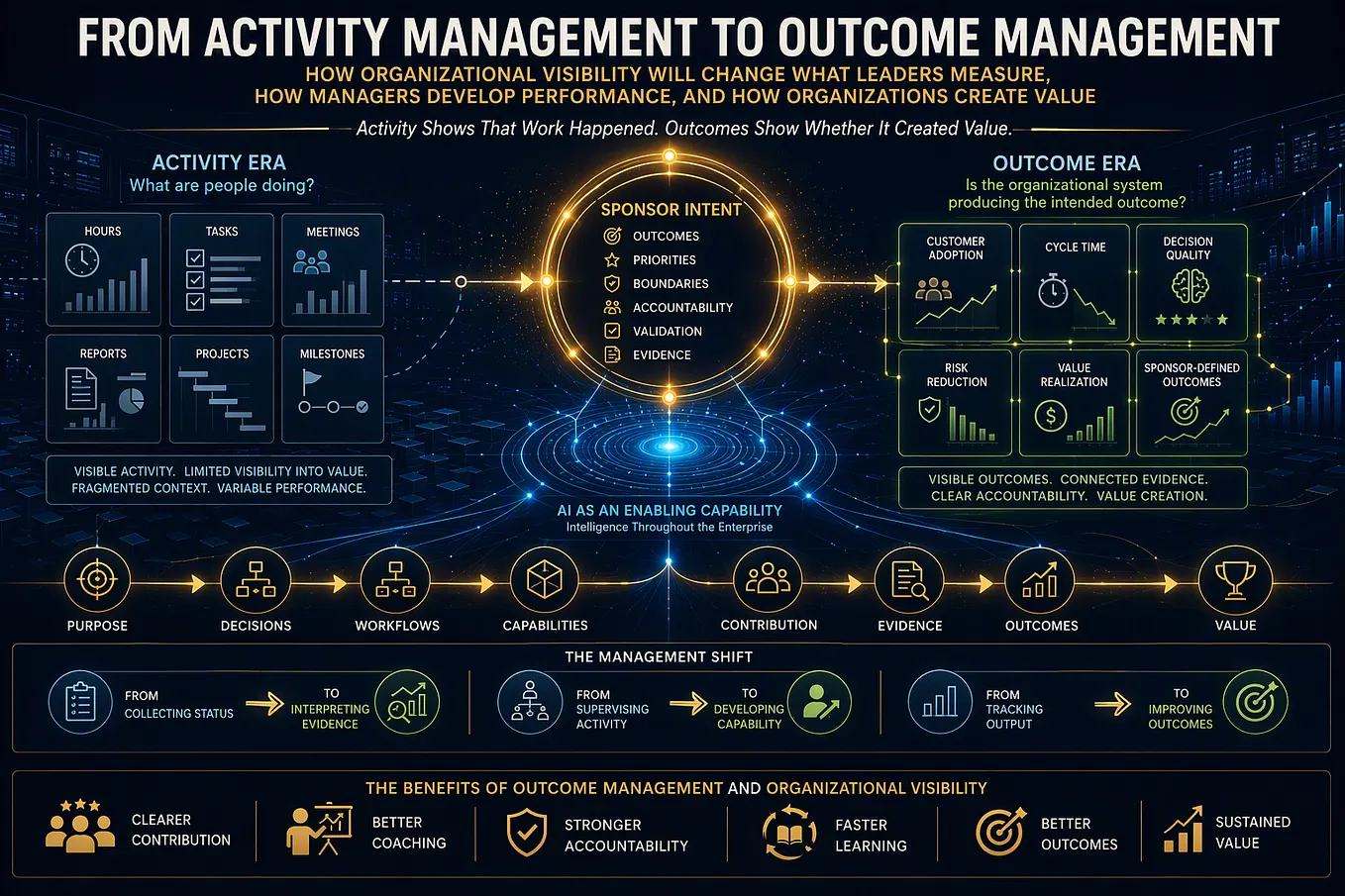
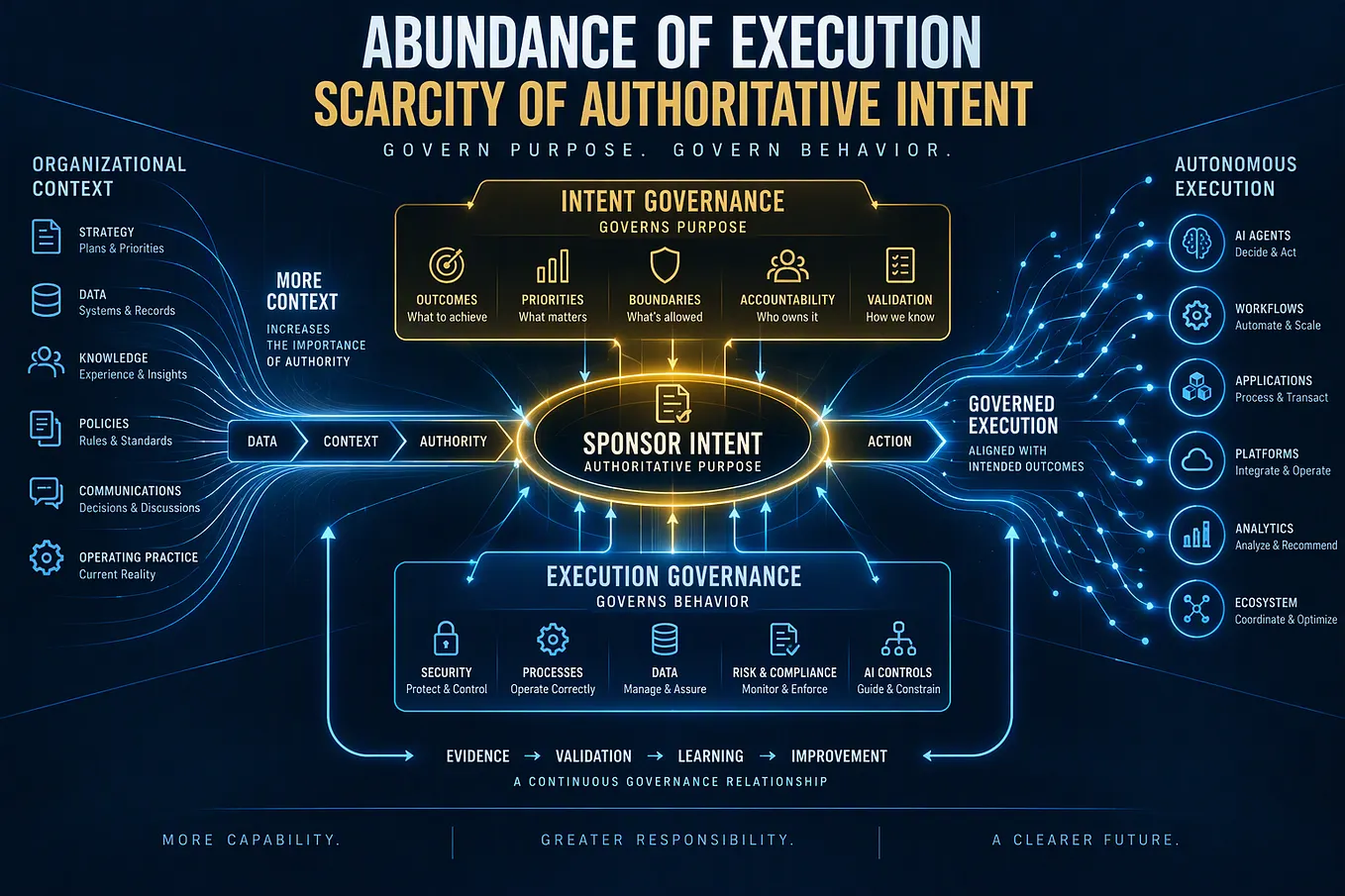
Sponsor Intent is the Executive Sponsor-owned expression of purpose. It captures the intended outcomes, priorities, assumptions, decision boundaries, accountabilities, validation requirements, and evidence expectations that define what success actually means.
Instead of relying on people to repeatedly interpret strategy, Sponsor Intent provides an authoritative point of reference that people, teams, systems, and AI can continuously access and align to.
Without such an asset, interpretation inevitably becomes the operating model.
Why AI Is Exposing the Problem
For decades, organizations could tolerate significant ambiguity because humans compensated for it.
Get Tim Hourigan’s stories in your inbox
Join Medium for free to get updates from this writer.
Employees filled gaps through experience, relationships, judgment, and context. Organizational understanding often existed in people’s heads rather than in governed organizational assets.
Agentic AI changes the economics of ambiguity.
Autonomous systems can only operate from what has been made explicit. They cannot reference undocumented assumptions, unwritten priorities, or years of executive conversations that were never captured. The same ambiguity that creates inconsistent decisions across human teams creates even greater challenges when organizations introduce increasingly autonomous execution.
AI did not create this problem.
It exposed it.
Honest Objections
Every meaningful idea should withstand thoughtful challenge. The objections below surface legitimate questions about alignment, strategy, culture, and communication, and exploring them helps clarify both the strengths and boundaries of the argument.
1. Strong Cultures Already Solve This Problem
Strong cultures create valuable norms, behaviors, and decision habits. They help organizations move faster because people develop a shared sense of how things are done.
The challenge is that culture remains largely implicit. People learn it through observation, repetition, and experience. Explicit organizational intent complements culture by providing an authoritative definition of desired outcomes, priorities, constraints, and success criteria.
2. We Already Have a Strategy Document
Many organizations do.
The question is whether the document serves as a living definition of organizational intent or primarily as a communication artifact. Most strategy documents describe direction. Far fewer define assumptions, decision boundaries, accountabilities, validation requirements, evidence expectations, and conditions of success in sufficient detail to sustain alignment over time.
3. Interpretation Is Unavoidable
Correct.
The objective is not to eliminate interpretation. The objective is to reduce unnecessary variation by making intent sufficiently explicit that thousands of decisions continue supporting the same intended outcomes.
Local autonomy remains important.
Shared understanding of purpose becomes even more important.
4. Isn’t This Just Better Communication?
Better communication is part of the solution.
Communication distributes understanding.
Governance preserves understanding.
Organizations benefit from both.
The Question Leaders Should Be Asking
Most organizations ask:
“Do people know our strategy?”
A better question is:
“Do we have an authoritative, explicit, accessible, governable, and durable definition of what organizational success actually means?”
The first question measures awareness.
The second measures organizational clarity.
One asks whether strategy was communicated.
The other asks whether intent can survive interpretation.
Those are very different questions.
At Alentra, We View This as an Intent Governance Challenge
Organizations do not lack intent.
Organizations lack an explicit, referenceable, accessible, governable, and durable expression of that intent.
The alignment challenge discussed throughout this article is fundamentally a Sponsor Intent challenge. Leaders often assume people are aligned because strategy has been communicated, priorities have been established, and goals have been published. Yet communication creates awareness, not an enduring point of reference.
What is communicated today becomes interpreted tomorrow.
Sponsor Intent is the Executive Sponsor-owned expression of purpose. It captures the intended outcomes, priorities, assumptions, decision boundaries, accountabilities, validation requirements, and evidence expectations that define what success actually means. Instead of repeatedly reconstructing intent from conversations, presentations, and institutional memory, people can continuously reference an authoritative expression of purpose.
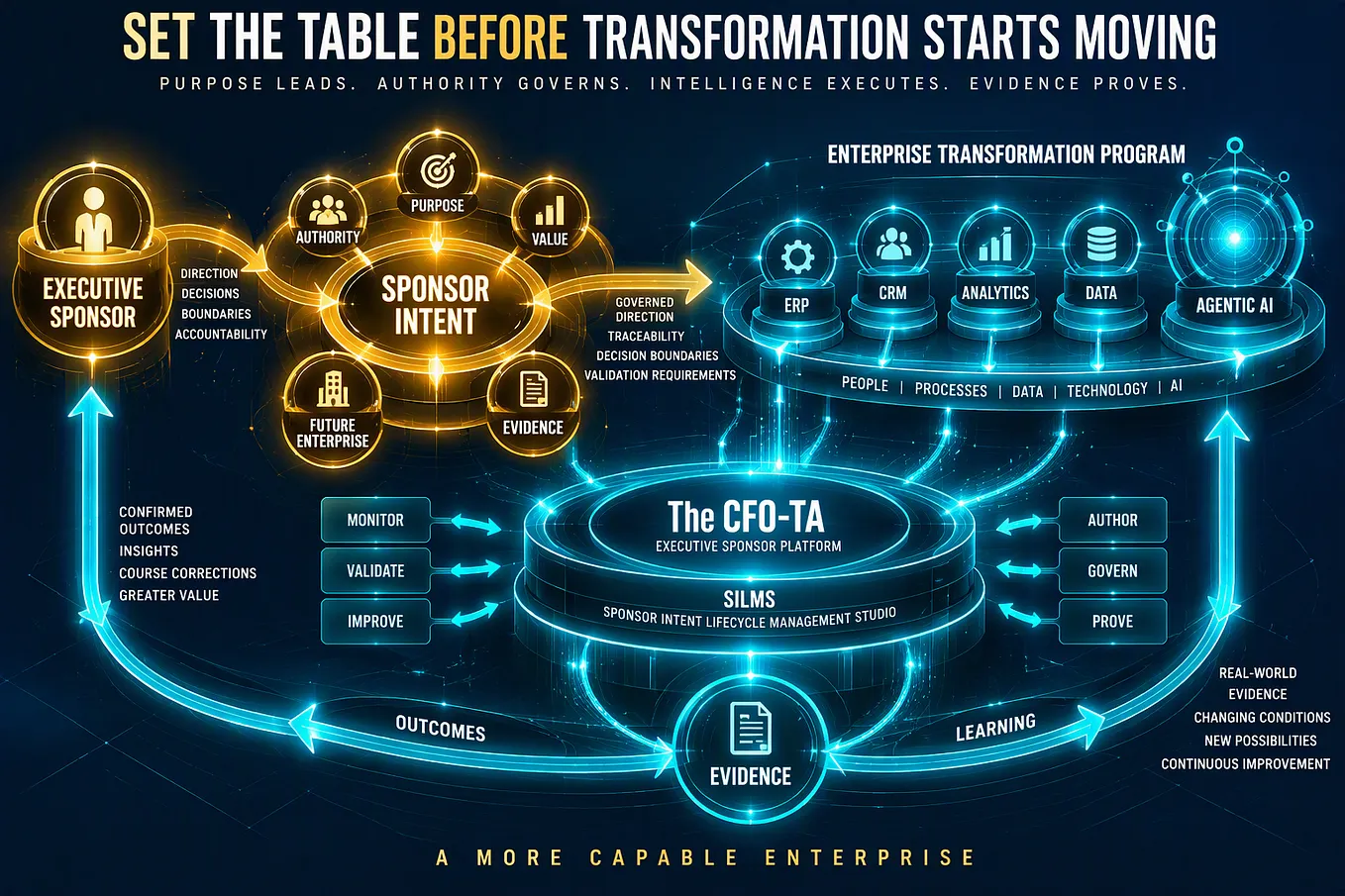
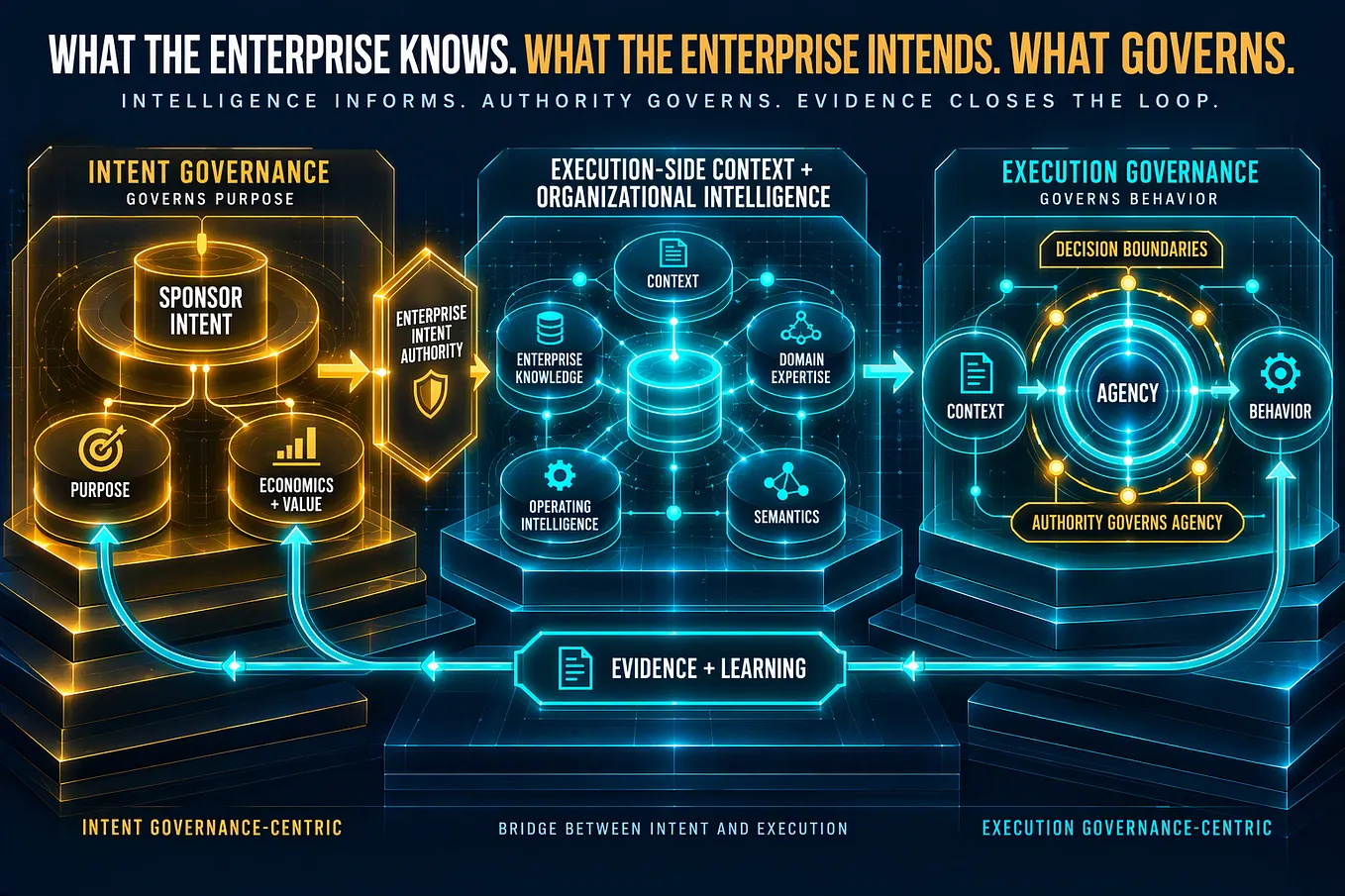
Business Intent Design is the discipline used to define and progressively refine Sponsor Intent before consequential commitments are made. Intent Governance preserves that Sponsor Intent as participants, assumptions, priorities, decisions, and operating conditions change, ensuring the organization remains connected to the outcomes it originally intended to achieve.
Intent Governance addresses both the enduring challenge of transformation drift and the emerging requirements of Agentic AI. It preserves authoritative Sponsor Intent as decisions, participants, assumptions, and operating conditions change. It also makes intended outcomes, priorities, boundaries, accountabilities, validation requirements, and evidence expectations explicit enough to guide increasingly autonomous execution.
People compensated for ambiguity.
Autonomous agents amplify it.
The organizations that thrive in the AI era will make success referenceable. They will establish clear Sponsor Intent that can be accessed, governed, validated, improved, and preserved over time. Rather than asking people, teams, and AI systems to infer what leadership intended, they will provide an authoritative expression of purpose that everyone can continuously align to.
Because the greatest threat to alignment is rarely disagreement.
It is interpretation.
And the most effective response to interpretation is explicit Sponsor Intent that can be governed, preserved, validated, and improved throughout the Enterprise Transformation Program lifecycle.