Are We Really In Control?

Sometimes, I have an unsettling feeling that the brain is nothing but an endosymbiont. A zombie-ant fungus, if you will — the deadly organism that, upon infecting a helpless ant, begins ruthlessly altering the creature’s behavior, causing it to wander erratically. The brain is the mastermind puppeteer; the body is the lifeless marionette.
How is it that the brain governs every thought? Every action? Every facet of our identity? How can it be that the entirety of what we perceive emerges from the soft, gelatinous organ nestled within our skulls?
The free will debate is a resonant one, echoing through millennia. Indeed, we still have yet to reach a decisive conclusion. Below, I have compiled a small collection of my favorite arguments.
Are we really in control?
No.
Neural Evidence.
We must begin, of course, with the Classic Libet Experiment.
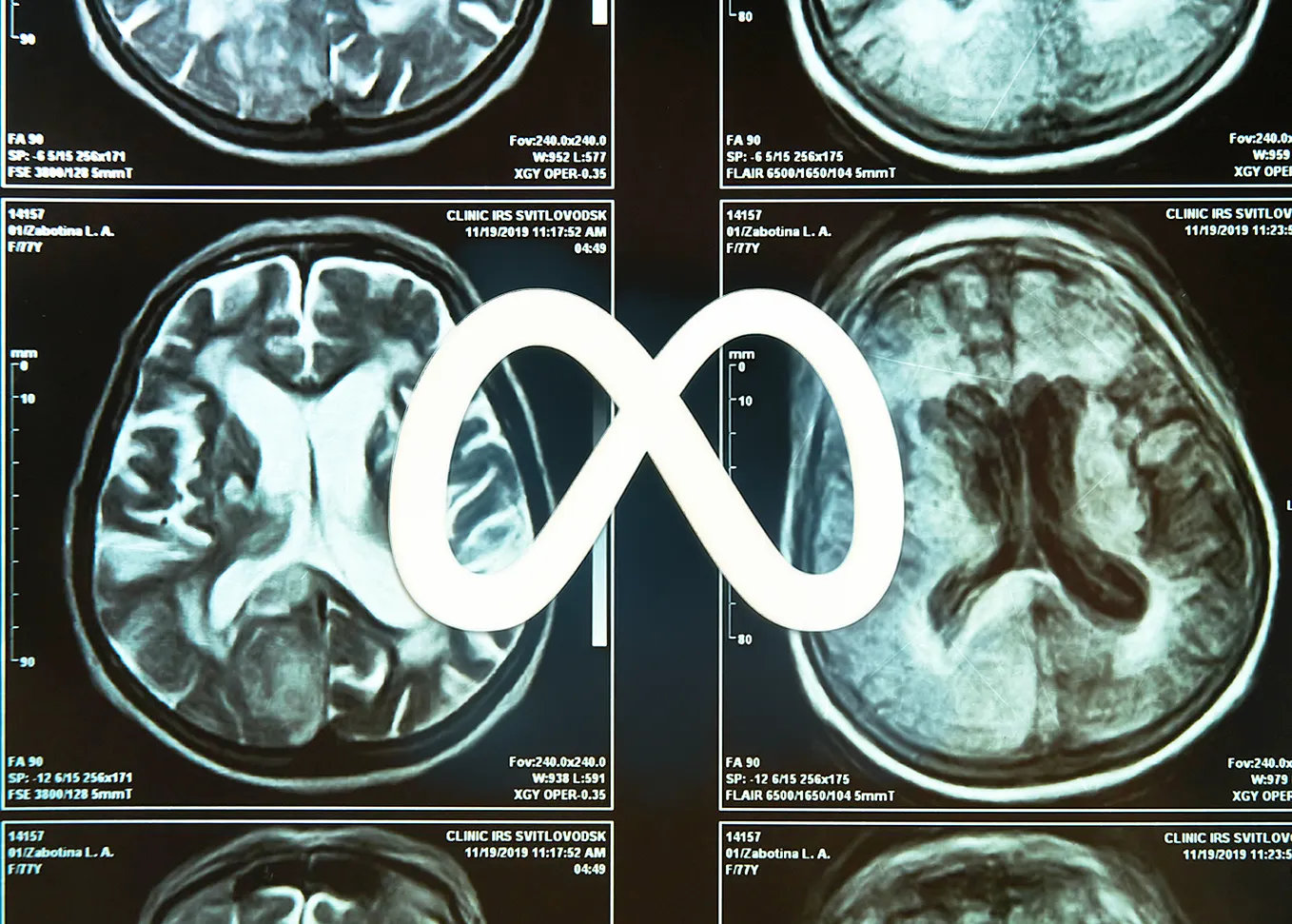
Participants faced a clock designed to measure time with high precision. Subjects moved at freely chosen times, reporting either “time of willing” or “time of the sense that the movement occurred”. Researchers simultaneously measured participants’ EEG activity (a means of recording the brain’s electrical activity via electrodes attached to the scalp), focusing specifically on the Readiness Potential — a gradual electrical buildup, represented within EEG data, that reflects neural activity preceding a self-initiated movement.
Astonishingly, Libet’s team discovered, across all subjects, a Readiness Potential that took place approximately 700 milliseconds prior to each participant’s conscious decision to initiate movement. In other words, the brain began preparing for self-initiated movement before the individual even became conscious of their voluntary decision to act.

In one extension of Libet’s experiment, researchers studied patients with implanted depth electrodes. As opposed to EEGs, depth electrodes (thin, flexible probes implanted directly into brain tissue, recording deep electrical activity) yield unparalleled temporal resolution. Within the study, a progressive recruitment of neurons associated with voluntary movement, decision-making, and cognitive control was identified, that altered their firing pattern across an interval surpassing 1,000 milliseconds prior to subjects’ awareness of the urge to act. Impressively, based solely on data procured from those neurons, the researchers were able to predict, with accuracy exceeding 80%, a participant’s impending decision to move 700 milliseconds prior to the subject’s awareness.
Of note, much of our brain’s activity is unconscious. We navigate routine, menial tasks predominantly on autopilot. Traversing a familiar route. Completing household chores. Certainly, complex decisions may bring particular brain processes into consciousness. But who’s to say consciousness acts upon the choice?
Perhaps our experience of autonomy is merely an awareness of decisions, out of our control, that have already been formed by our biology.
Causal Determinism.
Within the free will debate, the loudest voices opposing autonomy’s existence emerge from the causal determinism camp.
“Turtles all the way down,” Robert Sapolsky wrote. He borrows the idea from a well-known anecdote in which a woman declares the earth must rest on a turtle’s shell. When asked what that turtle then rests on, she responds, “it’s turtles all the way down.” In Determined: A Science of Life Without Free Will, the acclaimed Stanford neuroscientist delivered a powerful assertion: “we are nothing more or less than the cumulative biological and environmental luck, over which we had no control, that brought us to any moment.”
Each decision is wholly influenced by present circumstances and neural activity. The aforementioned are influenced entirely by (occurring hours before said decision) sleep, hormone levels, recent experiences, and so forth. These are influenced completely by (occurring years before said decision) childhood upbringing, social environment, education, and so forth. Terminating the incessant chain, the aforementioned are thoroughly influenced by genetic inheritance, culture, and evolutionary history. As Sapolsky expressed, there never once existed an opening for free will to emerge.
Childhood stress, for one, produces increased glucocorticoids. This yields a less developed frontal cortex, manifesting as decreased impulse control. Hormonal fluctuations (a product, to some extent, of environmental factors) can influence aggression, social behavior, and risk-taking. Physiological states bias judgements. In one striking study, researchers examined 1,112 parole decisions made by judges. Immediately after food breaks, favorable rulings were more common; this substantially declined as each decision session progressed.
“In order to prove there is free will,” Sapolsky asserts, “you have to show that some behavior just happened out of thin air.”
Are we really in control?
Yes.
Countering Neural Evidence.
A vast number of experiments probing free will, including those described within this article, examine proximal intentions (an intention to perform an action in the immediate future), as opposed to decisions concerning long-term plans or goals (these are typically more meaningful or deliberate), also known as distal intentions.
In one study, participants selected which of two nonprofit organizations should receive a $1,000 donation (here, distal intentions are in play). Those in the control group were informed that each nonprofit organization would receive $500 regardless of their choice (distal intentions are not in play). The control group exhibited Readiness Potential, whereas the meaningful decision group did not.
Get Neurotech@Berkeley’s stories in your inbox
Join Medium for free to get updates from this writer.
Perhaps elementary decisions are truly devoid of free will. But maybe those far greater in complexity (these are the ones that shape our lives) emerge, indeed, from autonomy.
Countering Causal Determinism.
Quantum physics asserts the impossibility of definitively ascertaining the location of particles due to their wave-like nature. Scientists, therefore, are fundamentally incapable of making perfect predictions about any event in nature. This presents the conceptual foundation by which choice, creativity, variability, and hence autonomy can arise. “Random variations in behavior are revealed in even the most highly controlled laboratory conditions,” Jackson Marr, a Professor Emeritus of Psychology at the Georgia Institute of Technology, commented in an article discussing determinism.
Numerous evolutionary scientists acknowledge, in tandem, the arbitrary nature of evolution. Which variations are selected and retained is, to some degree, unpredictable. Mutations (an essential driving force of evolution) occur at random, arising from DNA replication errors, chemical damage, or radiation. According to Stephen Gould, a renowned evolutionary biologist, “if we were to replay the tape of life’s evolution on earth, we would be unlikely to arrive at a world like the one we know.”
The foundation of causal determinism rests on the argument that “every event, action, and state of affairs in the universe is completely necessitated by preceding events and the laws of nature”. Yet the aforementioned examples provide evidence for events that seemingly cannot be explained by the episodes preceding it.
One Final Take.
Below is a breathtaking passage penned by Bernardo Kastrup, journalist for Scientific American.
“Why do we think that metaphysical materialism (the notion that our choices are determined by neurophysiological activity in our own brains) contradicts free will? Because, try as we might, we don’t experientially identify with neurophysiology; not even our own. As far as our conscious life is concerned, the neurophysiological activity in our brain is merely an abstraction. All we are directly and concretely acquainted with are our fears, desires, inclinations, etc., as experienced — that is, our felt volitional states. So, we identify with these, not with networks of firing neurons inside our skull.”
The brain may begin preparing for self-initiated movement before the individual becomes conscious of a voluntary decision to act. But are we not simply our brains? A separation seems to exist between our perceived identity and our inherent biology. “We don’t experientially identify with neurophysiology; not even our own.” This line of reasoning renders all arguments invoking neural evidence to reject autonomy’s existence as fundamentally worthless.
Here is another profound passage penned by Ted Chiang, a renowned science fiction writer.
“There have always been arguments showing that free will is an illusion, some based on hard physics, others based on pure logic. Most people agree these arguments are irrefutable, but no one ever really accepts the conclusion. The experience of having free will is too powerful for an argument to overrule.”
Conclusions.
A conglomeration of voices exist, each picking sides within the gargantuan, sprawling debate of the existence of free will. This article offers only a small glimpse into its depths.
Are we really in control?
We lack, evidently, a definitive answer. Ultimately, the choice is yours.
Sources.
Fried, Itzhak, et al. “Internally Generated Preactivation of Single Neurons in Human Medial Frontal Cortex Predicts Volition.” Neuron, vol. 69, no. 3, Elsevier BV, Feb. 2011, pp. 548–62, https://doi.org/10.1016/j.neuron.2010.11.045. Accessed 31 Oct. 2026.
Hallett, M. (2016). Physiology of free will. Annals of Neurology, 80(1), 5–12. https://doi.org/10.1002/ana.24657
Hoefer, Carl. “Causal Determinism (Stanford Encyclopedia of Philosophy).” Stanford.Edu, 23 Jan. 2003, https://plato.stanford.edu/entries/determinism-causal/. Accessed 4 Nov. 2026.
Jamali, Mohammad, et al. How the Human Mind Affects Its Related Brain? A Mechanism for This Influence, Using an Extended Bohmian QM in Avicenna’s Monotheistic Perspective. MDPI AG, May 2019, https://doi.org/10.20944/preprints201905.0223.v1. Accessed 10 Nov. 2026.
Kastrup, Bernardo. “Yes, Free Will Exists.” Scientific American, 5 Feb. 2020, https://www.scientificamerican.com/blog/observations/yes-free-will-exists/. Accessed 31 Oct. 2026.
Mahto, Neil. “Science Supports the Existence of Free Will.” The Johns Hopkins News-Letter, 24 Apr. 2024, https://www.jhunewsletter.com/article/2024/04/science-supports-the-existence-of-free-will. Accessed 31 Oct. 2026.
Rakos, Richard F., et al. “The Free Will: Determinism Debate in Contemporary Science and Society (or: Why Are You Reading This Article?).” Perspectives on Behavior Science, vol. 48, no. 2, Springer Science and Business Media LLC, Apr. 2025, pp. 475–97, https://doi.org/10.1007/s40614-025-00447-3.
Sapolsky, Robert M. Determined. Penguin, 2023.
This article was written by Rou Zhao , an undergraduate student majoring in Neuroscience and Data Science at UC Berkeley. This article was edited by Will Sperling and Bridgette Lai.