66 Java, Spring Boot & Microservices Interview Questions for Senior Engineers
Advanced Java 21, distributed systems, PostgreSQL, Kafka, Kubernetes, system design, and production engineering questions with practical answers.

A developer can explain the difference between HashMap and ConcurrentHashMap, describe the Spring Bean lifecycle, and answer fifty questions about dependency injection without ever demonstrating that they can keep a distributed system correct under failure. Those topics matter, but their value changes when an interviewer asks what happens after a database commit succeeds and a Kafka acknowledgment disappears.
Consider a Spring Boot payment service processing 8,000 transactions per second. Its PostgreSQL connection pool is saturated, Kafka consumer lag is increasing, and Kubernetes is adding replicas because request latency has risen. Every individual component appears to be doing what it was configured to do, yet the combined system is becoming less stable.
The following questions examine the engineering decisions behind failures like this. They are original practice scenarios, with each answer focusing on the mechanisms a Senior or Staff Engineer should understand before choosing a solution.
Java 21 and JVM Interview Questions
1. How can virtual threads exhaust a PostgreSQL connection pool?
A Java 21 service handles 20,000 concurrent requests with virtual threads. Its HikariCP pool allows 40 connections, and requests begin waiting several seconds to acquire one.
Answer: Virtual threads reduce the overhead of blocking threads, but they don’t expand database capacity. Bound concurrent database work and monitor acquisition latency, transaction duration, and pending requests. The correct concurrency limit depends on database throughput and workload characteristics.
Advanced challenge: Design a semaphore-based admission controller that prevents database overload without starving high-priority requests.
Resource: Senior Java Interview OS: 120 Questions.
2. Why can ConcurrentHashMap.computeIfAbsent() cause unexpected contention?
A service uses computeIfAbsent() to initialize expensive per-customer objects. Under heavy concurrency, many requests contend for the same key while initialization performs slow work.
Answer: Mapping functions should be short and avoid blocking operations. Expensive initialization can create contention and unpredictable latency, so consider asynchronous initialization or a separate coordination mechanism.
Advanced challenge: Design a cache that ensures only one expensive initialization runs per key while allowing unrelated keys to progress independently.
Resource: Senior Java Interview OS: 27 Advanced Questions.
3. How would you diagnose a Spring Boot service that stops responding without crashing?
The JVM remains alive and Kubernetes reports the container as running. HTTP requests time out because application threads are waiting for database connections.
Answer: Inspect thread dumps, HikariCP metrics, and database wait events. A running JVM doesn’t imply that the application can make progress. Correlate blocked threads with connection-pool saturation and transaction behavior.
Advanced challenge: Build a diagnostic workflow that distinguishes thread starvation, database locks, and external HTTP dependency delays.
Resource: Senior Java & Spring Boot Production Debugging OS.
4. Why does Spring’s @Transactional annotation sometimes fail?
A service invokes an internal method annotated with @Transactional. The developer expects transaction interception, but the method is called through this.
Answer: Proxy-based transaction management doesn’t intercept self-invocation. Use an appropriate service boundary or programmatic transaction management.
Advanced challenge: Explain how REQUIRES_NEW behaves when the outer transaction holds a database connection and the pool is nearly exhausted.
Resource: Spring Boot Production Troubleshooting OS.
5. How would you prevent a microservice dependency graph from amplifying latency?
An API calls several downstream services, some sequentially and others in parallel. One slow dependency causes the entire request to exceed its deadline.
Answer: Propagate deadlines, bound concurrency, and distinguish critical dependencies from optional ones. Retrying every failed request can increase pressure on already degraded services.
Advanced challenge: Design a checkout workflow that remains available when a recommendation service is down but never bypasses payment validation.
Resource: Senior & Staff Backend Interview OS.
6. How would you avoid tight coupling in a shared Spring Boot starter?
A platform team publishes a shared starter used by 40 services. A breaking configuration change requires coordinated deployments across the organization.
Answer: Keep shared infrastructure contracts stable and versioned. Avoid embedding service-specific business behavior into common libraries.
Advanced challenge: Design a compatibility strategy for migrating Kafka serializers across independently deployed services.
Resource: Spring Boot Microservices Starter Kit.
7. Why can Java memory usage exceed the configured heap limit?
A Java 21 service runs with a 600 MB maximum heap inside a container limited to 1 GB. The container is OOMKilled even though heap usage stays below 500 MB.
Answer: Total process memory includes native allocations, thread stacks, direct buffers, metaspace, and other non-heap memory. Inspect cgroup usage and JVM native memory diagnostics.
Advanced challenge: Create a memory budget for a containerized Java service with high concurrency and direct-buffer usage.
Resource: Java 21 & Spring Boot 3 Microservices Boilerplate.
PostgreSQL and SQL Interview Questions
8. Why can PostgreSQL experience severe latency with low CPU usage?
A database shows 20% CPU utilization while application requests time out. PostgreSQL sessions reveal long-running transactions waiting on row locks.
Answer: Low CPU doesn’t imply that queries can make progress. Investigate wait events, transaction age, and blocking relationships.
Advanced challenge: Write a query using pg_blocking_pids() to identify the root blocker and explain how you would safely resolve it.
Resource: PostgreSQL Production Debugging OS.
9. How would you optimize SQL queries for highly skewed multi-tenant data?
A table contains 300 million rows, and one tenant owns 80% of the data. Queries perform well for small tenants but poorly for the largest tenant.
Answer: Examine statistics, selectivity, parameter-sensitive plans, and indexing strategies. Compare estimated and actual execution costs.
Advanced challenge: Explain when partial indexes, partitioning, or custom plans may outperform a general composite index.
Resource: SQL Performance Debugging OS.
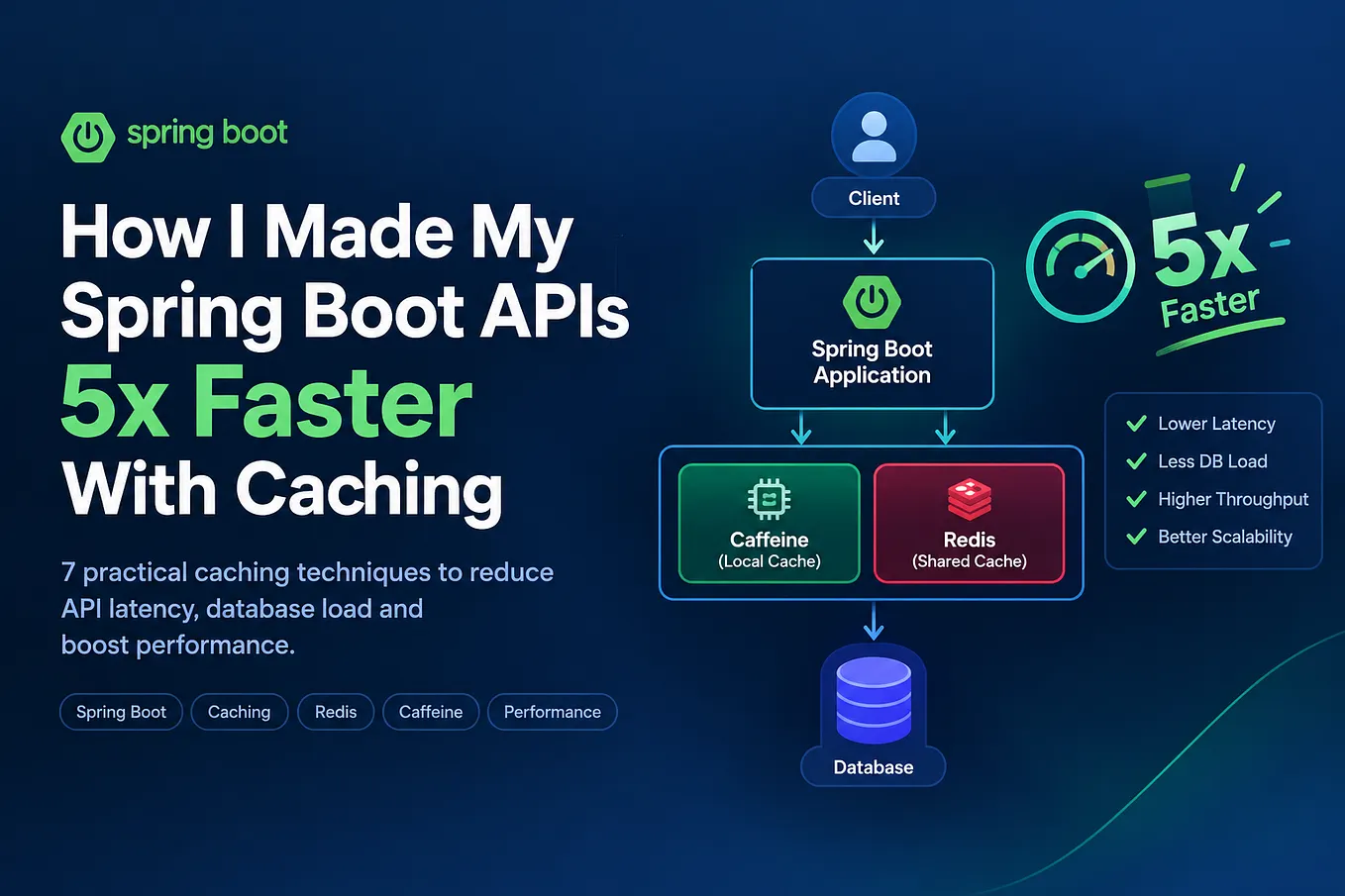
10. How would you prevent stale financial data in Redis?
A service invalidates Redis before committing a PostgreSQL transaction. Another request repopulates the cache with the old committed value.
Answer: Coordinate cache invalidation with transaction completion or use version-aware caching. Strong consistency requirements may require authoritative database reads.
Advanced challenge: Design a cache strategy that remains correct when invalidation messages are delayed or lost.
Resource: Redis Production Debugging OS.
11. How would you recover from an ambiguous PostgreSQL commit?
A client sends COMMIT, but its connection drops before the acknowledgment arrives. The application cannot determine whether the transaction committed.
Answer: Use durable business identifiers to determine whether the operation already occurred. Avoid blindly retrying non-idempotent operations.
Advanced challenge: Compare recovery behavior under synchronous and asynchronous replication during failover.
Resource: Database Outage Runbook.
12. How would you prevent write skew under snapshot isolation?
Two transactions read the same constraint and independently make updates that violate it when combined.
Answer: Enforce the invariant through appropriate serialization, explicit locking, or database constraints. PostgreSQL SERIALIZABLE isolation can detect unsafe executions when the application handles retries correctly.
Advanced challenge: Construct a write-skew scenario and explain why locking only the rows being updated may be insufficient.
Resource: Senior & Staff System Design Interview OS: Architecture Tradeoffs.
Kubernetes, Docker, and Linux Interview Questions
13. Why can Kubernetes autoscaling make a database outage worse?
An application scales from 20 to 80 replicas, each with a 30-connection pool. Theoretical database connection demand rises to 2,400.
Answer: Application autoscaling must respect shared dependency capacity. More replicas cannot resolve a database lock or a saturated downstream service.
Advanced challenge: Design an autoscaling policy that incorporates queue depth and database saturation.
Resource: Kubernetes Production Debugging OS.
14. How would you diagnose container OOMKills with normal heap metrics?
A Java service’s heap remains stable, but the container exceeds its memory limit due to native allocations and thread stacks.
Answer: Inspect cgroup memory, JVM native memory, direct buffers, and thread counts. Heap metrics alone don’t represent total process memory.
Advanced challenge: Distinguish a Java heap leak from direct-buffer growth using runtime diagnostics.
Resource: Docker Production Debugging OS.
15. How can Linux memory pressure cause latency spikes without high CPU usage?
A service experiences long pauses while CPU utilization remains low. Memory pressure stall metrics reveal threads waiting for reclaim.
Answer: Investigate PSI metrics, reclaim activity, and cgroup limits. Resource pressure can create substantial waiting time without high CPU utilization.
Advanced challenge: Explain how memory pressure propagates across colocated workloads.
Resource: Linux Production Troubleshooting OS.
16. How should Kubernetes readiness and liveness probes differ?
A temporary database outage causes application pods to fail health checks. Kubernetes restarts them, creating additional connection pressure.
Answer: Liveness should identify processes that need restarting, while readiness determines whether instances should receive traffic. Avoid probe designs that unnecessarily restart healthy processes during transient dependency failures.
Advanced challenge: Design health probes for a Spring Boot service with PostgreSQL, Redis, and Kafka dependencies.
Resource: Kubernetes & Docker Troubleshooting Playbook.
Backend Performance Interview Questions
17. Why can p99 latency increase while average latency remains stable?
An API averages 100 milliseconds, but p99 rises above four seconds during traffic spikes.
Answer: Averages conceal tail behavior. Investigate queueing, concurrency saturation, and latency distributions.
Advanced challenge: Use Little’s Law to estimate in-flight work and explain why it doesn’t independently predict p99 latency.
Resource: Backend Latency Debugging OS.
18. How would you eliminate Hibernate N+1 queries without breaking pagination?
An endpoint loads 500 entities and lazily fetches related collections, producing thousands of SQL queries.
Answer: Compare DTO projections, batch fetching, and fetch joins. Collection fetch joins can multiply rows and complicate pagination.
Advanced challenge: Design a paginated orders API that efficiently retrieves line items.
Resource: API Performance Debugging Playbook.
19. Why might increasing worker threads reduce throughput?
A service doubles its worker count from 200 to 400. Throughput falls because contention and downstream queueing increase.
Answer: Measure throughput across controlled concurrency levels and identify the sustainable operating range. More workers cannot overcome a fixed downstream bottleneck.
Advanced challenge: Design a load test that avoids coordinated omission.
Resource: Backend Performance Engineering OS.
Production Debugging and Incident Response Questions
20. How would you prevent retry storms during dependency failures?
Several upstream services independently retry failed requests, multiplying traffic against a degraded dependency.
Answer: Use retry budgets, exponential backoff with jitter, and admission control. Retry policies must respect idempotency and request deadlines.
Advanced challenge: Calculate retry amplification across a three-layer dependency graph.
Resource: Backend Production Incident OS.
21. How would you trace a gateway 502 error to a PostgreSQL lock?
An API gateway reports 502 responses while the upstream service waits for database connections blocked by a long-running transaction.
Answer: Correlate distributed traces, connection-pool metrics, and PostgreSQL wait events. Identify the earliest shared bottleneck.
Advanced challenge: Design tracing that connects HTTP requests to database blocking sessions.
Resource: Production Debugging Playbook.
22. What should you collect before restarting a failing JVM?
An application experiences thread exhaustion and increasing latency. Restarting it may temporarily recover service but erase diagnostic evidence.
Answer: When practical, capture thread dumps, connection-pool metrics, and runtime state before mitigation. Balance evidence collection against customer impact.
Advanced challenge: Define a five-minute diagnostic procedure for thread exhaustion.
Resource: Production Incident Debugging OS.
23. How would you distinguish a memory leak from an unbounded queue?
Heap usage rises continuously, but retained objects are mostly pending requests in an unbounded queue.
Answer: Examine queue depth, arrival rates, and object retention. Introduce bounded admission when work arrives faster than it can be processed.
Advanced challenge: Compare heap-retention patterns for a genuine leak and queue accumulation.
Resource: Production Failure Field Guide.
24. How would you coordinate a multi-team production incident?
Application engineers increase connection pools while database engineers reduce concurrency. Infrastructure engineers restart pods, obscuring the impact of each intervention.
Answer: Assign incident command, establish ownership, and maintain a shared action timeline. Coordinated mitigation reduces conflicting changes.
Advanced challenge: Design an incident communication protocol for a regional payment outage.
Resource: Production Incident Response Playbook.
25. When should an on-call engineer escalate?
A responder investigates an unfamiliar database failure for 45 minutes while customer impact continues.
Answer: Escalate based on impact, elapsed time, and available expertise. Define thresholds before incidents.
Advanced challenge: Create an escalation policy for high-severity database incidents.
Resource: On-Call Engineer Survival Guide.
26. How would you write a useful incident postmortem?
A deployment fails because a configuration value is missing. The postmortem concludes that the engineer should have checked more carefully.
Answer: Investigate why validation and deployment safeguards failed to prevent the issue. Focus corrective actions on system conditions.
Advanced challenge: Rewrite a blame-focused postmortem with measurable follow-up actions.
Resource: Production Incident Postmortem OS.
27. How would you validate disaster recovery objectives?
A runbook promises five-minute recovery, but database failover and application reconnection take 40 minutes.
Answer: Conduct controlled recovery exercises measuring the full application recovery path. Include RTO, RPO, and business-state reconciliation.
Advanced challenge: Design a regional failover simulation with measurable recovery criteria.
Resource: Production Incident Simulator.
28. How would you reconstruct event ordering across distributed services?
An API gateway logs a timeout before a worker records completion. Database timestamps appear inconsistent.
Answer: Use trace relationships, durable identifiers, and event semantics to reconstruct causality. Wall-clock timestamps alone may be misleading.
Advanced challenge: Build an incident timeline using Kafka offsets and database transaction identifiers.
Resource: Production Incident Investigation OS.
Deployment and Recovery Questions
29. How would you perform a zero-downtime database migration?
A new application version removes a column while older pods are still serving traffic.
Answer: Use expand-and-contract migrations that preserve compatibility during rolling deployment. Remove obsolete schema elements only after older consumers are gone.
Advanced challenge: Plan a migration that renames a heavily used column in a 500-million-row table.
Resource: Production Deployment Checklist.
30. How would you verify Spring Boot production readiness?
An application passes CI but behaves poorly during PostgreSQL failover and Kafka unavailability.
Answer: Test operational behavior under degraded dependencies, including recovery paths and overload controls.
Advanced challenge: Design a production-readiness review covering dependency loss and rollback.
Resource: Spring Boot Production Readiness OS.
31. How would you recover a lost Git commit after git reset --hard?
A developer resets a branch and loses access to recent commits.
Answer: Inspect reflog entries and recover the commit while its objects remain available. Understand how reachability and garbage collection affect recovery.
Advanced challenge: Compare reflog recovery with recovering dangling objects using git fsck.
Resource: Git Disaster Recovery Playbook.
Kafka and Distributed Systems Interview Questions
32. How would you guarantee idempotent Kafka processing?
A consumer updates PostgreSQL and crashes before committing its Kafka offset. The same event is delivered again.
Answer: Use durable event deduplication and atomic business-state updates. Broker delivery guarantees don’t automatically extend to external side effects.
Advanced challenge: Design a consumer that atomically records processed event IDs and updates account state.
Resource: Senior System Design Interview OS: Real Scenarios.
33. How would you preserve per-user event ordering with parallel consumers?
Kafka preserves partition order, but application workers complete messages out of order.
Answer: Preserve ordering within each key while allowing concurrency across independent keys. Handle retries without silently reordering later updates.
Advanced challenge: Build per-key ordered processing for millions of users.
Resource: System Design Architecture Diagrams & Playbook.
34. Why can a Redis distributed lock fail?
A worker acquires a Redis lease, pauses beyond its TTL, and resumes after another worker acquires the lock.
Answer: Use fencing tokens validated by the protected resource to reject stale owners. Lease renewal alone cannot guarantee exclusive execution.
Advanced challenge: Design a fencing-token protocol for a distributed job processor.
Get Inside Backend Engineering’s stories in your inbox
Join Medium for free to get updates from this writer.
Resource: Staff Engineer Architecture Decision OS.
35. How would you design a notification platform for 100 million users?
The platform requires high throughput, per-user ordering, regional failover, and bounded delivery delay.
Answer: Partition by an appropriate ordering key and separate durable notification intent from delivery attempts. Define guarantees under regional failure.
Advanced challenge: Explain tradeoffs between strict ordering and regional availability.
Resource: Senior & Staff Backend Interview Simulator.
AI Engineering and Production Safety Questions
36. How would you prevent AI-generated retry logic from duplicating payments?
An AI assistant adds retries around a payment API. The code passes normal tests but duplicates charges after ambiguous timeouts.
Answer: Review generated code against business invariants and test partial failures. Require stable idempotency keys and durable operation state.
Advanced challenge: Design failure-injection tests where the provider succeeds but the response disappears.
Resource: AI Coding Production Safety OS.
37. How would you design a production RAG system?
A retrieval pipeline returns documents from an obsolete API version and generates an incorrect answer.
Answer: Use version-aware retrieval and evaluate retrieval quality separately from generation. Measure citation support and answer correctness.
Advanced challenge: Design an evaluation framework covering retrieval recall and grounded answer quality.
Resource: Senior & Staff AI System Design Interview OS.
38. How would you make AI agent tool execution idempotent?
An agent creates a cloud resource, but the response times out. It retries and creates a duplicate.
Answer: Use durable operation identifiers and reconciliation for uncertain outcomes. High-impact calls need appropriate authorization controls.
Advanced challenge: Design an agent execution layer that prevents duplicate resource creation.
Resource: AI-Era Senior & Staff Software Engineer Interview OS.
39. How would you validate AI-generated production debugging advice?
An AI assistant recommends increasing PostgreSQL connections after observing timeouts. The actual bottleneck is row-lock contention.
Answer: Treat the recommendation as a hypothesis and verify it against database and application metrics.
Advanced challenge: Build a diagnostic decision tree distinguishing locks, connection exhaustion, and slow SQL.
Resource: AI Production Debugging Playbook.
Coding and Company-Specific Interview Exercises
40. How would you optimize a coding solution that times out at scale?
A substring search uses nested loops and passes small tests but becomes too slow for large inputs.
Answer: Analyze complexity and identify a suitable algorithmic pattern. Compare alternatives based on time and space requirements.
Advanced challenge: Implement a sliding-window solution and explain its correctness invariant.
Resource: Coding Interview Patterns: 12 Techniques & 50 Solutions.
41. How would you prepare for multiple Big Tech interviews?
An engineer performs well in coding rounds but struggles with architecture and leadership discussions.
Answer: Map preparation to the role and interview stages. Use timed exercises to identify weaknesses.
Advanced challenge: Build a six-week preparation plan based on measured performance.
Resource: Big Tech Software Engineer Interview OS.
42. Google-style: Design a globally distributed rate limiter
A customer has a quota of 10,000 requests per minute across five regions.
Answer: Compare centralized coordination, regional quota allocation, and approximate counters. Explain availability and consistency tradeoffs.
Advanced challenge: Bound quota overshoot during regional partitions.
Resource: Google Senior & Staff Software Engineer Interview OS.
43. Meta-style: Design a feed for celebrity accounts
A fan-out-on-write system attempts to distribute one post to 100 million followers.
Answer: Use a hybrid fan-out strategy that treats high-follower accounts differently. Evaluate caching, ranking, and freshness.
Advanced challenge: Design personalized ranking with bounded write amplification.
Resource: Meta Senior & Staff Software Engineer Interview OS.
44. Amazon-style: Defend a risky launch decision
A team must choose between delaying a launch and accepting a known reliability risk.
Answer: Explain the evidence, alternatives, mitigation strategy, and measurable criteria for proceeding.
Advanced challenge: Present a decision under incomplete information.
Resource: Amazon SDE II & SDE III Interview OS.
45. Microsoft-style: Design multi-region failover
A primary region becomes unavailable while asynchronous replication is several seconds behind.
Answer: Define recovery-point objectives and failover authority. Compare synchronous and asynchronous replication.
Advanced challenge: Recover transactions with unknown commit outcomes.
Resource: Microsoft Senior & Principal Software Engineer Interview OS.
46. Apple-style: Diagnose a rare concurrency failure
Two threads update shared state without appropriate synchronization. Rare interleavings produce incorrect results.
Answer: Analyze atomicity, visibility, and happens-before relationships. Build a controlled test exposing the unsafe interleaving.
Advanced challenge: Fix the race while minimizing contention.
Resource: Apple Senior & Staff Software Engineer Interview OS.
47. Netflix-style: Recover from regional streaming failure
A streaming platform loses a region during peak demand. Healthy regions lack enough spare capacity.
Answer: Use capacity-aware failover and controlled degradation. Prevent overload propagation.
Advanced challenge: Protect existing streaming sessions during traffic shifting.
Resource: Netflix Senior & Staff Software Engineer Interview OS.
48. Uber-style: Design real-time driver location tracking
Five million drivers send location updates every few seconds.
Answer: Separate transient location state from durable trip history. Use spatial indexing and partitioning.
Advanced challenge: Design regional recovery and freshness guarantees.
Resource: Uber Senior & Staff Software Engineer Interview OS.
49. Airbnb-style: Prevent concurrent double bookings
Two customers attempt to reserve the same property for overlapping dates.
Answer: Enforce the booking invariant transactionally using appropriate constraints or locking.
Advanced challenge: Design reservation expiration and retry handling.
Resource: Airbnb Senior & Staff Software Engineer Interview OS.
50. Stripe-style: Handle ambiguous payment outcomes
A client submits a payment request and times out before receiving the result.
Answer: Use durable idempotency records and reconciliation. Concurrent retries must not execute the same payment independently.
Advanced challenge: Design an idempotency-key store that remains correct under regional failover.
Resource: Stripe Senior & Staff Interview Prep.
51. OpenAI-style: Design a distributed inference scheduler
Inference requests vary in prompt length, output length, and resource consumption.
Answer: Consider continuous batching, capacity-aware admission, and scheduling fairness.
Advanced challenge: Schedule mixed interactive and batch inference workloads.
Resource: OpenAI Senior & Staff Software Engineer Interview OS.
52. Anthropic-style: Prevent model-serving overload
A model-serving platform receives requests with unpredictable execution times and memory requirements.
Answer: Use token-budget-aware admission control and bounded queues.
Advanced challenge: Prevent large requests from starving latency-sensitive traffic.
Resource: Anthropic Senior & Staff Software Engineer Interview OS.
53. NVIDIA-style: Diagnose low GPU utilization
An inference service receives heavy traffic, but GPU compute utilization remains low.
Answer: Investigate batching, kernel execution, memory bandwidth, and host-device transfer overhead.
Advanced challenge: Explain how batch size affects throughput and time to first token.
Resource: NVIDIA Senior & Staff Software Engineer Interview OS.
These company-style exercises are independent preparation scenarios, not verified or official employer interview questions.
Architecture and Staff Engineer Questions
54. How would you document a consequential architecture decision?
A team repeatedly debates Kafka versus synchronous HTTP because nobody remembers the original constraints.
Answer: Use architecture decision records preserving context, alternatives, assumptions, and consequences.
Advanced challenge: Write an ADR comparing messaging and synchronous communication for order processing.
Resource: Senior Backend Engineering OS: Architecture Decisions.
55. How would you build an engineering decision history?
Incident notes, architecture diagrams, and pull requests are scattered across disconnected tools.
Answer: Connect technical decisions to services, incidents, implementation changes, and ownership.
Advanced challenge: Design a knowledge system linking ADRs, incidents, and pull requests.
Resource: Software Engineer OS: The Engineering Command Center.
Senior, Staff, and Principal Career Questions
56. What separates Senior Engineers from Staff Engineers?
An engineer resolves difficult incidents but has limited influence beyond one team.
Answer: Staff-level impact often involves shaping decisions across team boundaries and improving other engineers’ effectiveness.
Advanced challenge: Design a cross-team reliability initiative with measurable outcomes.
Resource: Senior to Staff Engineer Roadmap.
57. How would you demonstrate Staff-level impact in a promotion packet?
A packet lists code reviews and projects without explaining outcomes.
Answer: Connect technical decisions to measurable results and organizational scope.
Advanced challenge: Rewrite a project description into an impact narrative.
Resource: Senior & Staff Engineer Promotion OS.
58. How would you lead a cross-team architecture migration?
Five teams own different parts of a legacy billing workflow and have incompatible deployment constraints.
Answer: Establish migration boundaries, ownership, compatibility requirements, and rollback procedures.
Advanced challenge: Design a phased migration to event-driven billing.
Resource: Senior to Staff & Principal Engineer OS.
59. What should a Senior Engineer accomplish in the first 90 days?
A new engineer proposes rewriting a service before understanding its architecture history.
Answer: Investigate system constraints, incident history, and team priorities before proposing major changes.
Advanced challenge: Build a technical discovery plan identifying critical services.
Resource: Senior & Staff Engineer First 90 Days OS.
60. How would you resolve a technical disagreement between teams?
Two teams disagree about whether a shared service should use Kafka or synchronous HTTP.
Answer: Make competing constraints explicit and evaluate alternatives against business requirements.
Advanced challenge: Prepare a leadership story explaining the decision and agreement process.
Resource: Staff Engineer Behavioral Interview OS: 60 Leadership Scenarios.
61. How would you explain your most difficult production incident?
An interviewer asks about an outage, but the candidate describes logs without clarifying their contribution.
Answer: Establish context, uncertainty, evidence, decision, and outcome.
Advanced challenge: Present a production incident in five minutes and defend the mitigation.
Resource: Staff Engineer Behavioral Interview OS: Story Bank.
62. Why do generic behavioral answers fail?
A candidate uses a polished STAR structure but provides little engineering detail.
Answer: Preserve technical constraints, alternatives, and measurable consequences.
Advanced challenge: Turn a generic conflict story into a grounded migration example.
Resource: Senior & Staff Behavioral Interview OS.
63. How should a Senior Engineer describe production achievements on a resume?
A resume says the candidate maintained Spring Boot microservices without communicating system scale or impact.
Answer: Describe the technical problem, contribution, and resulting improvement with credible metrics.
Advanced challenge: Rewrite five backend responsibilities into achievement statements.
Resource: Senior Software Engineer Resume OS.
64. Why might an experienced backend engineer receive few interviews?
A candidate has years of Java experience but receives little response from Senior and Staff applications.
Answer: Compare the application against target-role expectations and clarify technical scope.
Advanced challenge: Analyze job descriptions to identify positioning gaps.
Resource: Senior & Staff Engineer Job Search OS.
65. How should you compare two Senior Engineer offers?
Two employers offer similar base salaries but different equity, vesting, and employment terms.
Answer: Evaluate guaranteed compensation separately from uncertain components.
Advanced challenge: Compare hypothetical offers using vesting schedules and total compensation.
Resource: Software Engineer Salary Negotiation OS.
66. How would you identify your biggest weakness before a Senior Engineer interview?
A candidate studies many topics without measuring progress and repeatedly struggles with consistency guarantees.
Answer: Use timed exercises, record unsupported assumptions, and prioritize role-relevant weaknesses.
Advanced challenge: Complete a 45-minute system design exercise and evaluate failure recovery.
Resource: Free Senior Engineer Interview & Production Playbook.
How to Prepare for Senior Java and Spring Boot Interviews
Memorizing annotations and framework terminology doesn’t establish production engineering judgment. A candidate can explain transaction propagation and still fail to recognize that an external HTTP call inside a database transaction can exhaust the connection pool. Another may understand Kafka partitions but overlook how parallel processing breaks application-level ordering.
For each question, identify the business invariant and the failure conditions that threaten it. Explain which evidence would confirm your diagnosis and how the proposed solution behaves during retries, concurrency, and partial failure. The strongest answers also acknowledge operational costs and tradeoffs.
Frequently Asked Questions
What Java interview questions are most important for Senior Developers?
Java concurrency, JVM memory management, collections, transaction boundaries, and production debugging are important topics. Senior candidates should explain how these mechanisms behave under real workloads.
What Spring Boot interview questions should experienced developers prepare for?
Focus on transaction propagation, dependency injection, JPA performance, connection pooling, microservice reliability, and production configuration.
How difficult are Senior Backend Engineer interviews?
Senior interviews often combine programming, system design, database knowledge, and operational reasoning. Candidates may need to defend architectural choices under partial failure.
How should Java developers prepare for system design interviews?
Practice distributed consistency, messaging, caching, database performance, and service failure recovery. Use realistic Java and Spring Boot examples to explain design decisions.
Are these official interview questions from Big Tech companies?
No. The company-oriented scenarios are original practice exercises and are not presented as official employer interview materials.
Continue Learning
I publish advanced engineering breakdowns covering Java, Spring Boot, PostgreSQL, distributed systems, production incidents, and Staff-level architecture. You can subscribe to my Substack for practical technical discussions and interview preparation.
If you want a structured starting point, get the free Senior Engineer Interview & Production Playbook. It includes a 45-minute system design interview framework and practical preparation guides.
I’m also building an interactive AI-powered system design interview platform focused on realistic architecture decisions and structured feedback for Senior, Staff, and Principal Engineers. You can share your feedback and request private beta access to help shape the first release.