Why We Should Preserve Data for AI That Doesn’t Exist Yet

Today’s data may reveal things we cannot see yet. The question is how much of our lives we are willing to preserve — and at what cost to privacy.

Recently, I read an article about how AI may change the role of design tools.
Today, we still operate design software ourselves, with AI assisting us with certain parts of the process. But in the future, perhaps we won’t need to operate every tool directly. We may simply tell AI what we want to create, while it uses whatever tools are necessary behind the scenes and gives us the result.
We are already beginning to move in that direction.
But that made me think about something else.
For AI to create something or make a judgment, it still needs data.
And when I thought about it that way, I realized this isn’t really a new story that began with AI.
Old Data Can Reveal New Things
DNA analysis is an obvious example.
Material that once revealed very little can become valuable evidence years later because the technology used to analyze it has improved.
The same is true in archaeology.
Artifacts discovered long ago can be examined again with newer technologies, revealing information about age, diet, migration, environment, and other things researchers may not have been able to determine at the time.
Astronomy offers another example. Huge amounts of observational data can be analyzed again using new methods, sometimes opening the possibility of discoveries that were missed the first time.
The data itself may not have changed.
What changed was our ability to examine it.
That sounds obvious when I write it down, but it isn’t something I normally think about in everyday life.
And now AI is becoming another new way of examining data.
Data That Seems Unimportant Today May Matter Tomorrow
AI itself is still a relatively young technology.
Perhaps it is too early to look at what today’s AI can do and decide which data is useful and which is not.
Ten or twenty years from now, AI may be able to discover relationships in large collections of data that today’s systems cannot see.
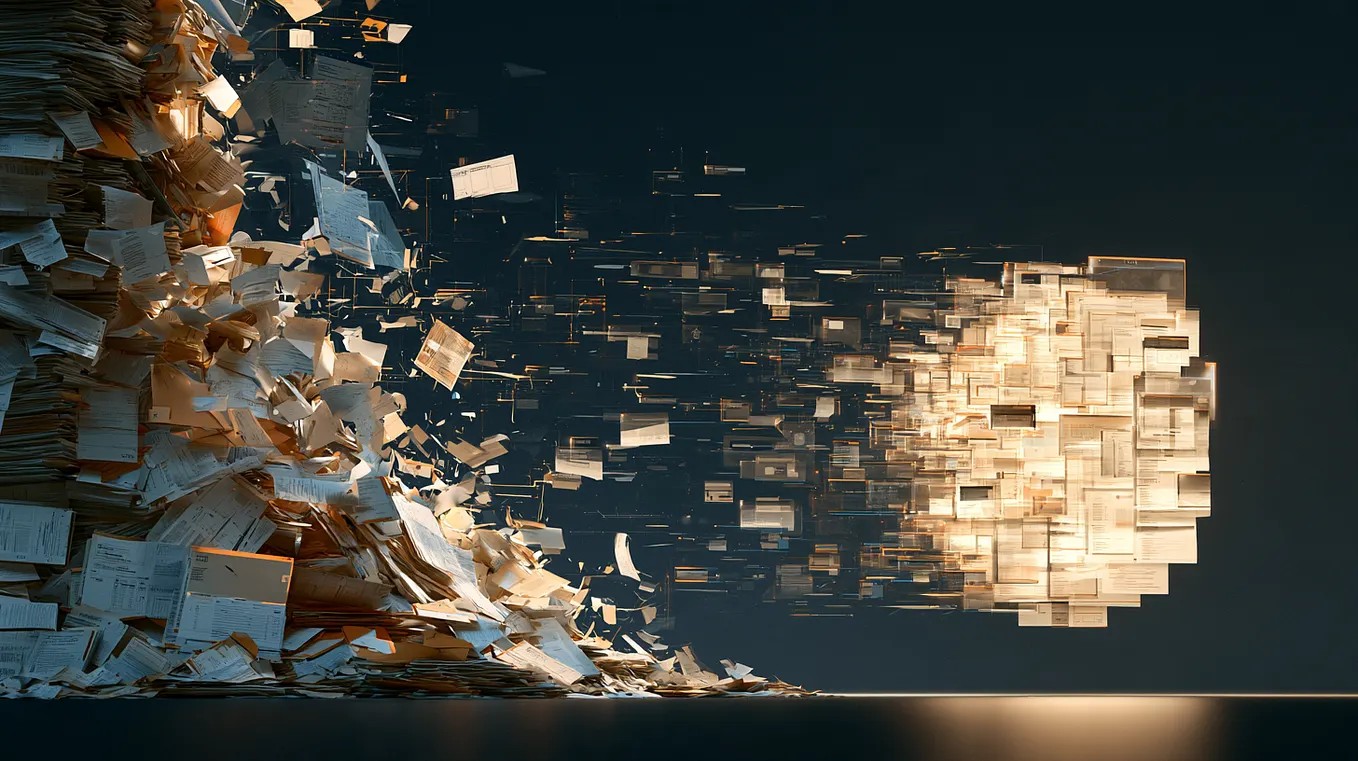
If that is possible, then preserving current digital data becomes important — but so does digitizing material that still exists only in analog form.
Old photographs. Documents. Video. Local records. Disaster records. The skills of craftspeople and specialists.
Even if we do not know exactly how these materials will be useful today, once they are preserved as data, future technologies can examine them again.
If they disappear, even the most advanced future AI will not be able to analyze what no longer exists.
Disaster Memory Could Mean More Than Passing Down Stories
After a major natural disaster, we often hear about the importance of passing the experience on to future generations.
But as time passes, the people who actually experienced the disaster grow older.
Traditionally, we have preserved their experiences through interviews, writing, photographs, and video. All of that remains important.
But perhaps we can preserve much more.
Not only the experiences of people directly affected by the disaster, but also those who evacuated, those who did not, rescue workers, medical staff, reconstruction workers, journalists, and many others.
They may all have experienced the same disaster from completely different positions.
If those records are preserved digitally, future AI may be able to examine them across many perspectives and find patterns or problems that were not obvious at the time.
Perhaps “passing down” the lessons of a disaster does not have to mean preserving one fixed set of lessons.
It could also mean:
preserving the experience in a form that future generations can examine again with better tools.
We Could Preserve Expertise in the Same Way
The same idea applies to human skills.
Traditionally, learning from a highly skilled craftsperson or specialist might mean becoming an apprentice, reading a textbook, or watching demonstrations.
But in the future, we may be able to preserve much more than the finished work.
We could preserve the process, failed attempts, revisions, tool use, decisions, and other parts of the work that usually disappear once the final result is complete.
If AI can learn from that data, future generations may have very different ways of accessing expertise.
They might ask an AI to explain a technique. In some cases, a machine might even be able to reproduce parts of the process.
Of course, that immediately creates another problem: if skills and styles can be preserved as data, they may also become easier for anyone to imitate.
Today, we are already debating whether something has less value because it was created with AI, or whether imitating another person’s style with AI is acceptable.
Those are important questions.
But if AI becomes increasingly useful and ordinary, I wonder whether simply asking, “Was AI used?” will continue to be enough.
Perhaps other questions will matter more.
Get Tetsuji Kondo’s stories in your inbox
Join Medium for free to get updates from this writer.
Whose experience was behind it? Who directed it? What was added or changed? Who decided that the result was finished?
Our Lives Are Already Becoming Data
Then there is an even bigger question.
It isn’t only our documents, artworks, and historical records that are becoming digital.
Parts of our lives already are.
Smartphones, computers, smartwatches, smart glasses, medical records, security cameras, and many other digital systems can create data about human activity.
Healthcare is an interesting example.
We often hear aging populations discussed in terms of rising healthcare costs.
But looked at from another direction, decades of medical records may also become valuable data for future medicine.
How did people’s health change over long periods of their lives?
What treatments did they receive?
What happened afterward?
If those records could someday be appropriately combined with health data collected in everyday life, younger generations might benefit from what previous generations experienced.
What If We Could Preserve Not Just the Result, but the Experience Behind It?
The same idea becomes especially interesting when thinking about art and design.
If we preserve thousands of finished works by an artist, AI may be able to analyze that person’s style.
But what if we also preserved what that person saw, what they tried, what failed, what they changed, which tools they used, and how their work developed over time?
A future AI might not only tell us:
“This person created work in this style.”
It might also offer new ways of looking at how that style changed over the course of a lifetime.
That would not necessarily prove cause and effect. Finding a relationship in data does not automatically mean one thing caused another.
But it might reveal connections we had never noticed before.
The More Useful Data Becomes, the Bigger the Privacy Question Gets
Of course, all of this leads directly to privacy.
I might be happy for my health data to be used for medical research but not for some unrelated purpose.
I might be comfortable training my own AI on my creative work but uncomfortable with someone else using the same data to reproduce my style.
I might be willing to preserve parts of my life for future research while strongly objecting to a company using the same information for advertising.
The same data can feel completely different depending on who is using it and why.
So I don’t think the question is simply:
Should we preserve data, or should we protect privacy?
The harder questions are who can use the data, for what purpose, under what conditions, and for how long.
Those questions need to develop alongside the technology.
I Still Want to Believe in the Benefits
I don’t spend my day consciously thinking about any of this.
When I use my smartphone, I don’t think, “This could become data for some future AI.”
When I scan an old photograph, I don’t normally wonder whether an AI 50 years from now might discover something in it that I cannot see today.
Most of us probably don’t.
But when we look back through history, we can see many examples of old materials becoming newly valuable because better technology gave us a new way to examine them.
AI is still at the beginning of its story.
I have no idea how capable it will become.
But from the standpoint of usefulness, I want to believe that AI will continue to improve, become easier to use, and become better at finding meaning in the data we already have.
Perhaps future AI will discover things in today’s data that we simply cannot see yet.
That possibility alone gives us a reason to think seriously about digitizing analog records that still exist today — and about preserving the digital data we are already creating in forms that future technologies can use again.
We cannot build the AI of the future today.
But we can preserve the data that future AI may one day be able to examine.
The harder question is how much of ourselves we are willing to preserve along with it.
Would you be willing to contribute more of your own data if you knew it might improve life for future generations?
Are there kinds of data you would never want preserved or shared, no matter how useful they might become?
And should we be digitizing more of today’s analog records now, even when we have no idea what future AI might eventually discover in them?
I want to believe in a future made more useful by better technology.
But where should we draw the line between that convenience and our privacy?
I’d be interested to hear where you would draw yours.