Featured
These Foolish Things (Remind Me of You)

Songbook staple rustled up on a single Sunday for a BBC radio show. But whose were those lipstick traces?
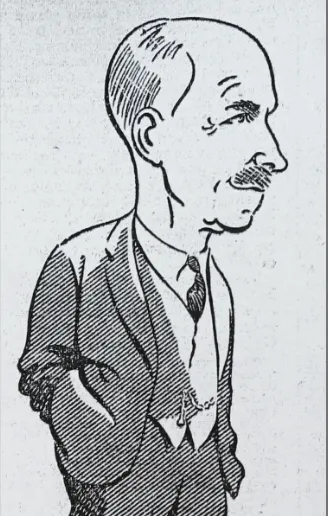
The words of These Foolish Things are by Eric Maschwitz, who is often cited as a real-life model for James Bond. Eric could never confirm that, of course, and his lips were also sealed regarding the muse for the song.
The smart money has a shortlist of three impossibly glamorous celebrities from the Mayfair fast set.

Cabaret singer and Nazi escapee Jean Ross was a friend of Christopher Isherwood and the model for Sally Bowles. Ross claimed it was her lipstick on that cigarette.
Second wife Hermione Gingold begged to differ. She was still married to Eric on that auspicious Sunday morning — and would be for another ten years. On the other hand, the song clearly refers to lost love rather than the woman still reading the Sunday papers in the lounge.

That leaves Chinese-American silent movie star Anna May Wong as the bookies’ favourite. She was rumoured to be romantically linked to Eric while she was filming in London in 1929. Was there a Brief Encounter-type love triangle? Perhaps Eric was still pining for his Ms. Wong, who returned to Los Angeles in 1931?
About the song
In his memoir No Chip On My Shoulder (1957), Maschwitz will only give name, rank, and serial number. These Foolish Things was about “fleeting memories of young love,” and a gentleman does not name names. But he does give chapter & verse about how those famous words were written.
In 1934, Eric was producing a weekly BBC Sunday evening radio show that would run for nearly thirty years: Tonight in Town. Each broadcast featured an original song, but on this occasion, the commissioned songwriter had been taken ill.
The multi-talented Maschwitz now needed to write the song himself to a sharp deadline. By the morning of the scheduled broadcast, he had only managed a title: These Foolish Things (Remind Me of You).
Sitting in his pyjamas, Eric chewed his pencil down to a stump. Then, eureka, a brainwave. He would write what lyricists call a catalogue or laundry-list song. Cole Porter’s You’re the Top provides the basic template:
With this framework, “a miracle happened — as miracles so seldom do in songwriting. It was as if it was all stored up in my head.”
A cigarette that bears a lipstick’s traces/An airline ticket to romantic places. . . . .
In a few hours, Eric bashed out a verse and three choruses (‘fortified by coffee and vodka’). At midday, he dictated the words down the phone to his writing partner, composer Jack Strachey.
“I need you to set them to music, Jack. By six o’clock!”
Get Kieran McGovern’s stories in your inbox
Join Medium for free to get updates from this writer.
The difficult I’ll do right now/The impossible takes a little time. Billy Holiday
These Foolish Things was duly broadcast that evening:
…beautifully sung by Patrick Waddington and a talented, lovely girl called Joan Carr — who is now the Countess of Drogheda
Despite the best efforts of the Countess, the song quickly disappeared from public consciousness. Maschwitz’s agent, Keith Prowse, declined the option to publish it, prompting Eric to take the unusual step of doing so himself.
This seemed extremely unlikely to pay off until the West Indian cabaret star Lesley ‘Hutch’ Hutchinson happened to be visiting Eric’s BBC studio. Hutch noticed the score lying on the piano.
“Hutch” placed the music on the rack, played and sang the song right through. Then he turned to me and said: “May I use it?”
Hutch recorded a version that was included in a West End revue, Spread It Abroad (1936). This happened to star Eric’s (then) wife, Hermione Gingold, though it was Dorothy Dickson who brought the house down singing it.
America
The show's success and its take-home tune attracted interest from the US. Irving Berlin bought the rights and worked with Harry Link to prepare the song for the American market. One change was to extend the middle section to fit a conventional 32-bar format. Another was the deletion of the second refrain with its British-English rhymes;
I knew that this was bound to be; These things have haunted me,
For you’ve entirely enchanted me . . .
Several new versions of the revamped song were released simultaneously. A standout was by superstar band leader Benny Goodman. Another featured ‘tinkling piano’ by Teddy Wilson and a bluesy vocal by the rising jazz star, Billie Holiday:
The Holiday version peaked at # №5 on the Billboard Pop Songs chart and opened the door for countless jazz interpretations.
Philip Larkin chose it as one of his Desert Island Discs, albeit with a sideswipe at the lyric. “I have always thought the words were a little pseudo-poetic,” he sniffed. “But Billie sings them with such passionate conviction that I think they really become poetry.”
Left-bank hipsters joined the party in France. A version by Jean Sablon, Ces petites choses (“These small things”) was also released in 1936.
Post War
Everyone, bar Keith Prowse, now adored a tune. In 1973, Bryan Ferry surprised his glam rock fans by getting tuxed up for a surprisingly traditional rendition. Yes, there’s rock percussion, but otherwise he stays closer to the original than many of the jazz versions. Brian gets extra points for including the introductory verse.
Rod Stewart also dusted down his white jacket for (imo) a less successful crooner rebrand on The Best of the Great American Songbook (2002). The song is not American, though, Rod, so you can lose that odd mid-Atlantic phrasing (and the meandering saxophone interlude while you’re at it).
I happened to bump into Mr Stewart in a recent dream, where we were sitting next to each other on the top deck of a London bus. I gushed about his early work but diplomatically avoided comment on the tuxedo work. When I looked around, he was gone, heading off in a limo towards that old BBC studio where These Foolish Things took wings.
The Magnificent Mr Maschwitz — the astonishing life-story of the songwriter/radio producer and wartime spy.