A Believer’s Life In The Flesh: What Is Valued Determines What Is Served

Placing Too Much Value in Our Bodies
What we value determines what we serve. Wealth, fame, nationality, and outward distinctions cannot spare us from death or answer for us before God. The call of Christ is not to exalt our temporary status, but to repent, love without prejudice, and use our lives to serve those in need. A meaningful legacy is measured not by what we accumulate, but by the goodness, kindness, and selflessness we practice. Our enduring hope rests not in worldly power, but in Christ and the Kingdom to come.

Introduction
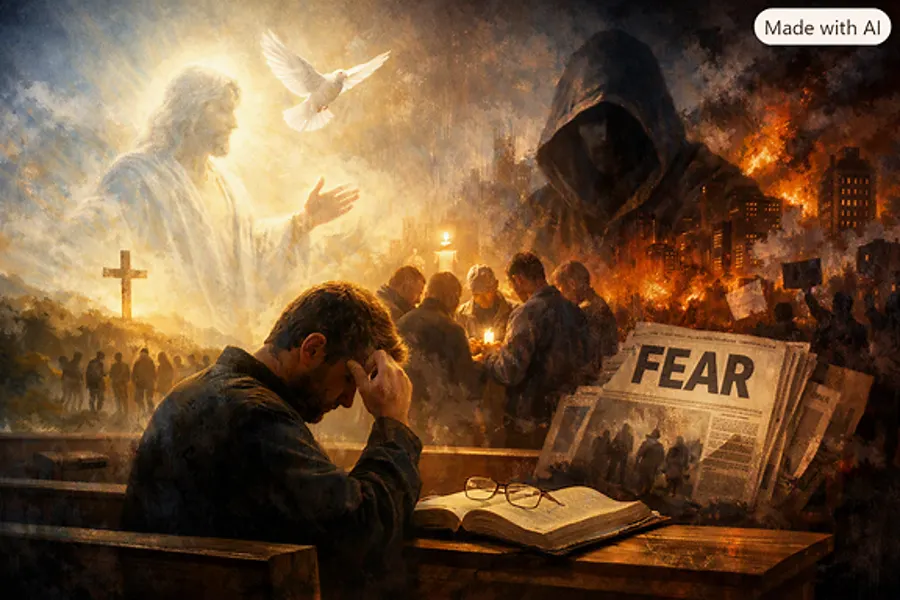
Christians value their lives, their bodies, and existence far more than they should. Teachers of the scriptures often write and speak on the need to separate from and not love the world of flesh as all these things will be removed (2 Peter 3:10); so why do we place such value in our present state in the body and in this world? Believers seem confused and not aligned with the solemn teachings to avoid too much identity in the here and now and to aim their thoughts on the world to come. I can think of the many Christians caught up in the spirit of Nationalism, even thinking of themselves as better than others based on skin color, ethnicity, language, and status of family at birth. So many reasons to see themselves as “special” because their body happens to be different from others. If the body dies, why do people seek to even separate their corpses from those of other nationalities and beliefs?
Remembering
When I was a child visiting the South, I encountered towns where Whites, Catholics, and Blacks were buried in separate places. Whites had nice places with green grass and scenery to bury their dead, while Blacks were often buried in muddy patches of land back in the country woods and behind decaying small churches. Further, there were separate water fountains, separate places to go to the bathroom, and separate places to eat and sleep. All of this was to somehow preserve the so-called purity of differences, separating even in death.
One could call it cultural, but it set a strong standard that certain people were less desirable and not to be associated with, and that some were much better than others. As a Christian, this is difficult to understand, as all flesh, no matter their origin, returns to dust, and all dust looks the same, no matter where it comes from. So, what happened? Why are people, and more so believers, still attached to their flesh than to Jesus? Do they see a gospel that compels them to observe these practices? Do they see a divided heaven or the Kingdom of Christ in the resurrection that will be color-coded? I, for one, did not get that edition of scripture, and what I know is that all flesh is fallen and facing death because of sin. This is not earned differently because of nationality, color, language, immigration status, or social status.
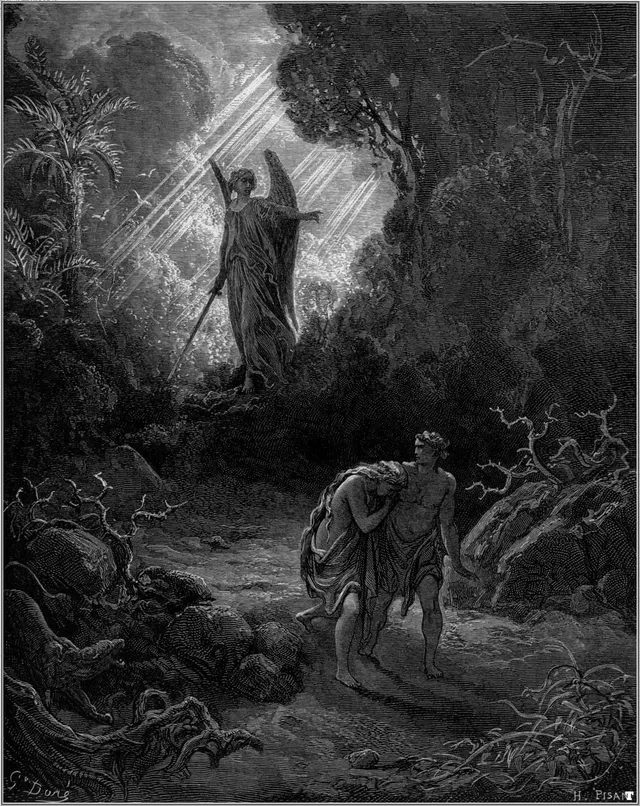
Death is the great equalizer, the one thing no one escapes despite status, color, language, or belief. All will die and have to give an account for the deeds they did during their fleshly life (Romans 14:12; Hebrews 9:27; 2 Corinthians 5:10; Matthew 12:36). Since all face the same fate, why do we attempt to separate people on earth as if some are so superior they somehow can avoid death? In all things it doesn’t matter, as the end of it will still be death; only death is reliable and a common fact for all people no matter how much they earn or think of themselves better than others.
A Profound Teaching Few Understand
Jesus provided a profound teaching in the gospel of Luke 13:1–5. I can’t imagine the disciples at the time understood His meaning, but His words contained a great mystery.
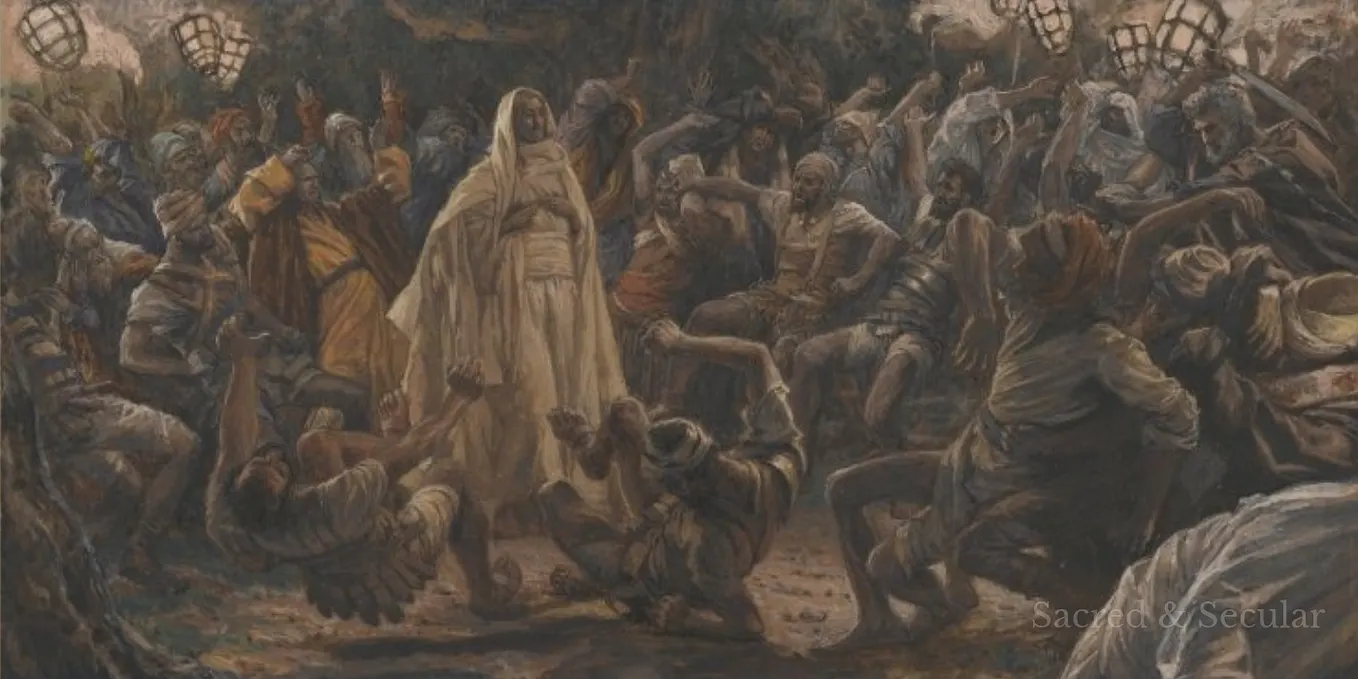
“There were some present at that very time who told Him about the Galileans whose blood Pilate had mingled with their sacrifices. And He answered them, “Do you think that the Galileans were worse sinners than all the other Galileans, because they suffered in this way? No, I tell you, but unless you repent, you will likewise perish.” Luke 13:1–3 (ESV)
In verses 4–5, Jesus adds another horrible death example but reaches the same conclusion. To understand what Jesus meant in these statements, we have to understand it was common at that time to consider the harshness of one’s death as a direct sign of the sinfulness of the individual. The nicer and quieter the death, the less sin the individual had, but the more violent the death, the more sins the person had to account for. Jesus eliminated that factor and simply said, "Unless we all repent, we will perish”—no matter the reason or how it happens. He in effect disconnected the optics of death seen in this world with the direct sinfulness of the person. No longer can it be said that violent death is due to more sinfulness than an easy death. Both are held to the same standard and will give an account to their creator.
This is important, as we still place immense value on optics today, and we seem to think that some people deserve violent deaths and some peaceful deaths surrounded by many loved ones and highly praised in their life’s achievement. None of this has anything to do with deserving or status. One if wealthy can pay for many mourners and attendants, be placed in a fancy tomb only to awake in the torments of Hades. Nothing done in the prior life adds up unless we all repent and turn to Jesus. Still, turning to Jesus does not necessitate a comfortable life and a quiet death. Again, quite the opposite, as living for Jesus may, in fact, require a very violent death (Matthew 10:37–38; Matthew 16:24–26; Luke 14:25–33; 1 John 3:16.)
Get A Voice’s stories in your inbox
Join Medium for free to get updates from this writer.
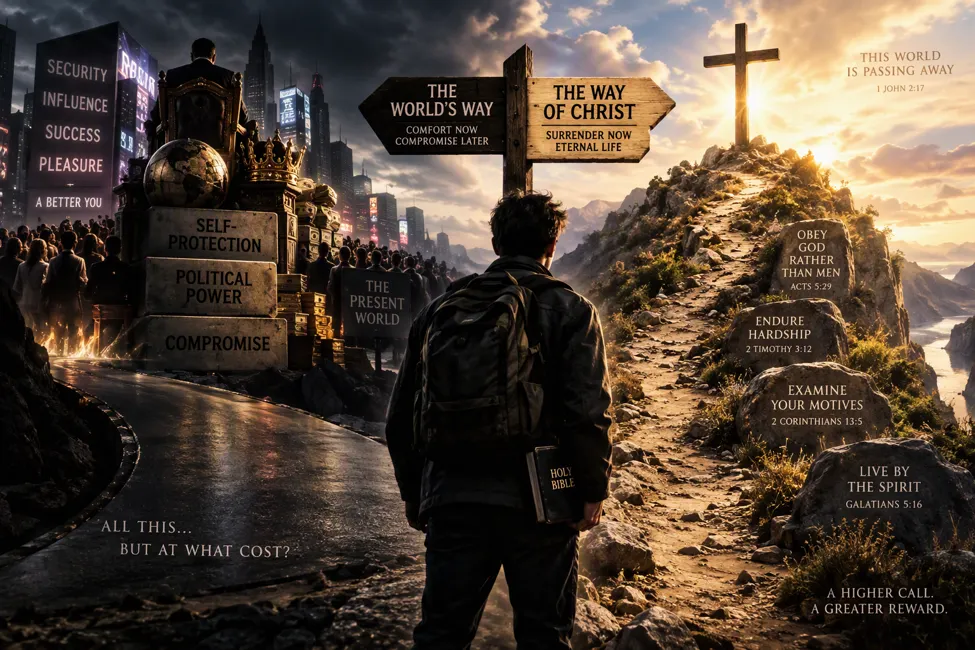
My point in this teaching is that the flesh—our bodies—are not of high value, and our existence in this world is transient, of absolutely no purpose unless the life is dedicated to Christ. To die for any other purpose is meaningless; to value worldly status, goods, nationality, family lineage, or physical stature is absolutely meaningless—so no true believer should dedicate themselves to any worldly pursuit that doesn’t bring glory to God and improve the conditions of those that are least in society.
A Perfect World
In a perfect world, there is no consideration for the love of money and building wealth. There is only concern for one another and to assure we are of service to those lacking and meeting their needs. There is no capitalism, no communism, and no socialism; there is only loving and serving others as the impetus of true wealth. Perhaps one may see this as a form of socialism, but not as practiced in this fallen world.
I have been blessed to see a substantial number of nations and places in the world, including many of the most coveted kingdoms and cities, and yet I see barred windows, doors, graffiti, and signs of oppression even in the presence of wealth. There is sorrow and suffering in all nations, and wealth is to be protected and treasured as the only true value in this world. Scriptures tell us to build up treasures in Heaven rather than in this world (Matthew 6:19–21). It isn’t difficult to consider saving up to benefit later even in this world; how much more if our works and deeds become invested in the Kingdom of God? We face death no matter what we do, and investing in this life only becomes wealth for others. None of us take it with us no matter how much or how fancy.
Wealth, Fame, and Regret at the End of Life
What can wealth accomplish when time is running out? The following examples concern regrets expressed during the illnesses that preceded death, not invented last words.
Steve Jobs—regret about family and treatment. The Apple co-founder possessed a multibillion-dollar fortune, yet in the year of his death he acknowledged regret about how he had handled his early relationship with his daughter Lisa. Reporting quotes his admission that he had done things he was not proud of, including his response to becoming a father at twenty-three. [1] Separately, his biographer Walter Isaacson reported that Jobs regretted delaying surgery for his pancreatic cancer for nine months. As his health declined, Jobs wished he had undergone the operation sooner. [2]
Yul Brynner—wishing he could undo a destructive habit. The Oscar-winning star of The King and I enjoyed substantial financial success; reporting on his estate describes valuable properties and investments. [3] Facing death from lung cancer, he spoke publicly about wishing he could reverse his smoking: “If I could take back that smoking, we wouldn’t be talking about any cancer.” In that same interview, he explained that his time was limited and that he wanted to leave an anti-smoking warning. UPI reported these statements when he died in October 1985. [4] His words express his own conviction and regret.
For the believer, I see in these accounts a reason to examine priorities while there is still time. Success cannot undo yesterday’s choices. Rather than treating wealth or fame as the measure of a life, we can ask whether we are loving others, repairing relationships, and using what we have in service to God.
Conclusion
I doubt that many nearing death are completely without regrets and feelings that they could have had a more meaningful life if they did this or that. A “Woulda, Coulda, Shoulda” complex is fairly typical even when not facing life’s end. However, facing death without Christ is indeed a sorrowful experience. To live for Christ is to strive for things not normal or common in this fallen world. To leave a legacy of goodness, kindness, and selflessness is truly a wonderful thing, and these are indeed the traits Jesus desires in those that follow him. Flipping their priorities and doing good rather than building money and fame for themselves.
America has recently held a midterm election, which demonstrated a rather notable change in attitude and desired course for the nation. Some are incredibly pleased with the outcome, seeing hope, while others are in great despair. It really isn’t all that important who wins or loses, but what course or difference will the change have regarding righteousness, kindness, and true benevolence based on a true faith in Christ? As I see it, the nation is all the more confused and divided; there is more uncertainty than the little certainty that was before the election. Nothing has been solved, and no true vision has emerged from the victors to take the nation into the future. We remain in uncertainty, and conditions ripe for the advancing tribulation remain unaltered.
The current attempt to stabilize this world with the presence of both good and evil is doomed. The scriptures tell us unless evil is removed, there is no opportunity for peace. Jesus will address this in His return, and that is the hope of the true believer and not in the imaginations and products of humanity.
References for Wealth, Fame, and Regret
[1] McKnight, Jenni. “Meet Steve Jobs’ multi-billionaire wife and 4 kids, including the daughter he denied was his.” HELLO!, July 25, 2025. Reports the fortune inherited from Jobs and his 2011 expression of regret concerning Lisa. Read the article. Accessed November 7, 2026.
[2] Potter, Ned. “Steve Jobs Regretted Delaying Cancer Surgery 9 Months, Biographer Says.” ABC News, October 20, 2011. Reports Walter Isaacson’s account of Jobs’ regret as his health declined. Read the article. Accessed November 7, 2026.
[3] Millisky, Remy. “Here’s Who Inherited Yul Brynner’s Money After He Died.” Grunge, updated February 3, 2023. Secondary reporting on his estate, properties, and investments; used for financial background, not for the regret quotation. Read the article. Accessed November 7, 2026.
[4] Rosenberg, Carol. “Yul Brynner leaves anti-smoking message.” UPI Archives, October 10, 1985. Contemporary reporting quotes his January television interview and identifies his awareness that his remaining time was limited. Read the article. Accessed November 7, 2026.