WTAF is inside the EU?
Kaja Kallas Went to See the Wizard. Brussels Gave Her a Stick.
The EU’s foreign-policy chief gets the motorcade, the expense account, and about as much actual control over foreign policy as a ceremonial dishwasher has over the municipal sewage system when the pipes are owned by 27 different plumbers.


Kaja Kallas has one of those spectacularly important-sounding jobs that Europe invents largely to keep the champagne flowing and the tax-free canapés moving at embassy cocktail parties. Her business card impressively reads The European Union’s High Representative for Foreign Affairs and Security Policy — a tongue-twisting chunk of bureaucratic ejaculate specifically engineered to invoke a palatial office, a motorised motorcade of armoured Audis idling on the taxpayer’s Euro, and a heavy brass plaque translating EUROPEAN FOREIGN POLICY into twenty-four separate languages that nobody actually speaks when an international crisis erupts and the rest of the world stubbornly refuses to conduct its wars in accordance with a Belgian syntax guide.
The job comes spectacularly well-endowed with the European External Action Service — an institution that acts as the John Holmes of global diplomacy: possessing a massive, legendary apparatus on paper, but completely incapable of performing when it actually matters. It is a sprawling circus of a diplomatic corps, a grand title, and the general, delusional expectation that Kallas will somehow make twenty-seven separate sovereign governments behave as though they have unanimously agreed on a single global strategy, despite a historical track record of almost never having agreed on which side of the door coat hooks go.
It is a little like being appointed captain of a massive ocean liner, only to step onto the bridge and discover that the engine room has been legally deeded to the Department of Trade, the steering wheel belongs to Energy, three manic-depressive committees control the fuel, and the crew are all sovereign citizens who don’t recognise your jurisdiction over them. Well, you could always just bribe them….
Welcome to Emerald City.
The European Union looks from the outside like a vast, gleaming, emerald engine of green continental power. Inside, it is essentially a gigantic, steam-venting shit-sausage factory with a spackled green façade and the operating logic of the bastard Rond-point Schuman at rush hour. Everybody is moving, neither obeying lights nor lanes, unrecognisably diabolical hole-making machinery hidden temporary orange barriers, some unionised freak jackhammering the very same bit of asphalt since 2012, and every frantic attempt to reach the exit simply hurls you into another dizzying circuit of the roundabout.
Raw political authority enters the Brussels shit-sausage works as fresh ministerial enthusiasm, high-level national-security anxiety, and tear-jerking statements about European solidarity. At the other end comes a warm, greyish-brownish cylindrical product of the sort usually encountered only top-down in a porcelain bowl after a bowl of out-of-date moule. The final sausage comprises a 147-page communication, a rectal-thermometer impact assessment, an interservice consultation loop, a mandatory stakeholder dialogue, three unreadable annexes, and a single, garbled sentence explaining that further work will be undertaken — just as soon as the ex-post ante-post ex-ante evaluation has itself been evaluated.
The factory floor is magnificent. It has a customised industrial hopper for every conceivable form of administrative garbage. Raw treaty language goes into one chute. Hypersensitive member-state anxieties are shoveled into another. That exotic, overpriced cat-shit coffee from the Brussels cafeteria is poured down a third to keep the gears lubricated. A stadium full of overpaid lawyers stand beside the conveyor belt, screaming at each other over whether the sausage is legally a sausage, whether the sausage constitutes an internal-market competence, and whether the word “strategic” has been used consistently across all twenty-four language versions, or if the Maltese translation accidentally implies an act of war against Libya. The entire batch is monitored, tracked, audited, impact-assessed, and holistic-reviewed until the machine gags on its own output, shits its institutional trousers, and instantly drops dead.
Bien sûr.
Somewhere deep in the bowels of the plant, a tax-free, Hermes-buying ‘Managing Director’ in a bespoke 3000 Euro tailored fluorescent safety vest operates a rusted lever marked INTERSERVICE CONSULTATION. Another bureaucrat with an iron-clad pension for three lifetimes presses a button labelled COUNCIL CONCLUSIONS. A third official checks the length of the sausage with a digital micrometre to ensure it complies with the latest Net-Zero emission standards for processed almost-meat. Absolutely nobody knows who actually owns the machinery, who paid for it, or how to shut it off.
This isn’t a breakdown in the system; it IS the system.
It is the holy grail of European institutional compromise: a machine specifically engineered so that when the final product inevitably poisons the consumer, every single person on the factory floor can produce a signed compliance certificate proving they were only responsible for checking the grease on the conveyor belt.
The EU has twenty-seven separate sovereign governments, a Commission, a Council, a Parliament, a stack of unreadable treaties, a maze of overlapping competences without anyone with actual competencies, a minefield of national veto points, and enough conflicting legal authorities to make a seasoned constitutional lawyer sit down with the Treaty of Lisbon, a bottle of cheap blended whisky, and the gut-punched expression of a structural engineer who has just discovered that his entire multi-billion-dollar suspension bridge was held together by duct tape and a Hail Mary. It is an elaborate, continent-wide mechanism specifically designed to answer the simple, terrifying question of “who the fuck is in charge?” with a 400-page legal brief that translates to “it depends on which sub-appendix you are currently rogering in your sleep.”
The High Representative herself is trapped right in the gears of this monstrosity: she is simultaneously responsible for global foreign affairs and security policy, while being legally subordinated as a mere Vice-President of the Commission. The EEAS sits in the middle of this architectural clusterfuck like a platinum hood ornament on a 1920s John Deere, while the actual, heavy-duty machinery that makes foreign policy happen sits entirely elsewhere. It is a relationship of such spectacular institutional hostility that the Commission bureaucrats don’t even recognise the EEAS as part of the family; they treat the entire diplomatic corps like a stray three-legged dog that snuck into the Berlaymont canteen to beg for scraps of leftover ham.
The EU’s institutional architecture is less of a government and more of an orgy organised by twenty-seven repressed, anal-retentive, middle-aged lawyers who refuse to admit they are even organising an orgy. The guest list is jealously guarded by the Council, the actual bedrooms are managed by the Commission, the condoms are strictly a member-state competence, the mood lighting is an EEAS responsibility if there is unanimity on tone, Parliament has custody of the safe word and won’t tell anyone, and a manic-depressive sub-committee in the basement is currently conducting a three-month procurement review of the mattresses to ensure the springs comply with European foam-density guidelines. They don’t.
Every orgy-goer is simultaneously in total command and legally forbidden to touch anything without a signed affidavit from someone else. One participant is screaming conflicting instructions and insisting on safe approximation, another is demanding a formal negotiating mandate before unzipping the wedding tackle, three are locked in the bathroom arguing over whether a handjob falls under national or European jurisdiction, and the poor bugger holding the door open has just been informed she lacks the proper treaty authority to let anyone inside the house.
Eventually, the entire miserable gathering stalls out from lack of momentum. Everybody gets dressed, issues an 80-page joint communiqué on the historical triumph of European solidarity, and drives home in their duty-free sedans, without anyone being quite sure who just did what to whom, or why the whole thing smelled so disagreeably of damp salty Kleenex and old cabbage.
This publication is reader-funded — no ads, no sponsors, no brand deals. If you want more long-form writing like this to exist: ☕ Buy me a coffee — it funds the next one directly.
So, in the midst of Sodom, Kallas gets to wear the gold-braided captain’s hat and wave at the passengers, while Ursula von der Leyen has spent the last five years in the guts of the vessel quietly routing the engine room, the fuel lines, and the toilets directly to her controls on her desk.
This schism is precisely why the current intergovernmental knife-fight over the EEAS actually matters. France and Germany have recently floated a devious little blueprint in which the entire diplomatic service would be dragged kicking and screaming under the direct, watchful eye of the Commission President, while Kallas is tossed a ‘broader, heavier portfolio’ that will keep her quiet.
Dare we presume hiatus in the EU Delegation to Nevis?
On paper, the boys in Paris and Berlin are loudly describing this as “streamlining.” In exactly the same way, completely gutting a three-star restaurant kitchen and replacing it with a single, damp broom closet can be described as a triumph of food-service efficiency.
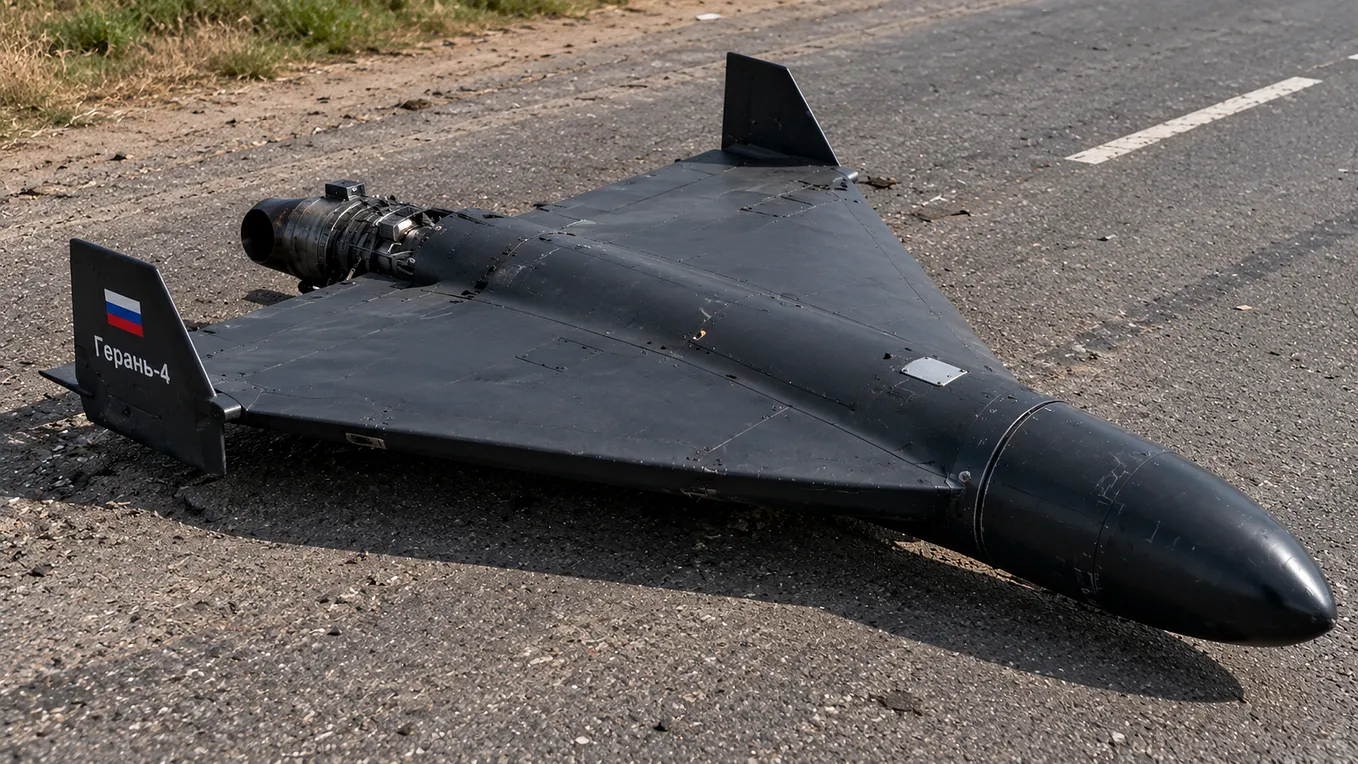
Kallas (about the only European leader, BTW, calling a Russian IED a Russian fucking IED) herself recently let slip accidentally on purpose that there have been plenty of times when “somebody above me” was making the goddamn decisions anyway. That is a beautifully understated description of a total disaster driving around looking for a wedding party to crash.
In a normal, sane organisation, if the person above you makes the decision, that person is called your boss. In Brussels, however, Kallas’ “somebody above me” isn’t always a human being — it’s an amorphous, shifting cloud of administrative nuclear dust. It might be a competing political authority, an angry national government, a hostile Commission directorate, a forgotten treaty competence, or an uncooperative Council preference. Much of the time, the “somebody above you” is a sneaky, unannounced administrative torpedo fired from deep beneath the surface of the Berlaymont from any one of a thousand arseholes dressed up as a submarine.
There is nothing more authentically Brussels than the cowardly bureaucratic torpedo.
The Brussels torpedo is a weapon specifically designed to travel a continent entirely sub-surface, powered only by three rounds of confidential interservice consultation, steered by an anonymous legal opinion, and packed with an explosive warhead of non-compliance. There you are, standing on deck, minding your own business, getting on with things, when suddenly your entire initiative blows up below the waterline. There is no explosion, no flash, and no visible enemy. Just a muffled crunch, a sudden rush of cold water, the odd untraceable giggle, and a 400-page memo floating to the surface explaining that your policy choice has been legally neutralised due to an unresolved jurisdictional inconsistency. You look around for the culprit, but all you see is an empty sea and some anonymous arsehole on a pay-grade chart polishing a periscope.
It is the corporate chain of command as redesigned by a suicide pact of constitutional lawyers. Imagine being named commander of a state-of-the-art attack submarine, only to discover that you are legally prohibited from ordering the crew to fire back without first submitting a triplicate authorisation form to Compliance. Compliance passes the buck to Legal. Legal triggers an emergency satellite consultation with a maritime safety committee in Frankfurt. 75% of your staffers leak your latitude and longitude to their home service. Frankfurt sets up a working group to determine whether a counter-strike is conceptually consistent with the Global Strategic Framework on Conflict Harmonisation. The Strategic Framework is currently undergoing a twelve-month holistic review by a panel of peace-studies experts in Brussels, meaning that while the enemy torpedoes are actively closing on your hull, you are stuck at your station filling out a digital questionnaire regarding the environmental impact of your ballast water.
Six months after your wreckage hits the ocean floor, your ghost finally receives an automated memo.
The memo says you have been granted full operational autonomy.
Then, second best for second last, comes the comedy gold of European defence. Kallas recently announced a High-Level Group on European Defence, a grand initiative intended to drag a bunch of senior political and military figures from EU countries, the UK, and Ukraine into a room to find “out-of-the-box solutions” and produce concrete recommendations — out of the box, as it were.
Get Brian Iselin FEIPIO’s stories in your inbox
Join Medium for free to get updates from this writer.
It was purely advisory. No armies were being raised. No tank divisions were being requisitioned. Nobody was launching a surprise annexation of Luxembourg. It was simply a collection of starched mess kits and over-decorated chest candy being asked to sit around a formica table, drink lukewarm coffee that tasted of battery acid, and think a little.
Naturally, thinking was viewed as a dangerously radical threat to the peace and quiet of the continent.
The key to understanding Brussels is that the majestic machine didn’t even need a villain to pull the plug; the collective panic of the member states was enough to trigger the incendiary device. Member-state unanimity is actually rather like twenty-seven separate bureaucrats standing around the factory conveyor belt, each holding one trembling finger over the big red emergency stop button. In this instance, the moment Kallas suggested an advisory group, on defence, twenty-seven fingers hit the button simultaneously.
The committee hadn’t made a single bad decision, because it hadn’t met. It hadn’t failed to produce recommendations, because it hadn’t written a word. It was a baby unborn and yet still violently smothered in its cradle on a Sunday afternoon, before the names of the participants could even be announced to a public that remains blissfully unaware that the house is still on fire.
Europe needs to strengthen its defence. Everyone knows Europe needs to strengthen its defence. Kallas, not even a little blind, agrees Europe needs to strengthen its defence. Kallas proposes getting experienced people together to work out how Europe might strengthen its defence. Several governments object to thinking about strengthening defence. The meeting is cancelled. Europe continues to need to strengthen its defence.
Cui bono?
This isn’t even a proper political puppet show anymore. It’s a puppet show where the puppets have been forced to undergo a multi-lateral, intergovernmental impact assessment before Punch is legally allowed to hit Judy with the stick, while the grand puppeteer smiles tightly from the wings of the factory floor.
In all cases, Judy just ends up covered in shit.
And this is where the Wizard of Oz metaphor stops being funny for Kallas. She isn’t Dorothy because she’s some clueless farm girl wandering around looking for a brain; she’s simply an ordinary, practical adult who keeps attempting the apparently normal activity of doing the exact job she was appointed to do, inside an institution specifically designed to make doing it completely impossible. The tragedy of Kaja Kallas is that however brilliant she may be, she has arrived in a wonderland where everyone keeps smiling, shaking her hand, and insisting she has all the grand authority she needs — right up until she tries to use it and? The Brussels torpedo hits her amidships.
At that point, the sky darkens, the flying monkeys are released from the Commission ceiling, and she is reminded both politely and not that the sovereignty belongs to the member states, the procedures belong to the Council, and the machinery belongs entirely to the desk of the woman standing behind the curtain.
Dorothy discovered the Wizard wasn’t what he appeared to be. Kallas has discovered her authority is the same illusion.
The Gimp lives in the sub-basement of the Berlaymont building, directly behind the industrial air-scrubbers and right next to a massive, leaking container of heavy fluid that has been dripping onto a stack of matted 1975 ladies underwear catalogues. Nobody in Brussels is entirely sure which directorate-general pays his salary, but he wears a stained rubber apron, smells like stale coffee and damp carbon paper, carries forty-seven keys on a heavy brass hoop, and limps with the agonising, uncoordinated hitch of a man who spent his formative years being spindled like Zappa’s Bobby Brown. When the black ball-gag is on the desk, he introduces himself as Deputy Assistant Director for Governance Implementation and Institutional Containment, but his business card simply reads: Policy Coordinator.
He appears from the floorboards the exact moment an actual, clear-cut political decision threatens to touch the machinery. Anyone who is anyone in Brussels has heard about the Gimp.
“Bring out the Gimp,” a voice whispers from a dark corner of the working group.
The Gimp climbs the stairs, dragging one rubber-booted leg behind him. He stands before the control panel. He unlocks a rusted valve. Nothing happens. He adjusts a grease-smeared clipboard. Nothing happens. He flips to Annex IV of a document concerning the definition of “substantive consultation.” Still nothing. He then clears his throat, wipes his nose with the back of his latex sleeve, and announces with absolute, deadpan professional pride that the procedure has been flawlessly executed.
Downstairs, the great shit-sausage works continues to pump out grey, lukewarm logs of policy. This is exactly where the European dream of “strategic autonomy” is manufactured out of pickled pig penises and shredded treaty obligations. It is a magnificent industrial pipeline specifically engineered to convert serious, urgent geopolitical intent into an unidentifiable paste that looks vaguely edible from across a great distance, but turns out to be a stomach-turning horror show the minute you sniff it.
Everyone in Brussels has just enough authority to be held publicly responsible when some global disaster turns into a slaughter, but absolutely nobody has enough power to turn on the taps in the first place.
Kallas isn’t Dorothy, wandering around the corridors wondering why the Wizard is so hard to find; she knows perfectly well what the machine looks like. It is a maze of leaking pipes, disconnected levers, twenty-seven sovereign nations shouting conflicting instructions from different rooms, a freak downstairs making meat out of legal briefs, and a Gimp lasciviously licking the seals on the envelopes.
On this dark day for Kaja, the Gimp limps back out of the basement, holding that pristine, velvet-lined box containing her brand-new ceremonial stick.
Kallas looks down at the implement. “Does it actually operate anything?”
The Gimp licks his thumb and flips through eighty-four pages of compliance logs. “No.”
“Does it control the EEAS?”
“No.”
“Does it make decisions?”
The Gimp pauses, adjusts his rubber apron, and blinks into the fluorescent light. “No. But it is carbon-neutral”.
And there, finally, is the whole magnificent, multi-lingual disaster of European foreign policy. Kaja Kallas went to see the Wizard. Brussels gave her a stick.
About the Author — Brian Iselin has spent decades observing governments manufacture elaborate machinery for producing extremely small sticks. He lives in Brussels, where he continues to investigate the relationship between power, paperwork and the mysterious gentlemen in basements who appear whenever someone attempts to make a decision. He does not yet have a Gimp of his own, but is currently checking the market. Ideally one with his own keys.
Four publications. Pick the ones that fit.
The Strategic Edge — Geopolitics, war economy, trade, and macroeconomics. Numbers that explain what’s actually happening.
The Civic Ledger — Policy, politics, culture, and society. Charts and cost curves you can use at work and in arguments.
Torque & Theory — EV, hybrid, and ICE: the maths, the documents, and how to save money on the decisions that matter.
The Permanent Secretary — A weekly memorandum on politics, diplomacy, and the management of world affairs. From the office of the Permanent Secretary.
Follow one. Follow all four. Either way, you’re reading work that isn’t written for the algorithm.