The Hammer of Faith: How Judas Maccabeus Forged Religious Freedom from the Fires of Persecution
From Priest to Warrior: The Unlikely Hero Who Lit the Flame of Freedom

What transforms a priest into a warrior, a scholar into a revolutionary, and desperation into triumph that echoes through millennia?
Settle back now, for this is a tale that begins in shadows but blazes into eternal light — quite literally, as you’ll discover. It’s the story of a man whose very name became synonymous with resistance, whose hammer blows against tyranny still reverberate in our modern world every December when candles are kindled and prayers whispered in defiance of darkness.
Picture, if you will, the ancient world of the 2nd century BCE — a time when empires rose and fell like morning mist, when the ghost of Alexander the Great still haunted the lands he’d conquered, and when being different, believing differently, could cost you everything you held sacred.
The Stage Set for Catastrophe
In those days, Judea found itself caught between hammer and anvil — the Ptolemies of Egypt on one side, the Seleucids of Syria on the other. By 175 BCE, the Seleucids had won this particular game of imperial chess, and their king, Antiochus IV, had ascended to power with ambitions that would make modern dictators blush.
Antiochus called himself ‘Epiphanes’ — ‘God Manifest’ — though his enemies preferred ‘Epimanes,’ meaning ‘madman.’ History suggests both titles held more than a grain of truth.
This wasn’t merely political conquest Antiochus craved; it was cultural annihilation dressed up as civilization. He gazed across his vast empire and saw diversity as weakness, tradition as rebellion, and the Jewish way of life as a stubborn stain that needed bleaching with Greek philosophy and pagan ritual.
The archaeological evidence from sites like Tel Maresha reveals just how pervasive Hellenistic influence had become. Greek pottery, gymnasium remains, and pagan altars sprouted like weeds across Jewish soil. But Antiochus wanted more than influence — he demanded surrender.
When Sacred Becomes Profane
The king’s edicts, preserved for us in the First Book of Maccabees, read like a blueprint for cultural genocide. Circumcision? Forbidden. Sabbath observance? Outlawed. Dietary laws? Abandoned or face death. Torah scrolls were burned in public squares while their owners watched in anguish.
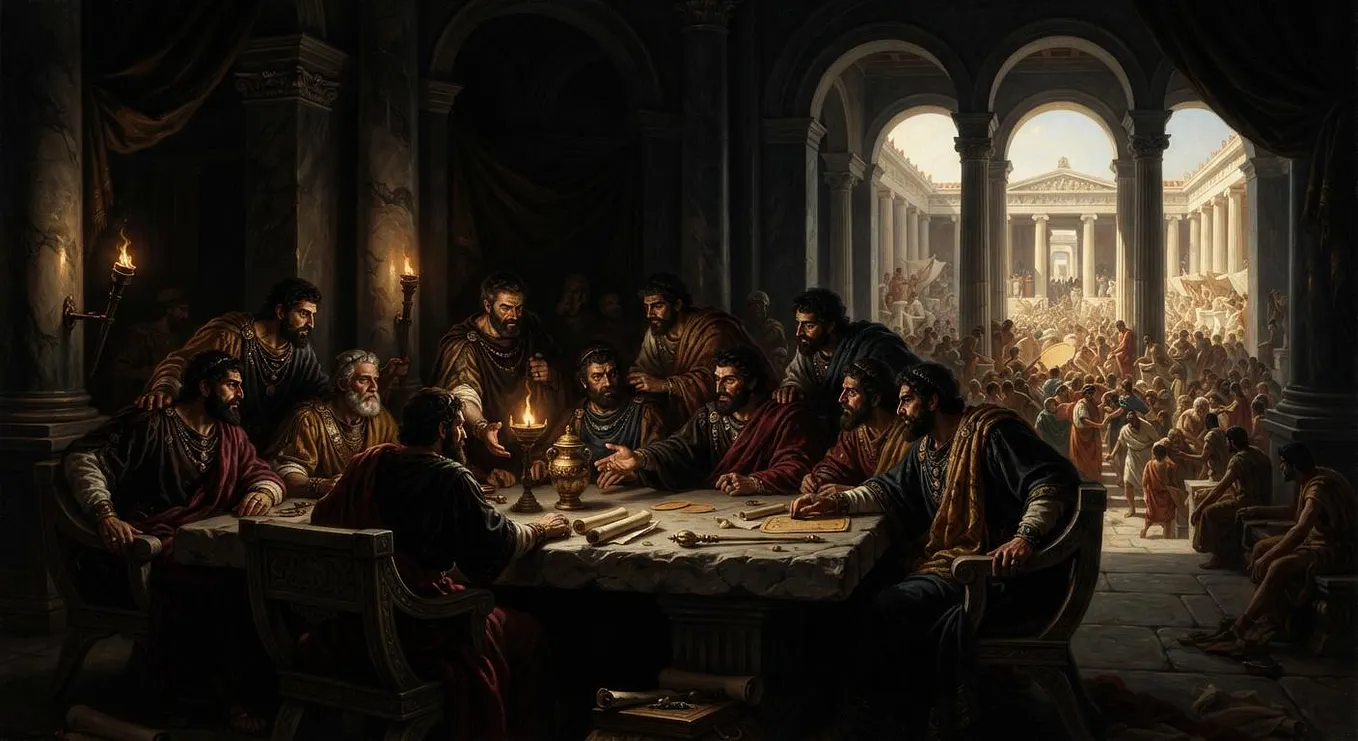
But the ultimate sacrilege — the act that would light the fuse of revolution — came in December 167 BCE. Antiochus transformed the holy Temple in Jerusalem, the beating heart of Jewish faith, into a shrine for Zeus Olympius. On the sacred altar where lambs had been offered to the Almighty, pigs now squealed and bled in pagan sacrifice.
This was the ‘Abomination of Desolation’ prophesied in the Book of Daniel, and it shattered something fundamental in the Jewish soul. Recent excavations around the Temple Mount have uncovered Hellenistic architectural fragments from this period, silent witnesses to this desecration that still makes scholars pause in reverent sorrow.
The Priest Who Chose War
Enter our hero — though he might have seemed an unlikely candidate at first glance. Judas Maccabeus came from Modiin, a priestly family led by his father Mattathias. These weren’t warriors by training; they were men of books and ritual, of prayer and contemplation.
Yet when Antiochus’s commissioners arrived in Modiin demanding pagan sacrifice, something extraordinary happened. The elderly Mattathias not only refused to comply but struck down both a Hellenized Jew who stepped forward to obey and the Seleucid official who demanded compliance.
“Whoever is zealous for the law and maintains the covenant, let him follow me!” Mattathias cried, and with those words, the Maccabean Revolt blazed to life.
When Mattathias died soon after, leadership passed to his son Judas, nicknamed ‘Maccabeus’ — the Hammer. And what a hammer he proved to be.
David Against Goliath, Jewish Style
Now, you might wonder how a band of priests and farmers could challenge the military might of an empire that stretched from modern Turkey to Iran. The answer lay not in strength of arms but in strength of conviction, married to tactical brilliance that would make Sun Tzu himself nod in approval.
Judas understood what many military commanders throughout history have learned too late: superior numbers mean nothing if you can dictate when, where, and how battles are fought. The Judean hills became his classroom, and the Seleucid army his unwilling pupils in the art of unconventional warfare.
The first lesson came at the Ascent of Lebonah, where Apollonius, a Seleucid general, led his forces through a narrow mountain pass. Judas and his men waited like shadows among the rocks, letting the enemy column stretch out like a snake before striking at its head and belly simultaneously.
When the dust settled, Apollonius lay dead, and his famous sword had passed to Judas — a weapon the Jewish commander would wield for the rest of his life. More importantly, word spread throughout Judea: the invincible Seleucids could bleed.
The Art of Appearing Where Unexpected
Seron, commander of the Syrian army, arrived next with a force that dwarfed Judas’s ragtag militia. “I will make a name for myself and win honor in the kingdom,” he boasted. “I will make war on Judas and his companions who scorn the king’s command.”
Get Leslie’s stories in your inbox
Join Medium for free to get updates from this writer.
At Beth Horon, Judas gave Seron his answer. Once again exploiting the terrain, the Jewish forces struck from multiple directions at once, turning disciplined ranks into panicked mobs. Seron himself fell in the rout, and his surviving soldiers stumbled back to Syria with tales of phantom warriors who appeared from nowhere and vanished like morning mist.
But these were merely opening moves in a deadly game. Antiochus, increasingly frustrated, dispatched a massive army under three seasoned generals: Gorgias, Ptolemy, and Nicanor. Their orders were simple: crush this rebellion permanently and sell the survivors into slavery.
The Empty Camp Stratagem
The Battle of Emmaus in 165 BCE showcased Judas at his most brilliant. Facing overwhelming odds, he employed a stratagem that Alexander himself might have admired.
While the enemy planned a surprise night attack on the Jewish camp, Judas anticipated their move. He evacuated his forces under cover of darkness, leaving behind empty tents with fires still burning — a deception worthy of the Trojan Horse.
When Gorgias arrived with his strike force, expecting to catch sleeping rebels, he found only shadows and cold ash. Meanwhile, Judas had circled around to attack the main Seleucid camp, now vulnerable with its best troops away on a fool’s errand.
The psychological impact was devastating. Here were professional soldiers, men who had conquered cities and brought kingdoms to heel, being outmaneuvered by Jewish farmers and craftsmen. The myth of Seleucid invincibility lay in tatters across the battlefield.
The Road to Jerusalem Opens
Victory at Emmaus opened the path to Jerusalem, but one more obstacle remained. At Beth Zur, Lysias, the regent himself, waited with yet another army. This battle would be different — no mountain passes to exploit, no opportunities for ambush. Just honest combat between two determined forces.
Yet even here, faith and determination proved their worth. The First Book of Maccabees records that Judas’s men fought “like lions,” their religious fervor transforming them into warriors who feared no earthly power because they served a higher one.
When Lysias’s forces finally broke and fled, nothing stood between the Maccabees and their ultimate objective: the Temple of their fathers, defiled but not destroyed, waiting for hands worthy to cleanse it.
The Festival of Lights is Born
On the 25th day of Kislev, 164 BCE, Judas Maccabeus entered the Temple Mount. What he found there would have broken a lesser man’s heart. The sanctuary lay in ruins, weeds growing in its courts, the sacred vessels stolen or defiled, the altar polluted beyond redemption.
But faith sees possibilities where despair sees only destruction. For eight days, the Maccabees labored to restore their Temple. They built a new altar, crafted new sacred vessels, and prepared to rededicate the sanctuary to its rightful purpose.
The Talmud tells us of a miracle — that when they sought to light the eternal flame, only one day’s worth of pure oil could be found, yet it burned for eight days until new oil could be prepared. Whether one views this as divine intervention or symbolic truth matters less than its meaning: sometimes the smallest light can banish the deepest darkness.
Thus was born Hanukkah, the Festival of Lights, celebrating not just military victory but the triumph of religious freedom over forced conformity, of authentic faith over imperial mandate.
The Price of Revolution
Yet our story cannot end with unqualified triumph, for life rarely offers such neat conclusions. Judas Maccabeus, the Hammer of Faith, would not live to see complete independence. In 160 BCE, at the Battle of Elasa, overwhelmed by superior forces, he fell sword in hand, true to his warrior’s code to the end.
But his death was not defeat. His brothers Jonathan and Simon continued the struggle, eventually securing full independence under the Hasmonean dynasty. What Judas began with desperate courage, others completed with patient statecraft.
Echoes Through Time
Recent archaeological discoveries at sites like Khirbet Qeiyafa and Tel Azekah continue to illuminate this pivotal period, revealing the material culture of a people fighting to preserve their identity against overwhelming pressure to conform.
Coins from the Hasmonean period bear Hebrew inscriptions rather than Greek — small symbols of a large victory. The right to worship as conscience dictates, the freedom to maintain cultural distinctiveness, the principle that might does not automatically make right — these ideas, forged in the crucible of the Maccabean Revolt, would eventually reshape the world.
Today, when we light Hanukkah candles or defend religious liberty, we honor the memory of a priest who became a warrior, a man who chose faith over safety, principle over peace.
Judas Maccabeus reminds us that sometimes the greatest victories come not from those with the strongest armies, but from those with the strongest convictions. His hammer blows against tyranny echo still, and his light — that miraculous, impossible, eternal light — continues to push back the darkness wherever freedom finds itself under siege.
References: 1 Maccabees 1–9; 2 Maccabees 6–15; Josephus, Antiquities of the Jews, Book XII; Daniel 11:31; Archaeological evidence from Tel Maresha, Khirbet Qeiyafa, and Jerusalem excavations
If you’ve enjoyed this article, please it would be an enormous help if you would share it with a friend or two, clap and follow. Your support and encouragement really makes a huge difference. Thank you. Never miss another article. Get an email whenever I publish.