The Mets Balance Sheet: Replacing the Old Core With Flexibility

The Mets Balance Sheet: Replacing the Old Core With Flexibility
How the Mets Are Reallocating Value, Not Replacing Names
1. The Emotional Exit vs. the Actual Numbers
If you’re a Mets fan, chances are you’ve already heard it — from family, friends, coworkers, or group chats:
“How do you replace Nimmo, Alonso, and McNeil?”
“You can’t just lose that core.”
And emotionally, that reaction makes sense. Those players were here for years. They were familiar. They were productive. They felt like the Mets.
But baseball front offices don’t operate on emotion. They operate on value, risk, and allocation. When you step back and look at the numbers instead of the names, the Mets’ approach under David Stearns starts to look less like dismantling — and more like restructuring.
This is the first entry in The Mets Balance Sheet: a series focused on how the Mets are reallocating value, not simply replacing players.
2. What the Mets Actually Lost (Not What It Felt Like)
Let’s be clear: the outgoing core mattered.
- Brandon Nimmo provided on-base consistency and steady outfield production.
- Pete Alonso delivered elite power, while also carrying defensive limitations at first base.
- Jeff McNeil offered positional versatility, contact hitting, and year-to-year volatility.
Together, they accounted for roughly 8–10 wins above replacement per season in recent years. That’s real value, and it shouldn’t be dismissed.
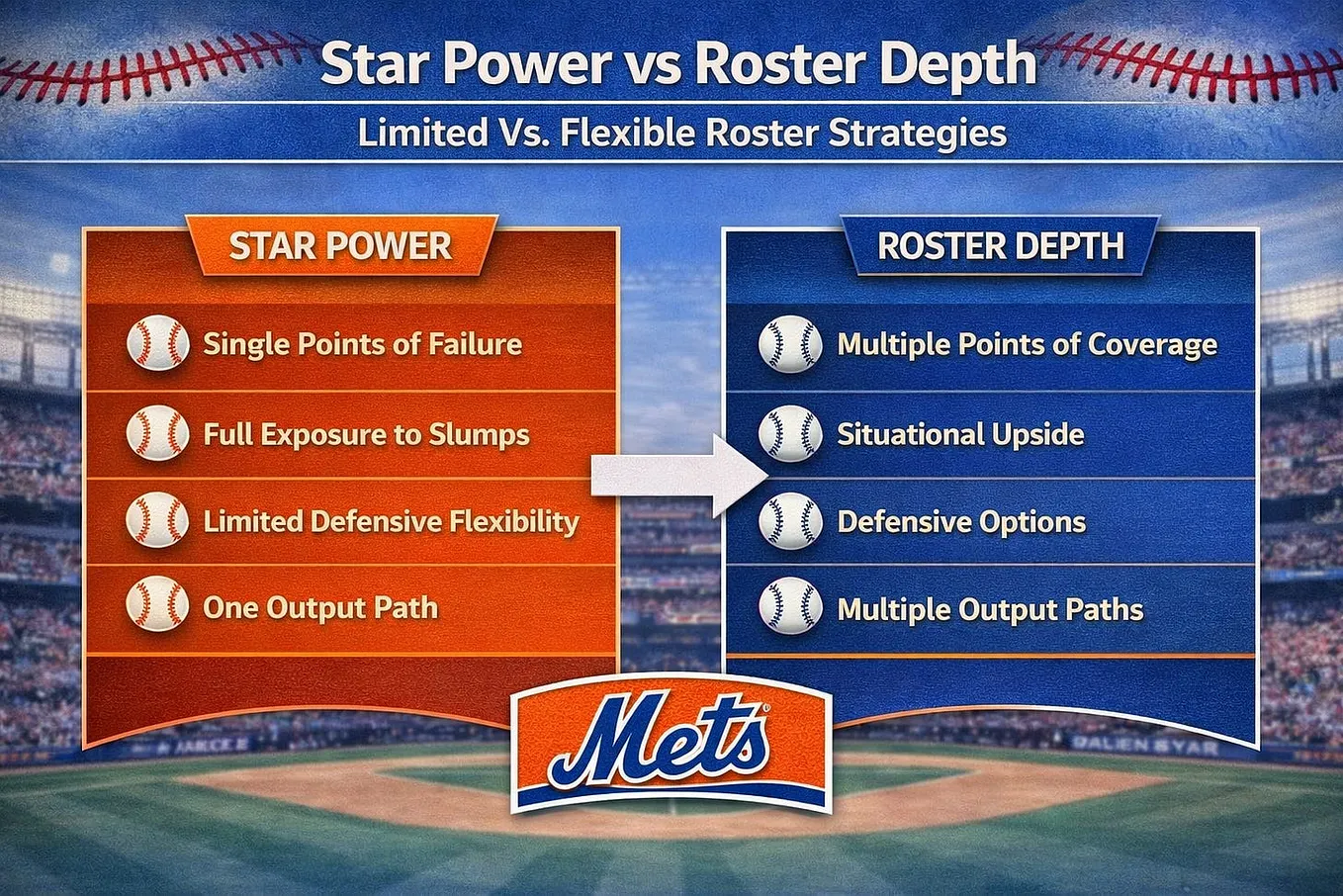
But that value was also concentrated. When one of those players slumped, got hurt, or ran into unfavorable matchups, the lineup absorbed the full downside. There was very little insulation.
From a balance-sheet perspective, that’s concentration risk.
3. Bo Bichette Isn’t the Replacement — He’s the Signal
The Bo Bichette signing has often been framed as a one-for-one replacement attempt. That’s the wrong lens.
Bichette isn’t here to be Pete Alonso.
He isn’t here to replace Brandon Nimmo.
He isn’t here to replicate Jeff McNeil’s versatility.
What Bichette represents is value mobility.
Get Russell Taylor’s stories in your inbox
Join Medium for free to get updates from this writer.
He brings:
- A strong, contact-driven bat
- Consistent offensive value when healthy
- Positional flexibility that allows the Mets to move other pieces more intelligently
In accounting terms, Bichette isn’t a single asset replacing another asset — he’s a reallocation tool. His presence allows the Mets to spread value across multiple lineup spots instead of forcing one player to do everything.
4. The Platoon Strategy: Spreading Risk, Raising the Floor
This is where the Mets’ new structure diverges most clearly from the past.
Instead of asking one player to handle:
- All right-handed pitching
- All left-handed pitching
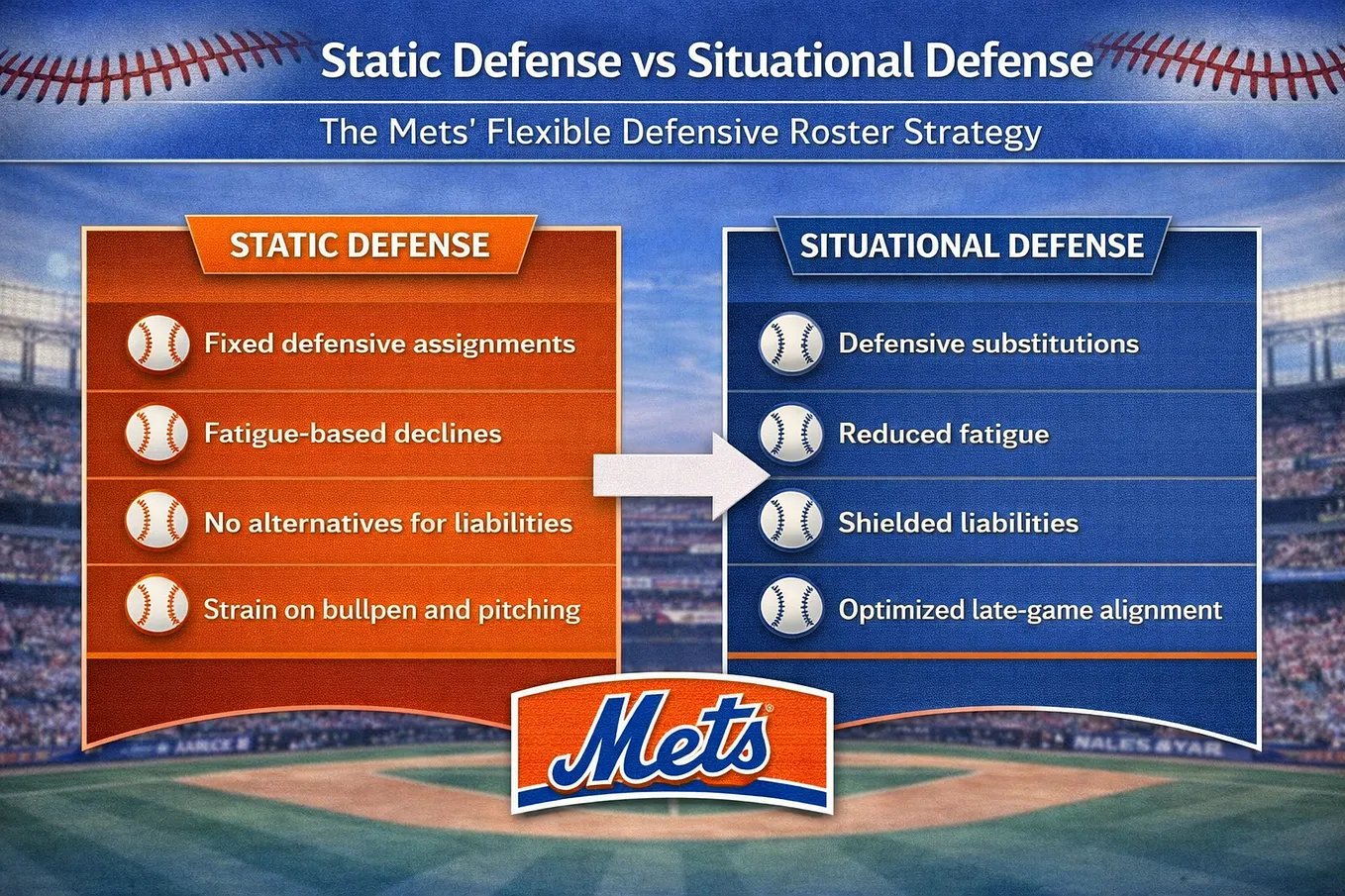
- All defensive innings
The Mets appear to be leaning into platoons and matchup optimization.
Here’s the basic shift:

Rather than replacing Alonso’s power directly, the Mets are combining multiple bats — including Jorge Polanco, Mark Vientos, Brett Baty, and Bichette — into a composite asset that better aligns with modern pitching usage.
It’s not flashy, but it’s efficient.
5. Looking at the Mets Through a Different Lens
This isn’t a victory lap, and it isn’t a prediction.
It’s simply an attempt to look at the Mets through a different lens — one that focuses less on individual names and more on how value is structured across a roster. From that perspective, the moves this offseason suggest a front office prioritizing flexibility, downside protection, and optionality over familiarity.
That approach fits the broader reputations of David Stearns and Steve Cohen — not as decision-makers chasing headlines, but as ones willing to accept short-term discomfort in exchange for long-term efficiency.
None of this guarantees success. Baseball doesn’t work that way. But it does offer a clearer picture of what the Mets may be trying to build: a roster designed to absorb variance, handle modern pitching usage, and spread risk across multiple contributors instead of concentrating it in a few familiar faces.
In the next pieces, I’ll dig further into that structure — starting with why depth and platoons often matter more than star power, and how those choices quietly shape outcomes over a full season.
Notes on Data & Methodology
All player value references in this article are based on publicly available concepts such as Wins Above Replacement (WAR), positional value, and roster construction principles commonly used across Major League Baseball analysis.
WAR ranges and player contributions are discussed in aggregate and conceptually rather than as precise forecasts. No proprietary projection systems or subscription-only research were reproduced.
General statistical context reflects information available from publicly accessible sources including MLB, Baseball-Reference, FanGraphs, and Statcast, combined with independent interpretation and analysis.
All opinions and conclusions are my own and are intended for discussion and exploration rather than prediction.