WHERE THEY LIVED AND WHO LIVED THERE (SAO CIVILIZATION CONT’D)
Let me start from your morning. ☀️
Not Lagos morning. Not London morning. Just your morning.

You wake up. Somebody is already cooking something. 🍲
Somebody is already greeting somebody. 👋🏾
Somebody is already planning the day. That small, normal feeling of “this is home, I have to protect this” 🤲🏾
Because that’s exactly where the Sao story starts. Not with kings. With home. 🏠
Now come with me. Back. Far back. About 2,000 years back. To Lake Chad. 💧
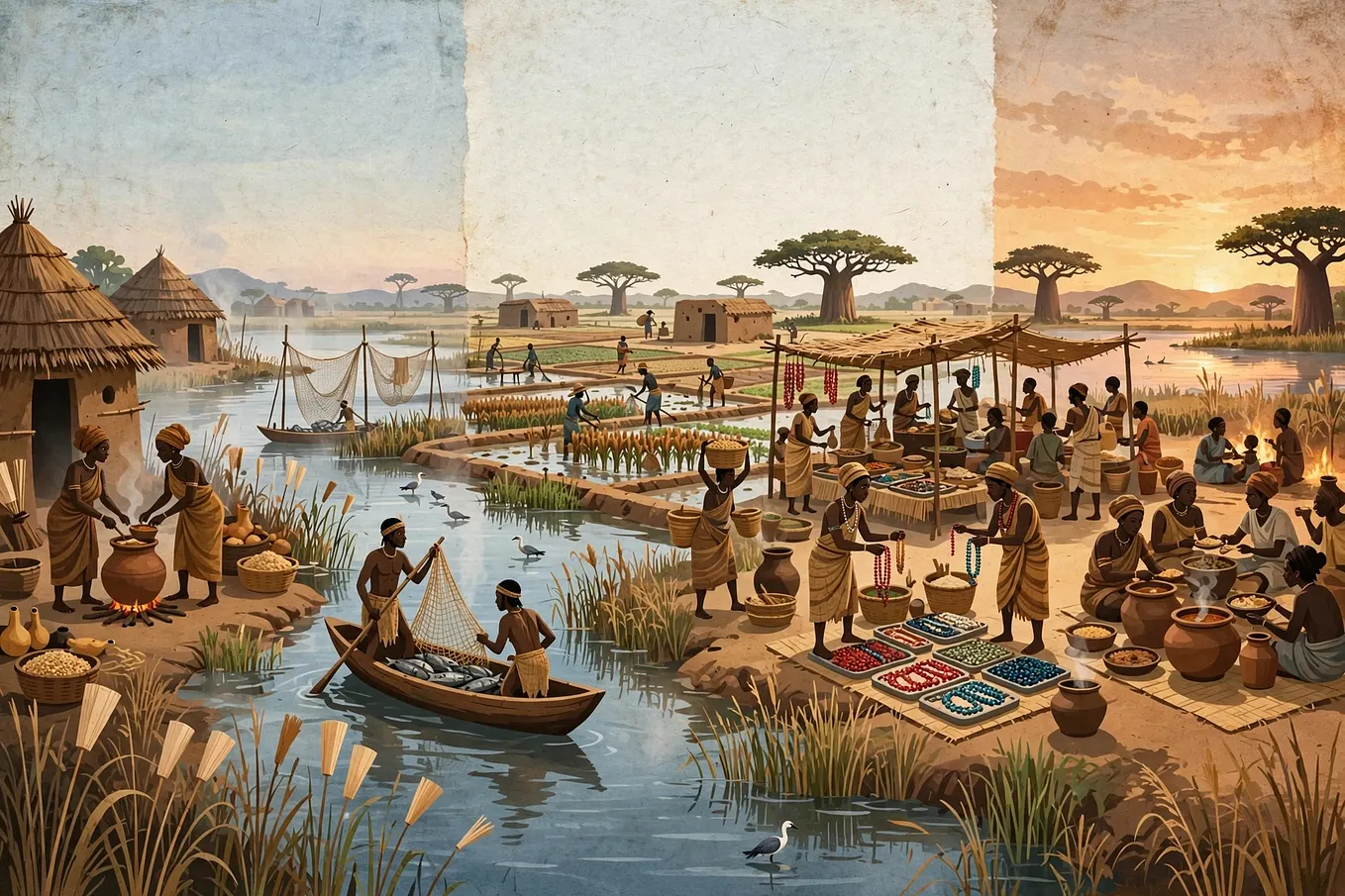
And when I say Lake Chad, I don’t want you to just picture water. I want you to picture people walking towards water, carrying things, shouting to each other, laughing, arguing about who forgot the net. 😂 Because a civilization is never really about a place. It’s about people who decide, “we are staying here, together.” 🤝
So where is “here”? 📍
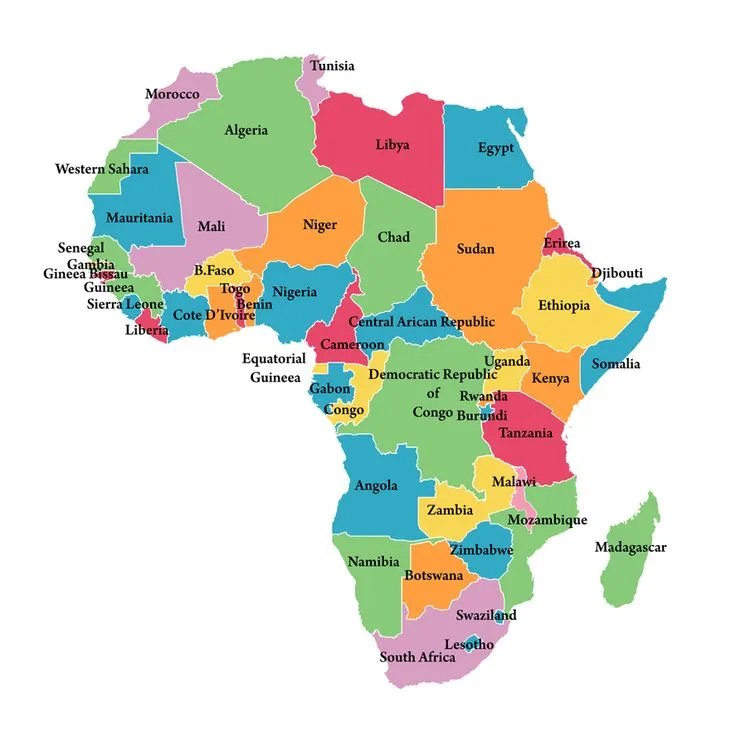
If you open a map today and put your finger right in the middle of Africa, you’ll land in the Lake Chad Basin. 🗺️ Today we call that area Chad, Cameroon, Nigeria, Niger. Back then, nobody called it that. There were no borders drawn with a ruler. There were rivers. Two big ones; the Chari and the Logone, feeding the lake. When they rose, they brought fish 🐟, they brought good soil. When they fell, they left farms ready. 🌾


So the Sao didn’t live near the lake like visitors. They lived around it. South, west, east. Like people sitting around one big pot, everybody with their own spoon. 🍲
And here’s something I had to unlearn while researching this: they were not one tribe. Not one people who just appeared.
They grew from the people already there. People like the Gajiganna, who were around from about 1,800 BCE, building fortified towns as early as 800 BCE. 🏘️ And one town alone, Mdaga, was lived in from about 450 BC all the way to 1800 AD. Think about that. That’s not one generation. That’s not even ten. That’s your great-great-great... you get tired counting. 😅
So when we say “Sao,” we’re really talking about many societies, over a very long time, sharing one way of living.
Let me introduce you to them properly. Not as a list in a textbook. As people you might have actually met if you had climbed the mound that morning. 👣
First, you’d meet the fisherman. 🎣 He’s already up. He knows the lake the way you know your own street. He knows when the fish will come, when the wind will change, when to just stay home and not waste his strength. His people are the ancestors of the Buduma and Kotoko fishermen today. Without him, the city doesn’t eat.
Then you’d meet the farmer. 🌾 She’s a woman, and she’s been up even earlier. Millet. Sorghum. She knows the flood will bring good soil if you’re patient. And she knows something we forget in supermarkets, a city that cannot feed itself cannot stand. So she stores. She plans. She’s the real economist. 🧺
Somewhere near her, you’d hear the potter. 🏺 Her hands are always wet. Clay everywhere. She makes pots for water, for cooking, for burial. And her pots have patterns. Not random. Like a signature. Like handwriting. ✍🏾
When archaeologists dig today, hers is the first thing they find. She never wrote a book, but her pot is a book. 📖
And if you follow the smell of smoke, you’ll find the metalworker. 🔥 Quiet man. People respect him, small fear him. Because he can take ordinary earth and turn it into bronze, copper, iron, into a spear, a bracelet, a god. In a world without factories, he was the factory. ⚒️
Then there’s the chief. 👑 And please, don’t picture a European king with a crown and 10,000 soldiers. No. Picture an elder. Picture a priest and a judge in one body. A chief of this mound, this town. The Sao were made of patrilineal clans (families tracing through the father’s line), coming together into chiefdoms, into city-states, each protected by moats and earth walls. His power wasn’t just about shouting orders. It was sacred. People listened because he carried the ancestors with him. 🙏🏾
Then the trader. 🗣️ She’s my favourite, if I’m being honest. She carries dried fish one way, and comes back with salt, beads, and gist.
Yes, gist. 📰 News. Because in a world without phones, she was the phone. “In Makari, they have a new chief. In Goulfey, harvest was good.” A city that trades, lives. A city that closes, dies.
And lastly, the child. 👧🏾👦🏾 Running around barefoot, climbing the mound like it’s nothing. Watching the potter. Listening at night when the elder tells stories. 🌙 We forget children when we talk about civilizations, but the Sao didn’t. They knew that a civilization is not what you build. It’s what your children remember to rebuild. ❤️
All these different people. Different work. Different tempers. But they learned one rule, and it held them for 2,000 years: we rise together, or we sink alone. ✊🏾
Get The Intellectual Scribe’s stories in your inbox
Join Medium for free to get updates from this writer.
Why did they even need to come together like that? It wasn’t for fame. Trust me, nobody was trying to go viral in 500 CE. 😂
First, to survive the lake. Alone, one family cannot survive a flood. Together, you can build a mound, build a wall, dig a moat, store grain. Some years the lake was kind. Gentle. Everybody happy. 💃🏾 Other years? Ah. The lake would just wake up angry. Water everywhere. Farm gone. House gone. Goat swimming like it paid for swimming lessons. 🐐🏊🏾 So they looked at each other and said, we will not run. We will rise. ⬆️
Second, to defend themselves. 🛡️
Good land attracts people. Some come to trade. Some come to take. A single hut cannot defend itself. A walled mound-city can.
Third, to keep their way of life. Pottery, burial, metalwork, beliefs; you can’t keep that alive with one family. You need a network. Towns teaching each other, marrying each other, remembering together. 💍
If you ask me what their vision was, I won’t give you corporate English. Their vision was simple: stay, build, remember, pass it on. ✨
Their mission was even simpler: make the mound higher than the flood, make the town stronger than fear, make the child know who his grandfather was. 👴🏾
Now, let’s actually enter one of those towns. Let’s enter Mdaga. 🚶🏾♂️ Let’s say it’s around 1000 CE, their peak time, between the 9th and 15th centuries.
You climb. Your legs are burning. 😩 A small child looks at you and laughs, “Even small pikin dey climb this every day!” 😂 You finally reach the top and "wow. 🤩 "
Mud-brick houses, flat roofs, neighbours greeting each other from roof to roof. 👋🏾 Granary. Well. Shrine. Wall. You smell smoke. You hear the potter. You hear the smith. 🔨 You hear the trader haggling. You hear a baby crying, a goat bleating, an elder telling a story that you know you’ve heard before but you still want to hear again. 📖
You walk to the edge of the wall and you look out. Lake sparkling. ✨ Farms green. 🌿 And far, far away, another mound. Another city. Waving back at you. 👋🏾
That’s the thing people miss. There was no one capital. No one big “Sao City.” There were many mound-cities, like Athens, Sparta, Corinth in Greece, each with its own chief, its own wall, its own workshop, but one shared culture. Names you should keep in your head: Mdaga, Makari, Goulfey, Logone-Birni. Not dots on a map. Homes. 🏠
So what made them different? Let me put it in plain language. 🗣️
Nok, in Nigeria, was famous for terracotta and early iron, beautiful work, but Nok wasn’t a 2,000-year network of walled mound-cities. Great Zimbabwe was famous for great stone walls, one powerful kingdom, gold trade, but the Sao didn’t build in stone, they built in earth, and they didn’t have one king, they had many chiefs. Mali and Ghana were great empires, gold, Islam, one Mansa, but the Sao were earlier, more local, more scattered, and they were _not_ an empire. And Kanem-Bornu next door? That _was_ an empire, centralized, with cavalry 🐎 and a Mai, and the Sao resisted it for centuries. That resistance alone tells you how strong they were. 💪🏾
In short: longevity without empire. Cities built on ancestors and local genius, they didn’t need to come from Egypt to be great. They were indigenous to the basin, south of the lake, and that is enough. 🌍
The Sao measured greatness in unique ways.
✓ How long you stay.
✓ How well you remember without writing, because they left no written records, we only know them through what was dug up and what was remembered.
✓ How well you build on those before you, not over them.
The Sao would say, if it is not remembered, if it is not buried with honour, if it is not built into the mound, then it did not happen. 🪦
The Sao asked, how do we live with the lake, with each other, and with our ancestors, and not disappear? 💧
So if someone asks you tomorrow, where did the Sao live, don’t just point to a country. Tell them a story. 📖 Tell them they lived around Lake Chad, in what is today Chad, Cameroon, Nigeria, and Niger. Fishermen, farmers, potters, smiths, traders, chiefs, children. Many clans, many towns, one shared way of life. On mounds they built themselves, on top of their fathers’ houses, so the flood could not carry them away.
They lived high, not because they were proud, but because they were wise. 🧠 And if there’s one thing I want you to carry from this entry, it’s this: if you build on what those before you built, you will never start from zero. You will start from the top. ⬆️❤️
Next, in Entry 3, we enter the workshop. We meet the hands that made the terracotta gods. 👀🏺 And trust me, those gods have gist. 😏
Follow us on this progressive series:
Facebook: http://facebook.com/akinkunmi.oyaniran
Instagram: https://www.instagram.com/oyaniranpeter3089?mdxt=OXJlYTF5ZGhiaWU4
#TheAfricanDiary #SaoCivilization #AfricanHistory #November2026