The City That Was Built With Secrets We Still Don’t Fully Understand


Thousands of years ago, someone built a city with straight streets, planned housing, and a drainage system that would put a lot of modern towns to shame. We still haven’t fully figured out how, or why.
A City Ahead of Its Time
Picture walking through a city that’s more than 4,000 years old. The streets run straight. The houses sit in an organized layout instead of sprawling wherever. Water is managed carefully, waste gets moved away from where people actually live, and a lot of the buildings look like they followed an actual plan rather than someone’s whim.
This wasn’t a modern city — it was Mohenjo-daro, one of the great cities of the ancient Indus Valley Civilization. And the deeper archaeologists dug, the stranger and more impressive it got.
The Streets Weren’t Random
We tend to picture ancient cities as a chaotic mess of buildings crammed together. Mohenjo-daro breaks that image. Its streets follow a clear grid, with major roads crossing smaller ones at fairly regular intervals — which tells us the people who laid it out weren’t just letting houses pop up wherever someone felt like building.
There was real urban planning here. Someone, thousands of years before zoning laws existed, was already thinking hard about how a whole city should function.
Water Came First
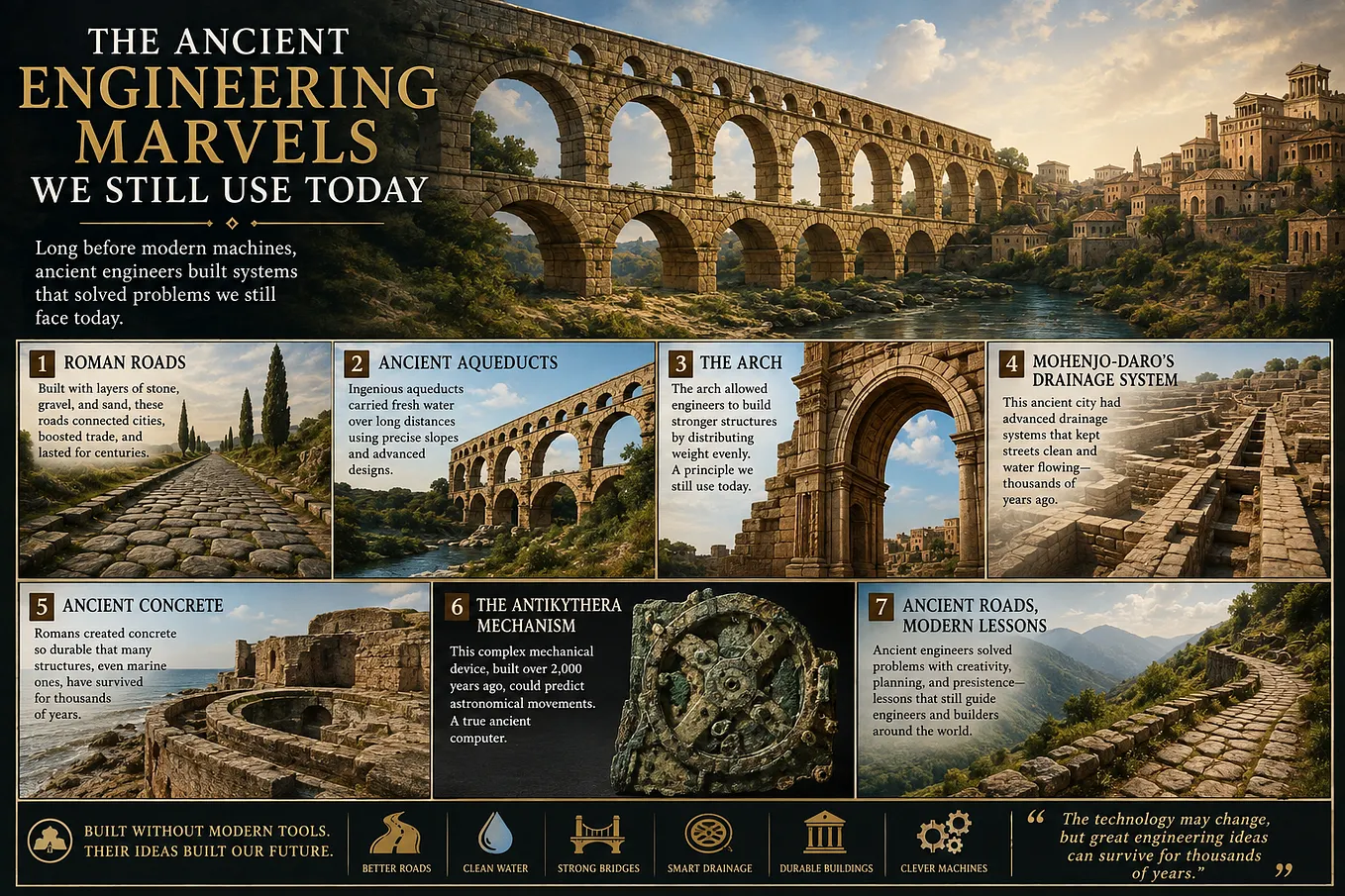
Maybe the most impressive part of Mohenjo-daro is what it did with water. Most houses had access to wells, and the city as a whole had an extensive drainage network built right into it. Wastewater didn’t just sit around — it was channeled away through the streets.
That sounds unremarkable now. But think about what it took to pull off back then: no sewage plants, no pumps, no engineers with computer models. Just people who’d worked out, on their own, how to solve a problem every city on earth still deals with today.
The Great Bath
Then there’s the Great Bath — a large, carefully built tank surrounded by rooms and walkways. Nobody’s entirely sure what it was for. Ritual purposes seem likely, but historians won’t say that with total confidence, because the evidence only takes you so far.
Get Muhammad Usman Writes’s stories in your inbox
Join Medium for free to get updates from this writer.
And that’s the frustrating, fascinating part. We can see exactly what they built. We just can’t always say why.
So Where Are the Palaces?
Here’s something odd: compared to other early civilizations, Mohenjo-daro shows almost no sign of a massive royal palace or a monument built to glorify one ruler. No pyramids. No giant royal tomb sitting at the city’s center.
Which raises a real question — how did a city this organized get governed? Was there a king? A council? Some system we don’t even have a name for? Nobody knows for sure.
A Civilization That Didn’t Leave Us the Answers
The Indus Valley Civilization did have writing. Archaeologists have found thousands of inscriptions and symbols. The problem is nobody has managed to fully decode the script.
So we’re left with clues, not explanations. We can study the streets, the buildings, the tools people left behind. But their own voice — what they actually thought and said about themselves — stays mostly out of reach.
Then the Cities Emptied Out
Sometime around the second millennium BCE, the major Indus Valley cities went into decline. Why exactly is still debated — shifting rivers, climate changes, disrupted trade routes, and other factors probably all played a part.
It likely wasn’t one dramatic collapse. More a slow unraveling: people moved on, cities shrank, and eventually Mohenjo-daro was left largely empty.
Why This City Still Matters
What makes Mohenjo-daro so compelling isn’t really its age. It’s the questions it leaves hanging. How did they organize a city this size? How did they pull off water management this well? Who was actually in charge? What does their writing say, if we ever crack it? And why did it all eventually fall apart?
We don’t have solid answers to most of that. Maybe that’s exactly why it’s still worth talking about.
Final Thoughts
Mohenjo-daro is a good reminder that advanced urban life didn’t start with modern technology. People thousands of years ago were already wrestling with the same problems every big city faces now — water, sanitation, housing, getting around, planning ahead.
The civilization is gone. The language is still mostly unread. But the city is still telling us something through what’s left of its streets and ruins — we’re just still working out what it’s trying to say.