The Celtic Tiger: Ireland in 1997 and Its Effects Today
The push and pull of modernity and tradition


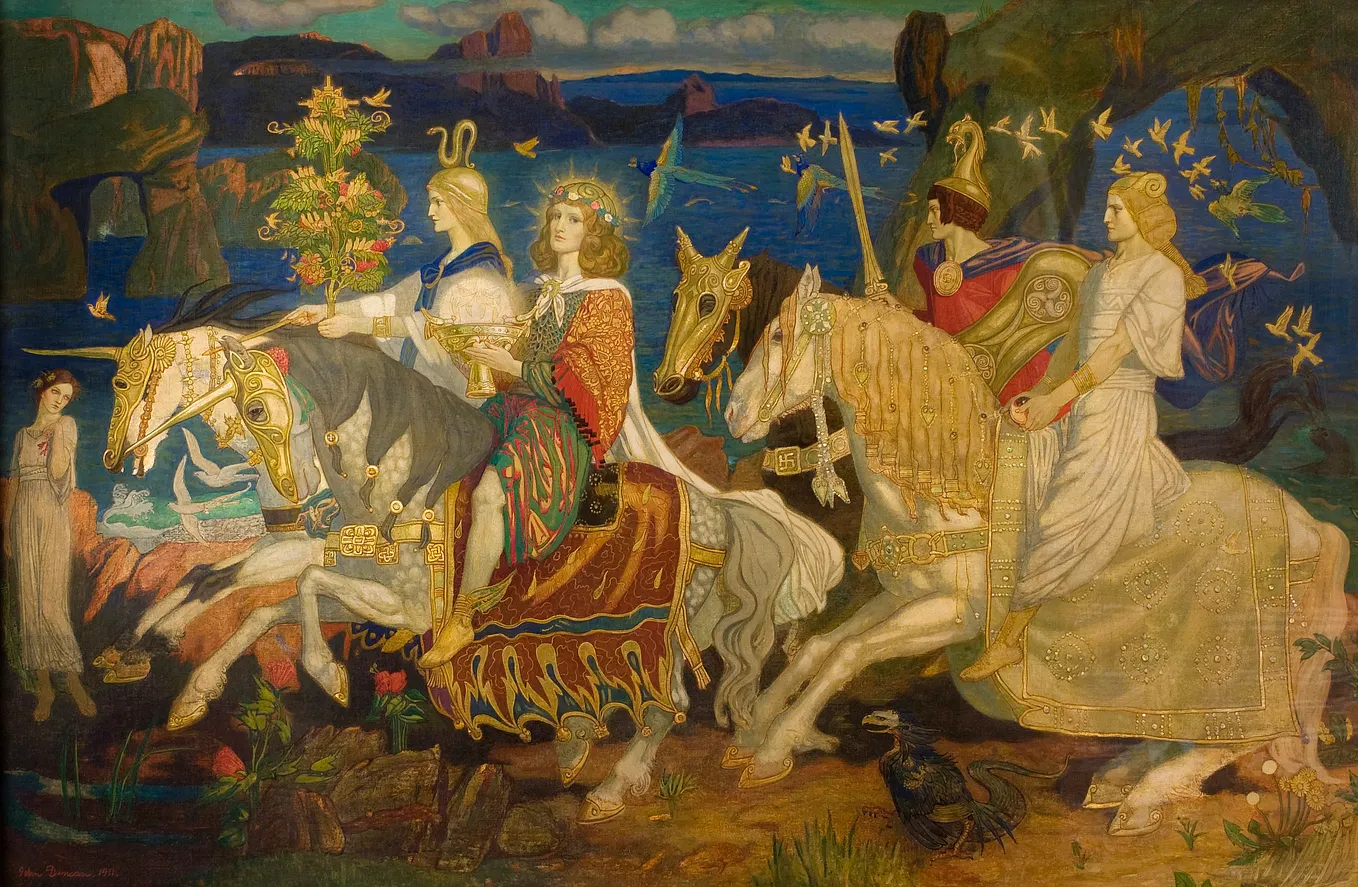
Onstage at Lantern Theater Company November 12 — December 13, 2026, Conor McPherson’s The Weir has at its heart ancient folklore, superstitions, and connection to the rugged land of rural Ireland. But this is not an old-fashioned story: it was written in 1997, and the friends old and new who gather at Brendan’s pub for company and stout do so at a time of great change for Ireland, when the siren song of modernity and economic growth competes with the call of tradition.
The Celtic Tiger (An Tíogar Ceilteach in Irish) was the period of economic boom that powered Ireland’s economy and rapid growth between 1995 and 2007. There were many contributors to this economic boom. One was increased foreign investment, as a combination of low corporate tax rates, government grants, and America’s strong trade relationship with the EU made Ireland an attractive place for US corporations to base their European operations. There was also an active effort to promote social partnership between government and labor, which helped keep the Irish workforce strong. Ireland’s public investment in education, including free or low-cost postsecondary education, meant that their workforce was one of the best-educated in Europe — an attractive resource for corporations. And the peace process in Northern Ireland, which culminated in 1998’s Good Friday Agreement, raised Ireland’s profile abroad.
During the Celtic Tiger, Ireland went from being one of Western Europe’s poorest countries to one of its wealthiest. The country’s GDP soared along with disposable income (though for some, income inequality also deepened). Unemployment fell dramatically and industrial wages rose. Quality of life measures improved significantly, due in part to these employment factors and in part to social investment of government funds. There were also a great number of modernization projects launched to public infrastructure; the now-famous Spire of Dublin (An Túr Solais) was built as part of a wide-scale redevelopment of O’Connell Street, and new forms of public transportation were developed.
Another major trend of this boom period was an influx of immigrants. Ireland historically lost more people to emigration than it gained by immigration. During the Celtic Tiger, that trend reversed for the first time in more than a century as people of the Irish diaspora returned home and foreign-born people made a new home in Ireland. There was internal movement as well, as rural dwellers flocked to urban centers for work.
Get Lantern Theater Company’s stories in your inbox
Join Medium for free to get updates from this writer.
The boom ebbed and crested again early in the millennium, but it wouldn’t last forever — the global financial crisis of 2007 brought it to an end, and by September 2008, Ireland became the first eurozone country to go into recession. The housing bubble burst, unemployment rose again, and assistance from the International Monetary Fund required accepting austerity measures. After a few years, the economy stabilized and by 2015 began growing again. Many of the effects of the Celtic Tiger have persisted, and the country still enjoys net immigration with more people moving to the island than moving away. Multiculturalism remains on the rise, though this brings with it an attendant reactionary backlash aimed at non-white residents, immigrants and Irish-born alike. The economy has recovered dramatically, though there is a housing affordability crisis. In short, Ireland is like many other Western countries: a modern nation battling an affordability crisis and the rise of far-right extremism and protectionism while also working to hang on to progress made in the preceding decades.
But inside Brendan’s pub in The Weir, nestled in western rural County Leitrim or Sligo at the start of the Celtic Tiger, this boom is fraught. The visitors bring tourism dollars, but they also bring noise and caravans. Business is good for the hotelier who moved to town, leaving his rural upbringing behind, but bad for the garage owner who watched as a major road was built to bypass their village. The weir of the title — a small dam that reroutes the waterway — provides power, but it is also evidence of modernity’s influence on a wild landscape. The economic boom connects Ireland’s cities to each other and the country to the world, but it leaves the patrons at Brendan’s bar feeling cut-off, tied to their land and way of life even as their friends and family answer the call of prosperity and advancement. But as the Celtic Tiger draws people to Ireland and to its cities, Valerie is drawn away from Dublin, back to somewhere the veil feels a little thinner between then and now.
One of the major infrastructure projects of the Celtic Tiger, the M18 Motorway, began construction in 1999. Modernity called — an interurban highway was needed. But there was a problem: its construction threatened a local fairy bush, a whitethorn tree considered to belong to the Aos Sí. Community members protested. Folklorists appealed. After 10 years, the road was finally built — and the tree was intact and unmoved.
Locals say, even as they assure you they do not believe in fairies and are not superstitious about the tree, that the road was given a small curve to avoid it. Authorities will say they did not change the road’s route at all; it just so happened that the tree wasn’t actually in the path of the intended route. This is a modern country of cars and highways, not of ghosts and ancient spirits, after all. Nothing would have happened if the tree had been moved. But then again…why risk it?
More great reading: See other recent articles and interviews on the Lantern Searchlight blog
Lantern Theater Company’s production of The Weir by Conor McPherson is onstage November 12 through December 13, 2026, at St. Stephen’s Theater. Visit our website for tickets and information.