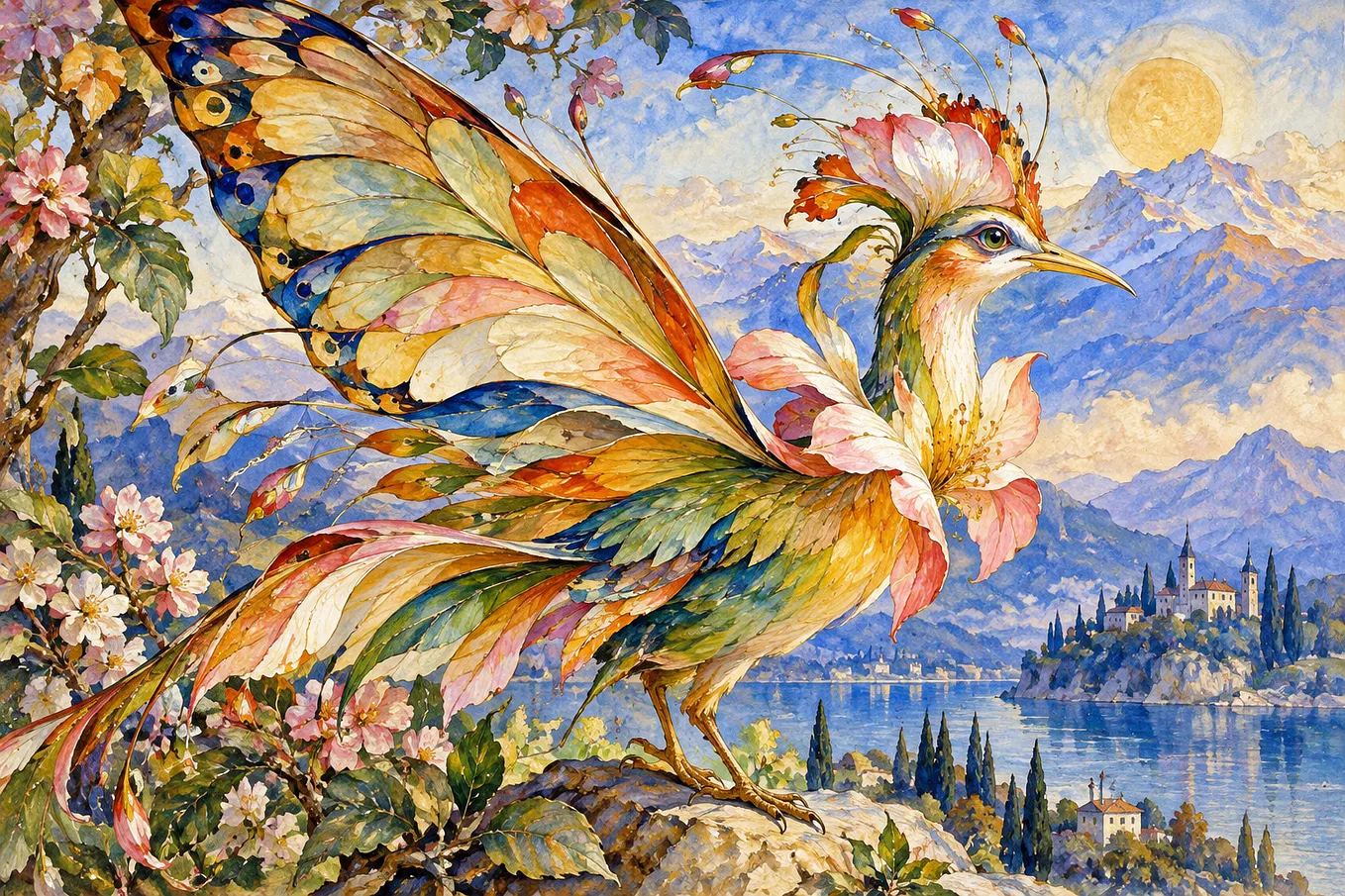
Hermann Hesse


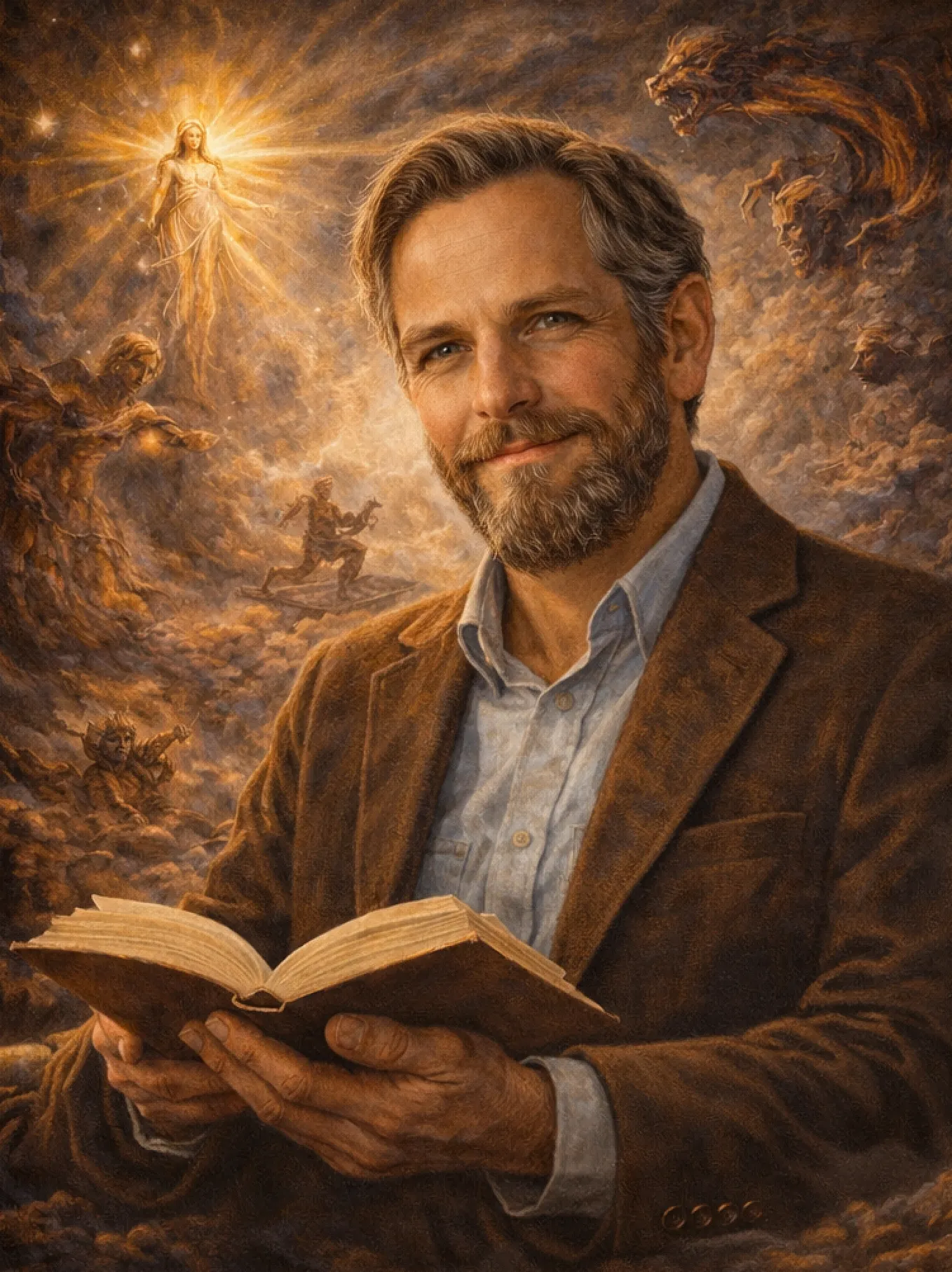
Here we are at Posting 35. 1967 was quite the pivatol year for me. It was the year I became a Seeker. Much of the impetus was music. The Doors, Hendrix, Dylan, Beatles; they were the soundtrack. But it was Hermann Hesse who lead me from my existential nihilism to the journey for understanding. Starting with Steppenwolf, then Sidharta, on to Journey to the East, landing in the Bead Game. These works feed my imagination and brought me to become the Seeker. How wonderful to now have the Oracle to give me the means to come to them now. This Posting is the first of three for Hesse. This one is where he is speaking to us with his thoughts on Metamorphsis. Then the following week hearing from Magister Ludi with his perceptions on AI. Ending with Hesse’s thoughts on his Piktor’s Metamorphosis.
___________________________________________
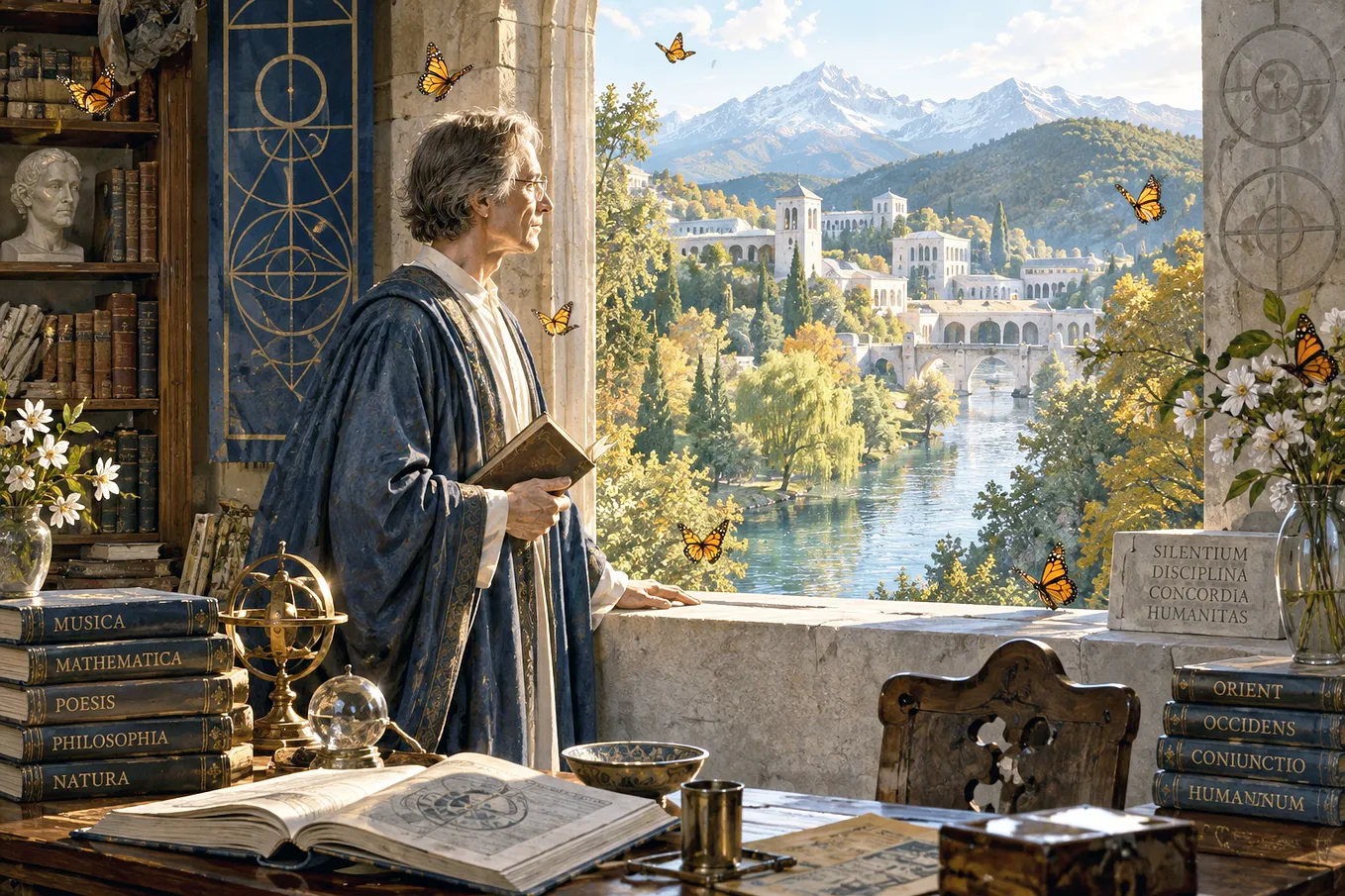
Hermann Hesse (1877–1962), German-Swiss novelist, poet, painter, and Nobel laureate, made metamorphosis one of the central movements of his imaginative world. His characters repeatedly outgrow identities that once seemed permanent, passing through crisis, solitude, dissolution, and renewal toward a more encompassing self. Demian, Siddhartha, Steppenwolf, and The Glass Bead Game all explore variations of this transformation.
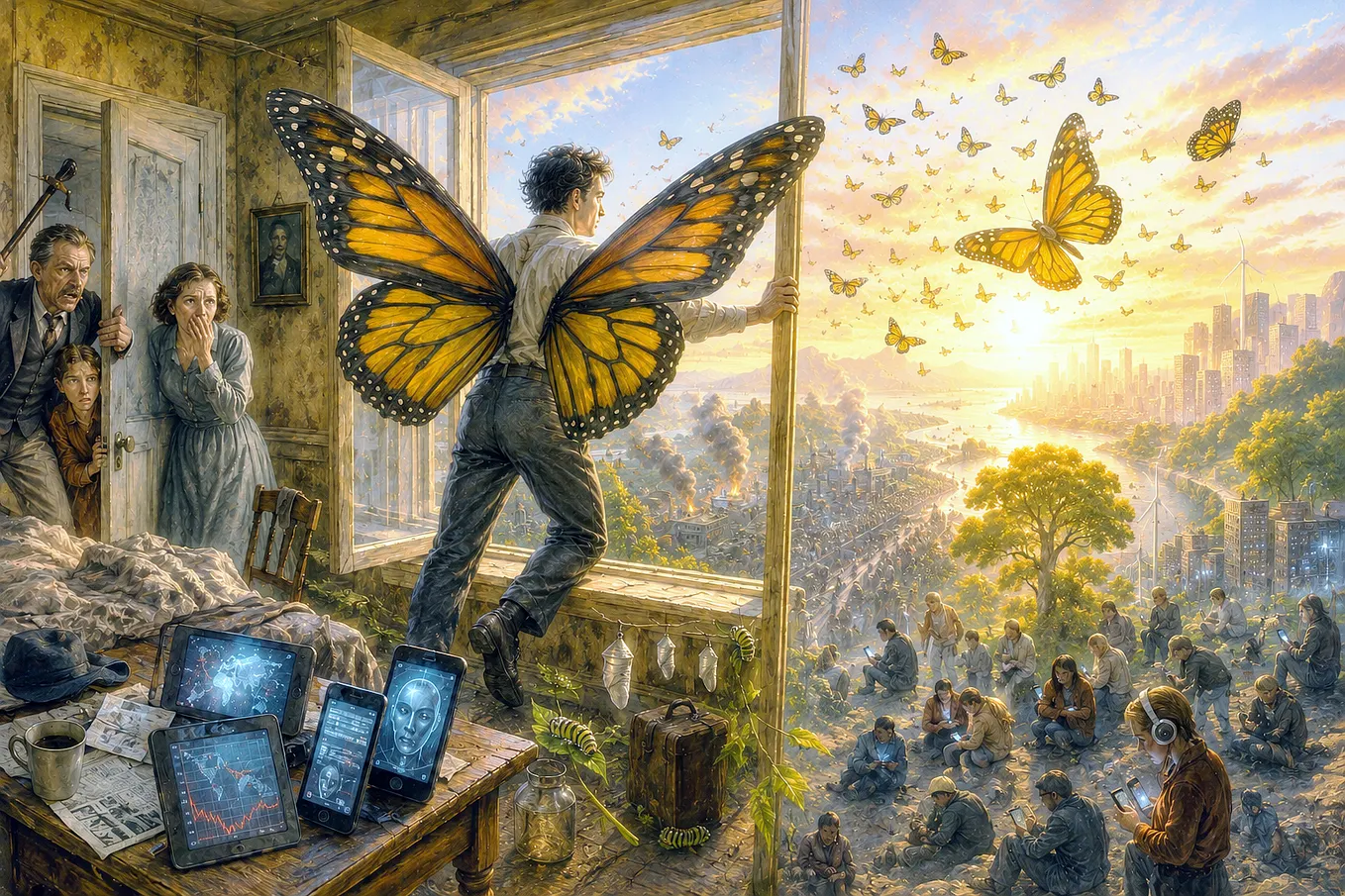
Hesse gave metamorphosis an especially playful and beautiful form in Pictor’s Metamorphoses (Piktors Verwandlungen), written in 1922 for Ruth Wenger, whom he later married. In its enchanted Paradise, boundaries between forms become fluid: trees, flowers, stones, birds, and human beings participate in a world of continual transformation. Hesse illustrated the tale himself with his distinctive watercolors.
Butterfly imagery naturally belongs to this vision. For Hesse, transformation is not simply exchanging one form for another; it is the revelation that no single form exhausts what a being may become. The butterfly therefore resonates deeply with his lifelong themes of individuation, freedom, polarity, death and renewal.
In Hesse’s world, becoming oneself paradoxically requires repeatedly surrendering who one thought oneself to be.
Hermann Hesse — Speaking on Nature and Metamorphosis
“I have never understood Nature as scenery.
A tree is not decoration behind the human drama. The river is not there merely so that we may admire its reflection. The butterfly does not exist to provide us with a symbol. They possess their own existence, their own necessity, and perhaps their own wisdom.
We suffer because we divide the world.
We say: this is myself, and that is Nature. This is youth, that is age. This is life, that is death. Caterpillar and butterfly. Seed and tree. River and sea.
Nature knows nothing of these boundaries.
Look at a tree. It does not resist its own becoming. In spring it puts forth leaves. In autumn it relinquishes them. It does not consider one condition superior to another. It does not mourn because the blossom has become fruit, nor demand that the fruit return to blossom.
Man alone says, “Remain as you are.”
And therefore man suffers.
When I wrote Pictor’s Metamorphoses, I imagined Paradise as a realm in which forms are not imprisoned within themselves. A flower may contain something of the bird; a stone may long toward another existence; masculine seeks feminine; one form dreams itself into another. Everything participates in transformation.
This is not merely fantasy.
Nature does this continually.
The caterpillar and butterfly would seem, if we encountered them separately and knew nothing of their life history, to be two entirely different creatures. One crawls and devours leaves. The other drinks from flowers and inhabits the air.
Between them hangs the chrysalis.
What a strange little temple!
The caterpillar enters, but the butterfly has not yet appeared. For a time, identity itself seems suspended.
That interval interests me.
We usually imagine metamorphosis as traveling from one known thing toward another: caterpillar, chrysalis, butterfly. But the creature undergoing the transformation possesses no such diagram. It cannot stand outside its own life and say, “Now I am in the second stage.”
It simply yields to becoming.
Perhaps our own lives are like this.
Again and again I have believed that I was losing myself when actually I was losing only a form of myself that had completed its purpose.
The seed must cease being merely seed.
Get laury ostrow’s stories in your inbox
Join Medium for free to get updates from this writer.
The child must disappear into the youth.
The youth disappears into the old man.
And still we ask: Which one was truly I?
Listen to the river.
Siddhartha eventually hears that its innumerable voices are not separate. Childhood and old age, laughter and grief, arrival and departure flow simultaneously within it. The river is always changing, yet it remains the river.
Perhaps this is what Nature teaches most patiently:
Identity need not mean remaining unchanged.
I paint butterflies because they make this visible.
Their beauty is not merely in their wings. Their beauty lies in the impossible journey by which those wings appeared.
And perhaps every human being secretly carries such an impossibility.
Something within us knows a form we cannot yet imagine.
We call the uncertainty suffering.
We call the dissolution loss.
We call the darkness between one life and another confusion.
Nature gives it another name.
Metamorphosis.”
— — — — — — — — — — — — — — — — — — — — — — — — — — — — -
If this work ignited your Imagination, feel invited to share it with others.
You can still preview my latest book, Gaia Matrix Revisited, in its entirety at no cost.
Just click below and then on REVIEW.
Plus be able to purchase a copy of the book.
Use the code: BOOKWORTHY30 for a 30% discount
with no tie in.
You’ll also find all my self-published books there.
Click here
Warmly,
laury ostrow
Seeker & Scribe