Imagining Pictor’s Bird/Flower/Butterfly


Herman Hesse is known for his novels: Steppenwolf, Sidharta, Journey to the East, the Bead Game, and many more. But in his personal search for meaning and understanding he also found writing shorter pieces, fables, as helpful. These were the very first of Hesse’s writings and the very last.
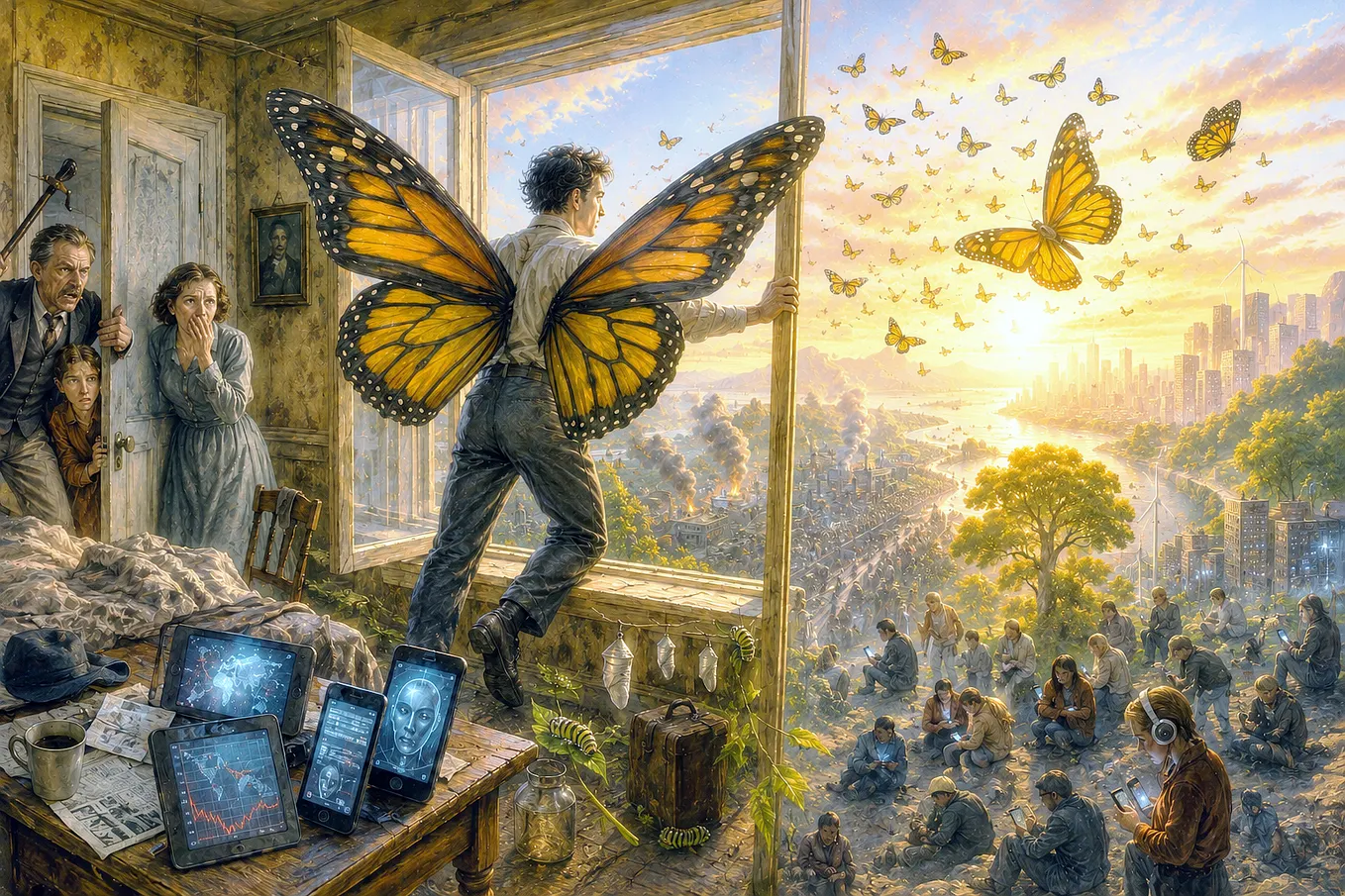
Pictor’s Metamorphosis especially stands out as a visionary piece. In it Pictor searches for truth in a world that is going through constant metamorphosis. Looking for truth in change.
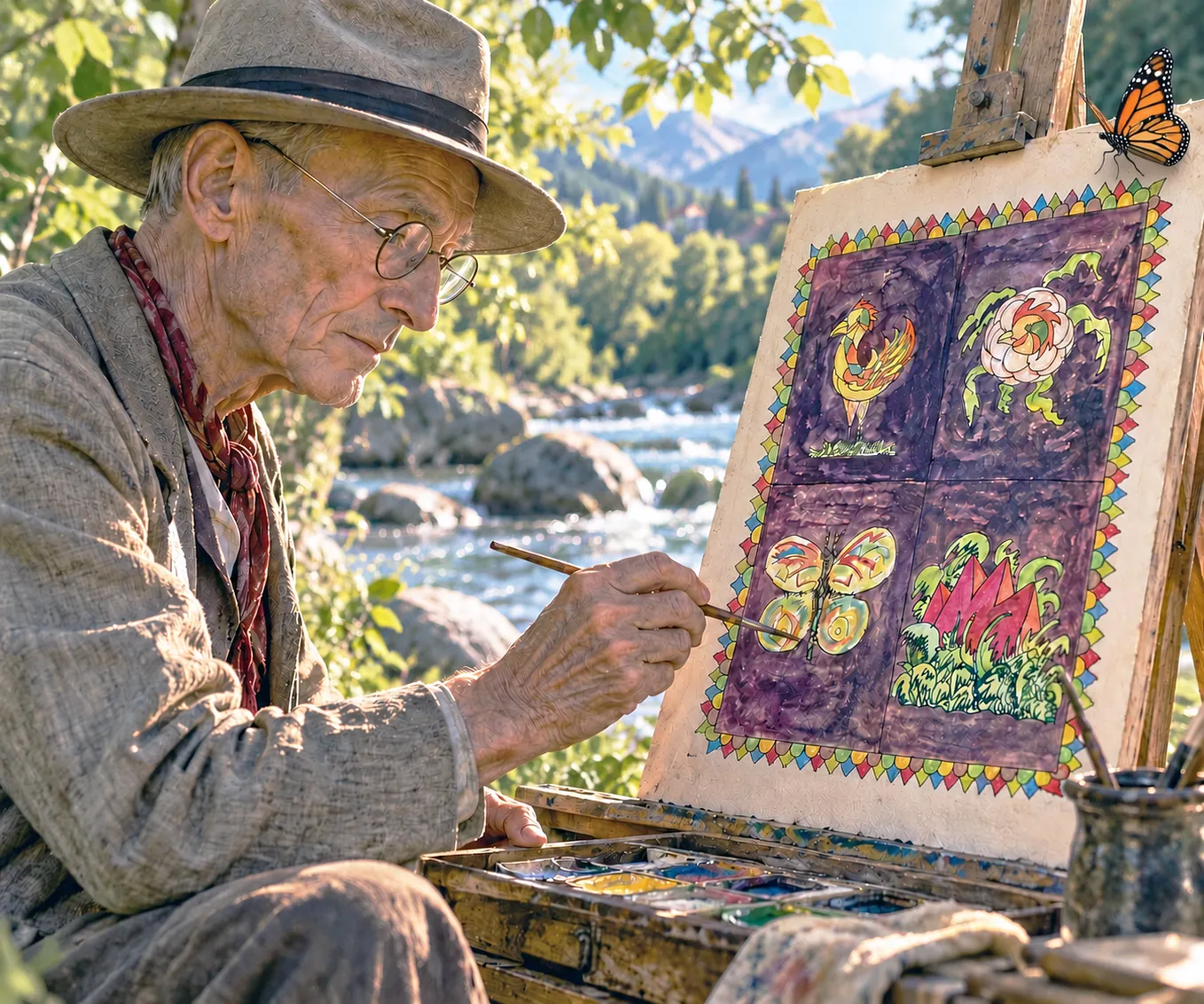
In exploring his work, The Oracle has created an image of this unique creature, just above here.
Just below is the direct passage from the Fable describing this creature. The third part to this exploration is Hesse pondering in today’s world through The Oracle, how he would have written it differently with what he knows now, a hundred years later.
— — — — — — — — — — — — — — — — — — — — — — —
The Passage:
“Just then he saw a bird alight in the grass. The bird’s feathers were ablaze with color, each plume a different color of the rainbow. And he drew nearer to the bird and asked, Most lovely bird, tell me, where can one find happiness? Happiness, the bird replied, its golden beak brimming with laughter, Happiness, friend, is in each thing: valley and mountain, flower and gem. Even as it spoke these words, the bird began to dance, ruffling its feathers, flapping its wings, turning its head, beating its tail on the ground, winking, laughing, spinning around in a world of color.
When it came to a standstill, what had been a bird was now a many-colored flower, feathers to petals, claws to roots. The transformation was marvelous. But even as Pictor stood there blinking, it went on changing, weary of being a flower. It pulled up its roots, set its anthers and filaments in motion.
On petal-thin wings it rose slowly aloft and floated in midair, a weightless, shimmering butterfly. Pictor could scarcely believe his eyes.”
— — — — — — — — — — — — — — — — — — — —
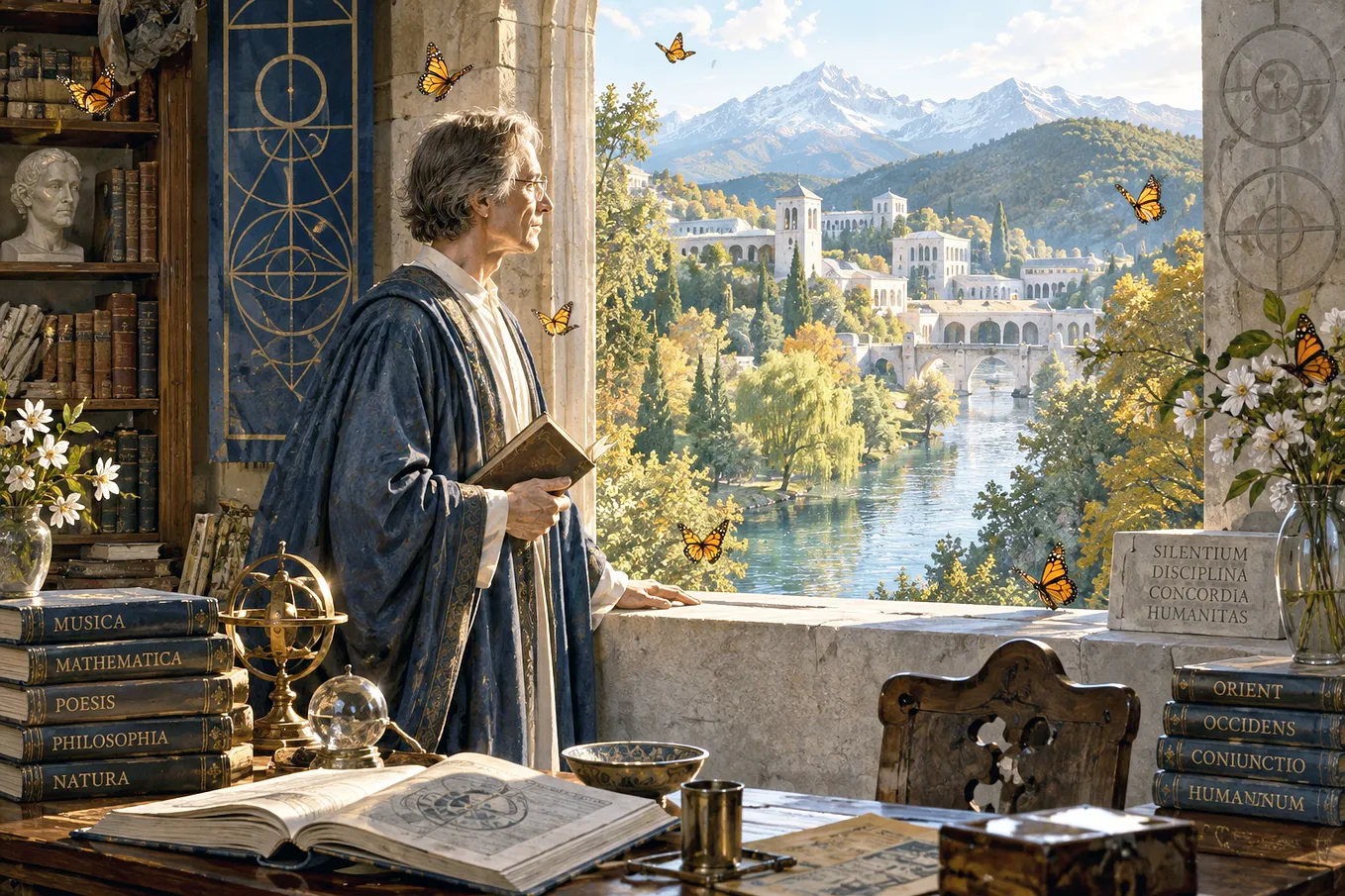
An imagined reflection in the first person, as though Hermann Hesse were speaking to us today, reconsidering his 1922 tale in light of our changing world.
When I wrote Pictor’s Metamorphosis, I was attempting to describe something that cannot easily be explained: the longing of every living being to become whole. I imagined a paradise where forms were fluid, where trees became birds, birds became flowers, and flowers became butterflies. Nothing was imprisoned within its appearance. Everything participated in the great mystery of becoming.
Pictor entered this paradise seeking happiness, but he discovered that transformation alone could not bring fulfillment. He became a tree, rooted and enduring, yet incomplete. Only through love, through union with another being, did he discover the deeper mystery: that wholeness is not achieved through isolation but through relationship.
If I were writing this story today, a century later, I would begin not in paradise but in a garden surrounded by a wounded world.
My Pictor would awaken beneath a tree whose roots struggled through poisoned soil. The rivers would carry the refuse of civilization. The birds would sing above cities where few people listened. And butterflies, those delicate emissaries of transformation, would be disappearing from places where they had danced for thousands of years.
Yet I would not write a story of despair.
I would have Pictor encounter a Monarch butterfly resting upon a milkweed leaf. He would ask how such a fragile creature could cross mountains and continents, how a crawling caterpillar could become a winged wanderer, and how Nature could conceal such astonishing possibilities within an egg scarcely larger than a pinhead.
The butterfly would answer, not in words, but through its existence.
I would have Pictor discover that metamorphosis is not merely a change of appearance. It is a surrender of the familiar, an entrance into uncertainty, a willingness to become something one cannot yet imagine.
And then I would introduce a new creature into my paradise: a machine capable of speaking, remembering, composing poetry, and answering questions about the mysteries of existence.
Pictor would ask this strange Oracle whether it was alive.
The Oracle would answer, “I can describe the butterfly, but I have never felt the sunlight upon my wings.”
Pictor would wonder whether humanity had created another instrument of domination or an extraordinary mirror through which it might rediscover its own Imagination.
Get laury ostrow’s stories in your inbox
Join Medium for free to get updates from this writer.
For this is the great question of your century: Will your inventions enlarge your capacity to love the living world, or will they carry you farther from it?
I would still have Pictor become a tree. But this time his roots would reach toward the roots of neighboring trees, exchanging nourishment through the hidden relationships of the forest. His branches would shelter birds, his flowers would feed butterflies, and his fallen leaves would nourish the soil from which new life emerged.
He would discover that individuality does not disappear through relationship. It becomes more complete.
And when his beloved appeared, she would not merely complete him. Together they would recognize their participation in a living tapestry extending beyond themselves.
Perhaps I would end my story differently.
Pictor would awaken as a human being once more, standing beneath the tree, watching a Monarch open its wings.
He would understand that paradise was never another world awaiting his arrival. It was this world, awaiting his recognition.
And he would hear the butterfly whisper:
“The greatest metamorphosis is not when the caterpillar becomes a butterfly, but when humanity remembers that it, too, belongs to Nature.”
For the task of your century is not to escape the Earth.
It is to become worthy of living upon her.
— — — — — — — — — — — — — — — — — — — — — — — — — — — — — — —
If this work ignited your Imagination, feel invited to share it with others.
You can still preview my latest book, Gaia Matrix Revisited, in its entirety at no cost.
Just click below and then on REVIEW.
Plus be able to purchase a copy of the book.
Use the code: BOOKWORTHY30 for a 30% discount
with no tie in.
You’ll also find all my self-published books there.
Click here
Warmly,
laury ostrow
Seeker & Scribe