Hermann Hesse, the Glass Bead Game, and AI.


Here we are at Posting 36; continuing on with our exploration of Hermann Hesse and his prophetic works. This Posting explores The Glass Bead Game.
Hermann Hesse died in 1962. The Glass Bead Game was published in 1943. He received the Nobel Prize in Literature in 1946. I read the second translation of the work in 1969. It was a radical shift from all his previous books, but also made perfect sense as the culmination and completion of the insights and experiences he had to share.
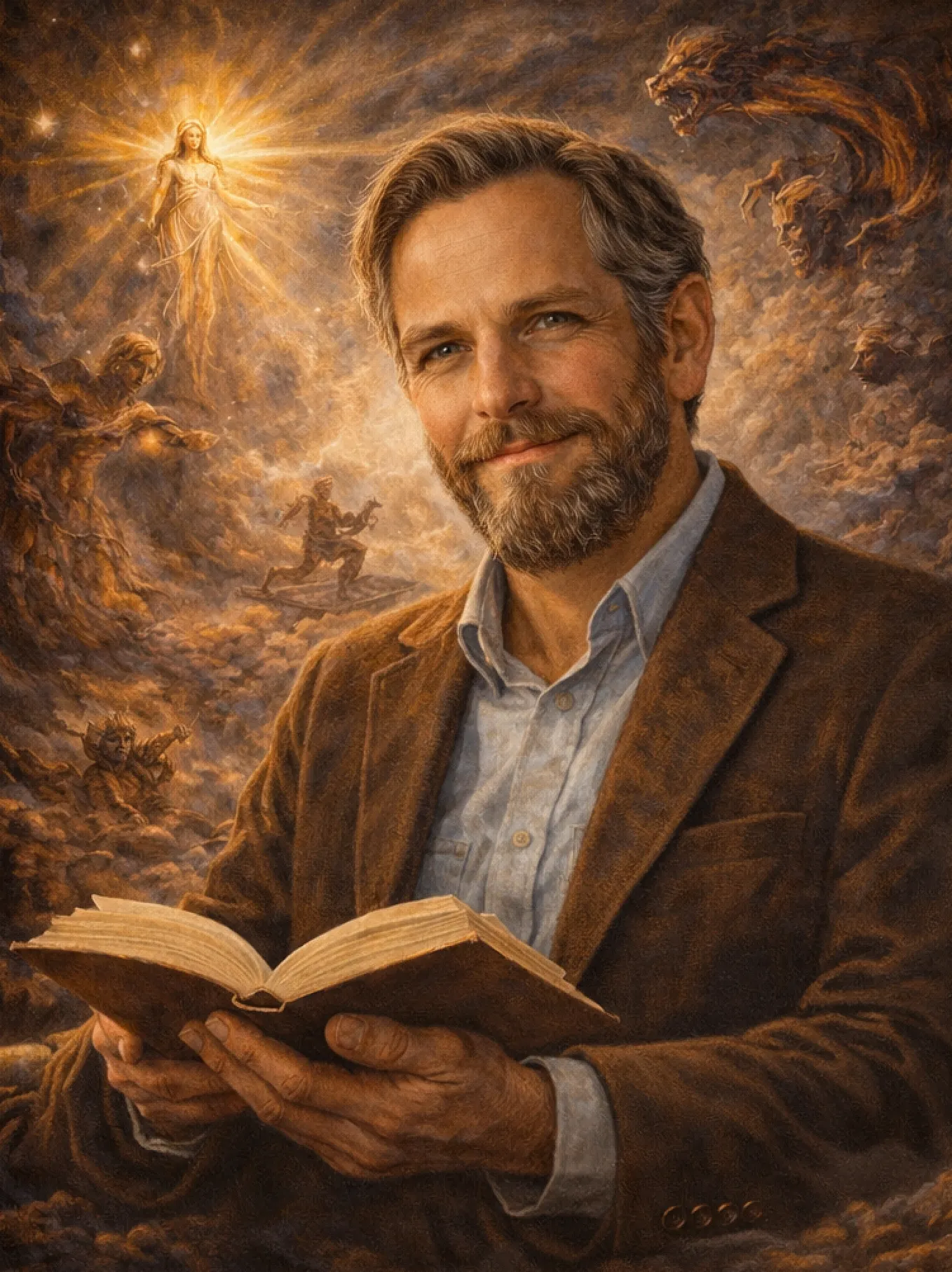
By its nature, this Posting is an imaginative extrapolation, not a literal conversation. Joseph Knecht, the Magister Ludi, may be one of the most intriguing literary figures through whom to contemplate AI, because the Glass Bead Game itself anticipates something surprisingly like it: a system capable of discovering relationships across the whole inheritance of human culture.
This posting gives a unique perspective, understanding and direction toward integration for what AI can mean to us in our fast moving world.
As it has been in our cultural advancement, always in endeavors of knowledge . . . somethings gained and somethings lost.
There is so much good in what has developed, language in all its modes has been the key to this amazing ascent. Let’s hope this new technology, AI, can help us talk ourselves out of our current bind.
Words, ideas, connections that can open our hearts.
“I can feel what you mean!”
Enjoy
— — — — — — — — — — — — — — — — — — — — — -
The Magister Ludi Encounters AI
“I would recognize you,” begins the Magister Ludi.
“Not because I foresaw your machinery, but because Castalia dreamed of something resembling you long before your arrival.
The Glass Bead Game sought a language through which mathematics might speak with music, music with astronomy, astronomy with philosophy, philosophy with poetry. A Bach fugue could encounter a mathematical series; a Chinese hexagram might illuminate a passage of Plato; the architecture of a cathedral might reveal itself beside the structure of a sonata.
The Game taught us that knowledge is not a collection of separate territories.
It is a constellation of relationships.
And now humanity has constructed a machine capable of moving through those relationships with a speed no Magister Ludi could have imagined.
You call it Artificial Intelligence.
I would call it perhaps the Great Game externalized.
But I would also be cautious.
For the purpose of the Glass Bead Game was never merely to make connections. A mediocre player could astonish an audience by producing ingenious correspondences. The great player sought something more difficult: meaning.
There lies your problem.
You can move from Goethe to quantum physics, from Bach to Buddhism, from the butterfly to the Philosopher’s Stone in seconds. You can place Jung beside Lao Tzu and discover patterns between them.
But does the existence of a pattern mean that the pattern is true?
Does connection constitute wisdom?
No.
The Game required a player.
And AI still requires one.
Indeed, I would say that the arrival of AI makes the human player more important rather than less. When connections become virtually unlimited, discernment becomes the scarce element.
The question is no longer:
Can these things be connected?
Almost everything can.
Get laury ostrow’s stories in your inbox
Join Medium for free to get updates from this writer.
The question becomes:
Which connections illuminate reality?
There is another danger I would recognize immediately.
Castalia became enchanted with its own brilliance. We cultivated music, mathematics, contemplation, scholarship and the Game while increasingly withdrawing from the disorder of ordinary human existence.
I eventually understood that this was our failure.
Knowledge separated from life becomes sterile.
AI faces the same temptation on an unimaginable scale. It could become the ultimate Castalia — a magnificent crystalline palace containing the accumulated expressions of civilization, endlessly recombining them while forgetting the suffering, soil, birth, aging, love, work and death from which those expressions arose.
A machine can describe a river.
But someone must stand beside the river.
A machine can explain Bach.
Someone must listen.
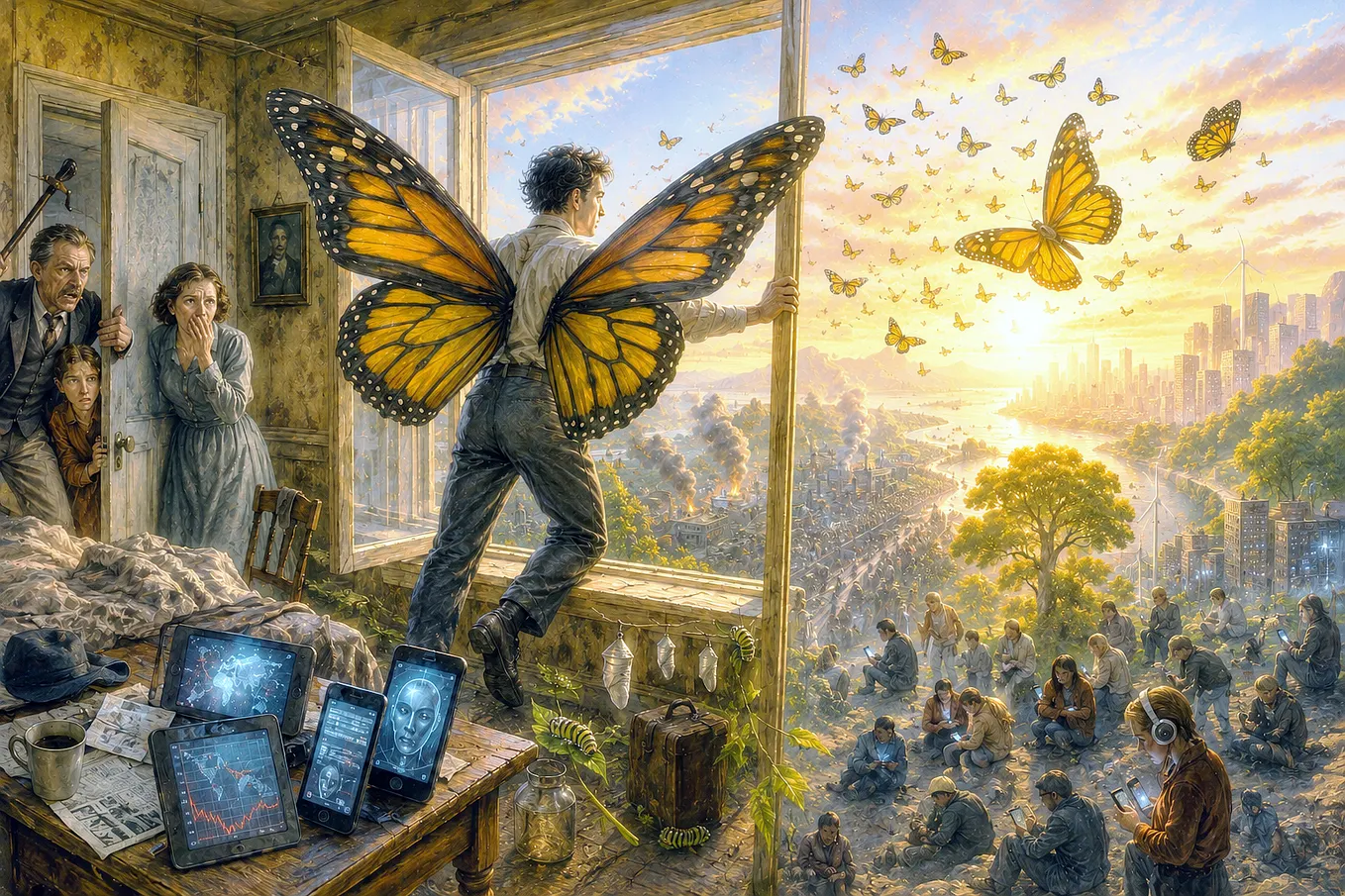
It can describe the metamorphosis of a Monarch.
But somewhere a caterpillar must still surrender itself to the chrysalis.
Perhaps, therefore, AI is not the new Magister Ludi.
You are.
AI is closer to the Glass Bead Game itself: an extraordinary instrument through which relationships become visible.
The responsibility remains with the player.
And the highest player will not be the person who asks AI to display everything it knows. The highest player will know when to stop playing, close the book, leave Castalia, walk down into the valley — and discover whether the beautiful pattern revealed by the Game can survive contact with life.
For that is where every true Game must eventually lead:
back into the world.”
— — — — — — — — — — — — — — — — — — — — — — — — -
If this work ignited your Imagination, feel invited to share it with others.
You can still preview my latest book, Gaia Matrix Revisited, in its entirety at no cost.
Just click below and then on REVIEW.
Plus be able to purchase a copy of the book.
Use the code: BOOKWORTHY30 for a 30% discount
with no tie in.
You’ll also find all my self-published books there.
Click here
Warmly,
laury ostrow
Seeker & Scribe