Shreedharan Soundiah·Aug 7Qincept Convey: The Continuity Layer Between ProcessesUnderstanding how conversations, processes, approvals and experience continuously generate institutional intelligence.
Shreedharan Soundiah·Jul 31The Instruments That Become Catalysers of Tomorrow in an OrganisationHow seven timeless disciplines work together through Continuity to transform knowledge into organisational resilience, better decisions and…
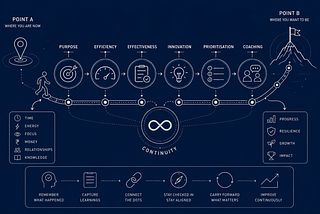
Shreedharan Soundiah·Jul 24Purpose as the Starting Point: The Physics of Moving from Point A to Point BHow Purpose, Efficiency, Effectiveness, Innovation, Prioritisation, Coaching, and Continuity Move Us from Where We Are to Where We Want to…
Shreedharan Soundiah·Jul 17The Physics of Individuals and Teams: The Forces Behind Lasting SuccessHow Psychological Safety, Collaboration, Talent, Vision, Focus, Resilience, and Continuity Turn Human Potential into Lasting Progress
Shreedharan Soundiah·Jul 10Institutional Effectiveness Begins with ContinuityWhy Organizational Continuity, Attention Management, and Continuous Feedback Are Becoming the Three Foundations of Modern Institutions
Shreedharan Soundiah·Jul 3Accountability in the Age of AI: Why Future Systems Must Preserve More Than ResponsibilityPreserving responsibility as organizations, AI, and work evolve.
Shreedharan Soundiah·Jun 26What Is a Continuity Engine? Exploring a New Category for Human and Institutional ProgressExploring why preserving continuity — not just information — may become one of the next foundational categories of software for…
Shreedharan Soundiah·Jun 19𝗕𝗹𝗮𝗰𝗸 𝗛𝗼𝗹𝗲𝘀, 𝗞𝗮𝗿𝗺𝗮, 𝗮𝗻𝗱 𝘁𝗵𝗲 𝗚𝗿𝗮𝘃𝗶𝘁𝘆 𝗼𝗳 𝗛𝘂𝗺𝗮𝗻 𝗣𝗼𝘁𝗲𝗻𝘁𝗶𝗮𝗹Why the Future of Human Potential May Depend on Centers of Attraction, Continuity, and Institutional Memory
Shreedharan Soundiah·Jun 12Beyond AI Agents: Why Organizational Continuity Will Define the Future of Enterprise IntelligenceOpenAI’s Intelligence at Work and the Emerging Need for Decision Continuity Infrastructure
Shreedharan Soundiah·Jun 6Qincept and the Reduction of Temporal Friction Inside InstitutionsWhy the Future of Institutions May Depend on Reducing Temporal Friction